
Three-point hitch explained: how it works and lift capacity
The short answer
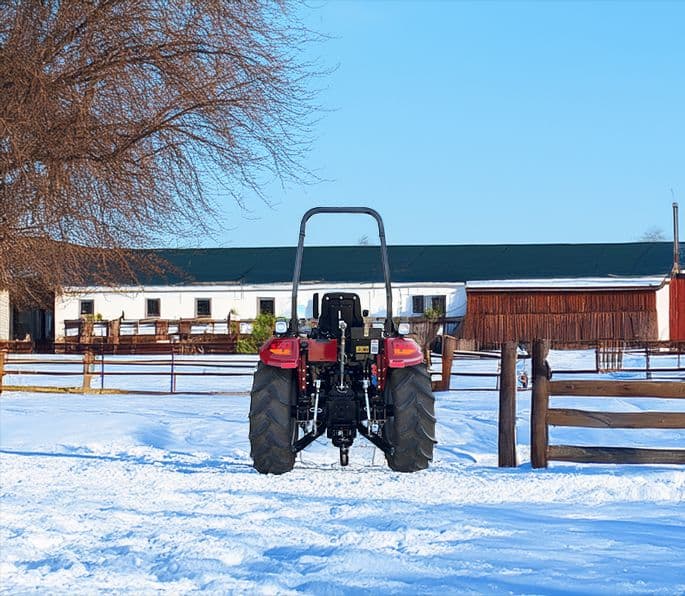
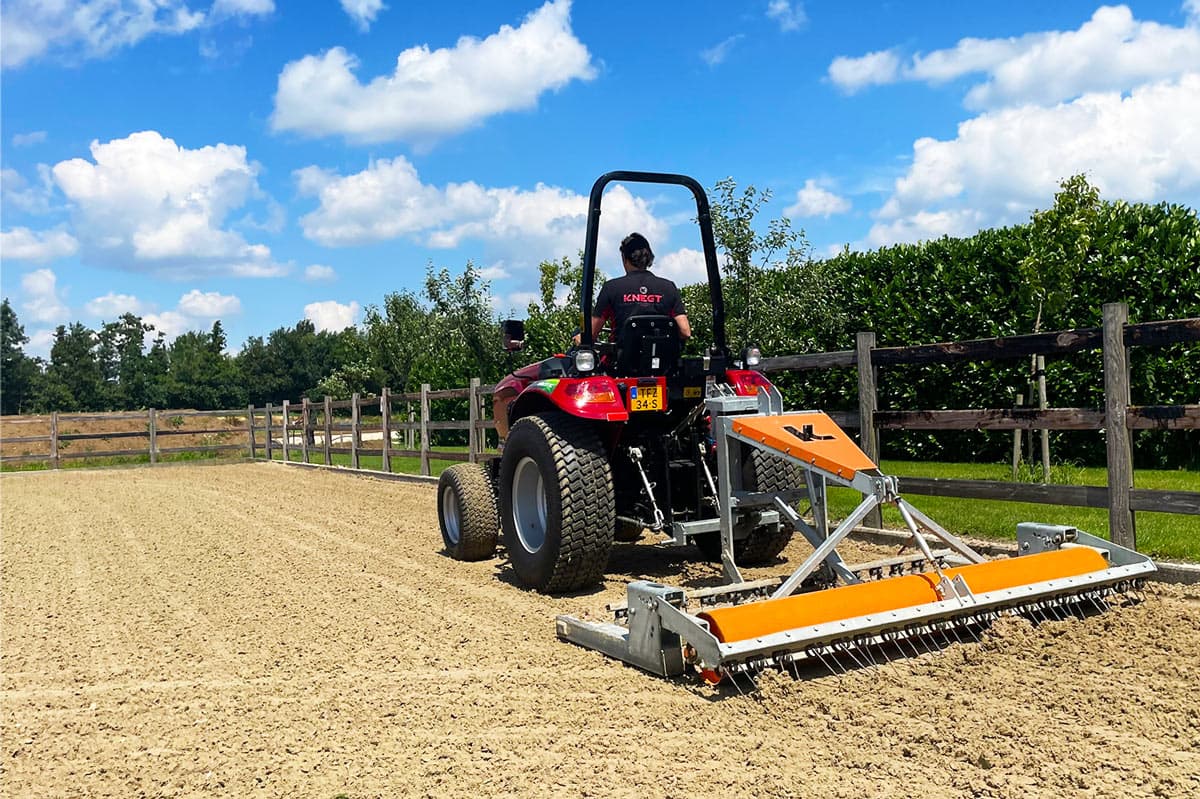
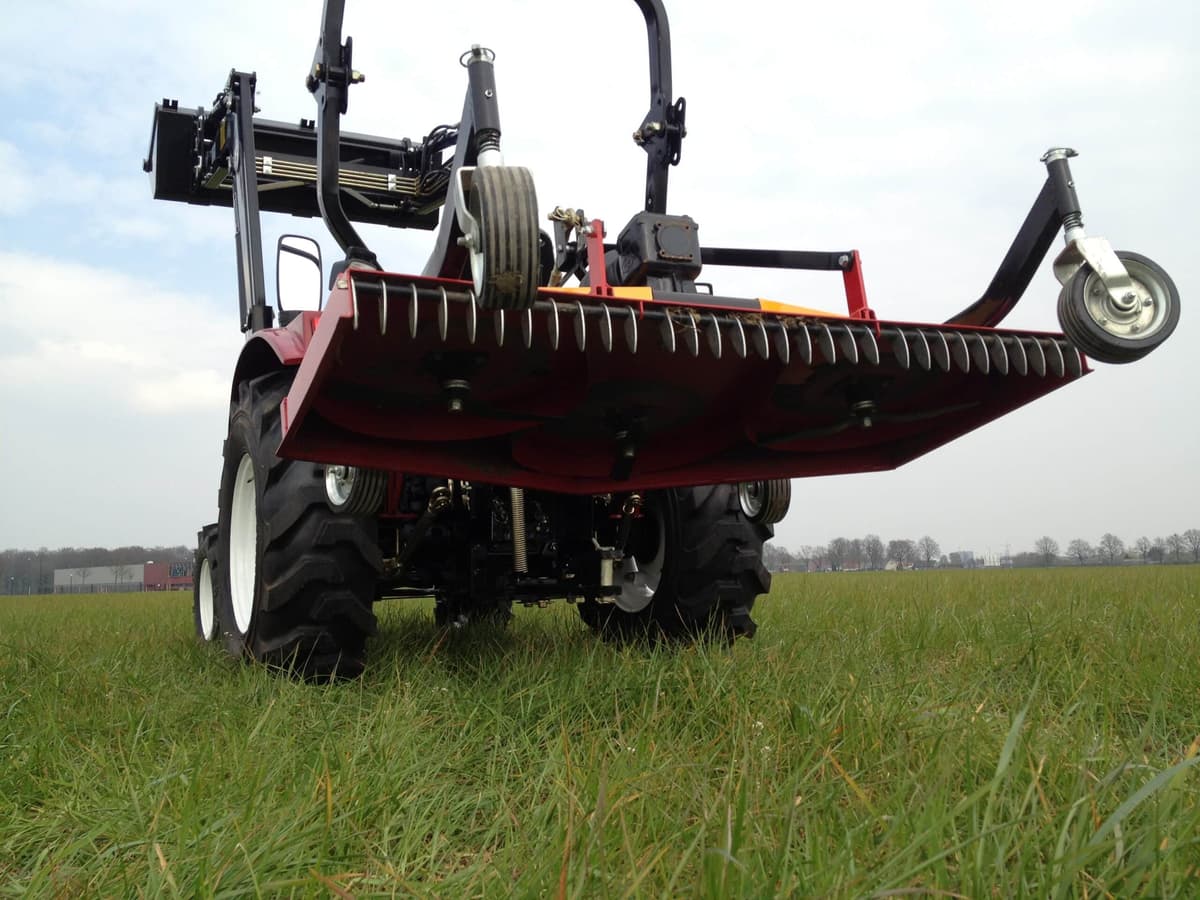
The three-point hitch, also called the three-point linkage, is the coupling system at the rear of a tractor that lets you attach, raise and lower implements. The implement hangs from three points: two lower links and one top link. The tractor's hydraulics move the lower links up and down.
Two figures decide whether an implement fits: the category, which sets the dimensions of the coupling points, and the lift capacity, which shows how much weight the hitch can raise. On the Knegt 404G2E electric compact tractor the lift capacity is 665 kg, and on the 504G3E it is 1,100 kg, measured 61 cm behind the ball ends.
How does a three-point hitch work?
The three-point hitch is an international standard. That is why implements from different manufacturers fit the same tractor, as long as the category matches. The hitch consists of these parts:
- Lower links: two arms with a ball end into which the implement's pins fit. They carry most of the weight.
- Top link: the adjustable upper connection. Its length sets the angle of the implement, so that a mower or rotary tiller, for example, works level.
- Lift rods: the connection between the lower links and the tractor's hydraulics. An adjustable lift rod lets you level the implement from side to side.
- Stabilisers: chains or bars that stop the implement from swaying sideways.
- Controls: a lever lowers or raises the implement, for example to turn at the end of a row or to drive on the road.
Implements that do rotating work, such as a flail mower, rotary tiller or wood chipper, are also driven by the PTO. The hitch carries the implement, the PTO makes it turn.
On Knegt electric tractors the hydraulics have their own 15 hp electric motor, separate from the drive motor. This keeps hydraulic power available for the hitch, even while you are driving.
Category 1 or 2: will your implement fit?
The three-point hitch is divided into categories. Among other things, the category sets the diameter of the pins on the lower links. For compact tractors these two matter most:
- Category 1: 22 mm pins for the lower links. Common on compact and smaller tractors.
- Category 2: 28 mm pins. Intended for heavier tractors and hitches.
If the implement's category does not match your tractor's, the pins will be loose or will not fit at all. Adapter bushes can help, but an implement in the same category as your hitch is the safest choice. You will find your tractor's category in the manual, or your dealer can tell you.
Lift capacity: what does the figure mean?
Lift capacity tells you how much weight the three-point hitch can raise. Where it is measured matters. Knegt states the lift capacity at 61 cm behind the ball ends of the lower links. The further back an implement's centre of gravity lies, the less the hitch can lift. A long or deep implement therefore demands more than its weight alone suggests.
- Knegt 404G2E: lift capacity 665 kg, measured 61 cm behind the ball ends.
- Knegt 504G3E: lift capacity 1,100 kg, measured 61 cm behind the ball ends.
- Both models have a PTO with 540 and 1,000 rpm.
You will find the specifications of the 304G2E and the diesel models on the models page, or you can ask your dealer.
How to check whether an implement suits your tractor:
- Look up the implement's weight, including any load, such as fertiliser in a spreader.
- Check how far the centre of gravity lies behind the lower links.
- Compare this with the tractor's lift capacity and keep a generous margin.
- Watch the front axle: a heavy rear implement makes the front light. Extra weight at the front keeps the tractor stable and steerable.
Attaching an implement in 5 steps
Hitching up is easiest on level, firm ground. Always work in this order:
- Step 1: lower the lower links and reverse straight back until the ball ends line up with the implement's pins.
- Step 2: attach one lower link, then the other, and secure both with the linch pins.
- Step 3: fit the top link and adjust its length so the implement sits at the right angle.
- Step 4: adjust the stabilisers so the implement cannot sway sideways.
- Step 5: connect the PTO shaft if needed, raise the implement and check that it hangs freely and touches nothing.
Make sure nobody stands between tractor and implement while you operate the hitch, only engage the PTO when everyone is at a safe distance, and lower the implement when you park the tractor.
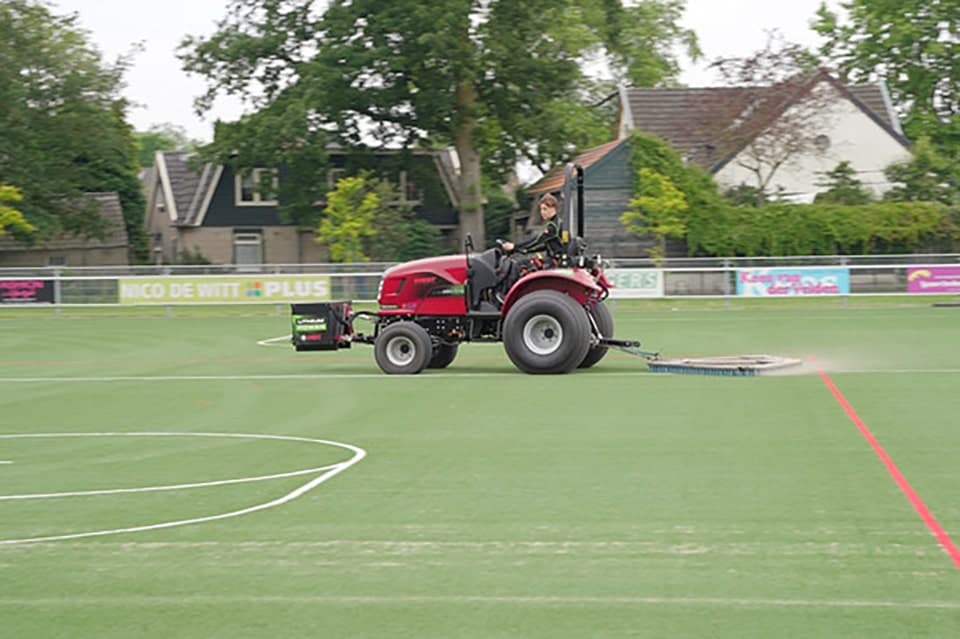
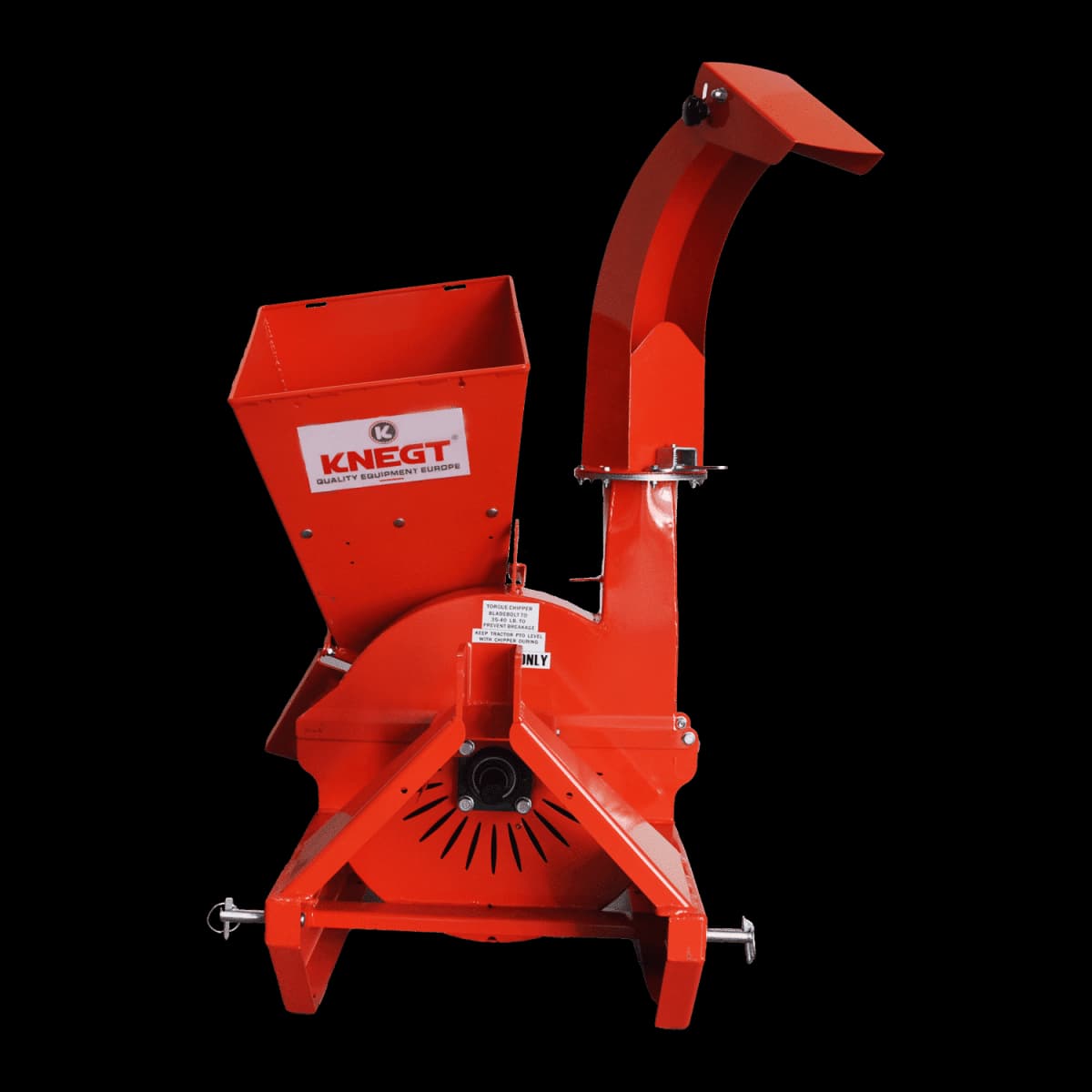
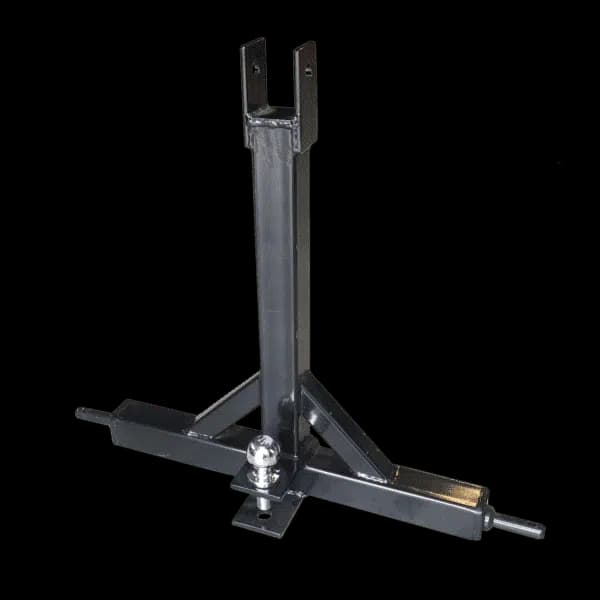
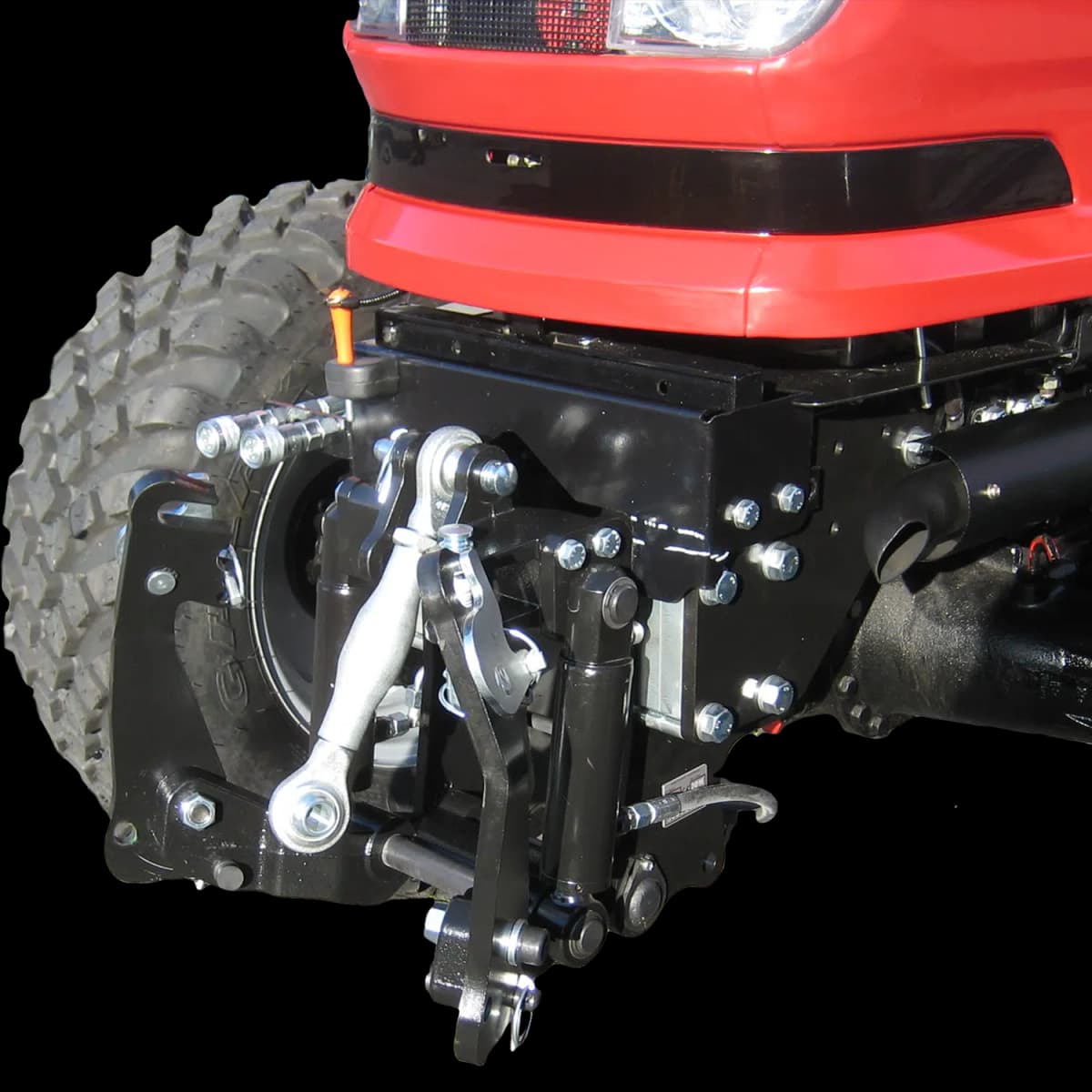
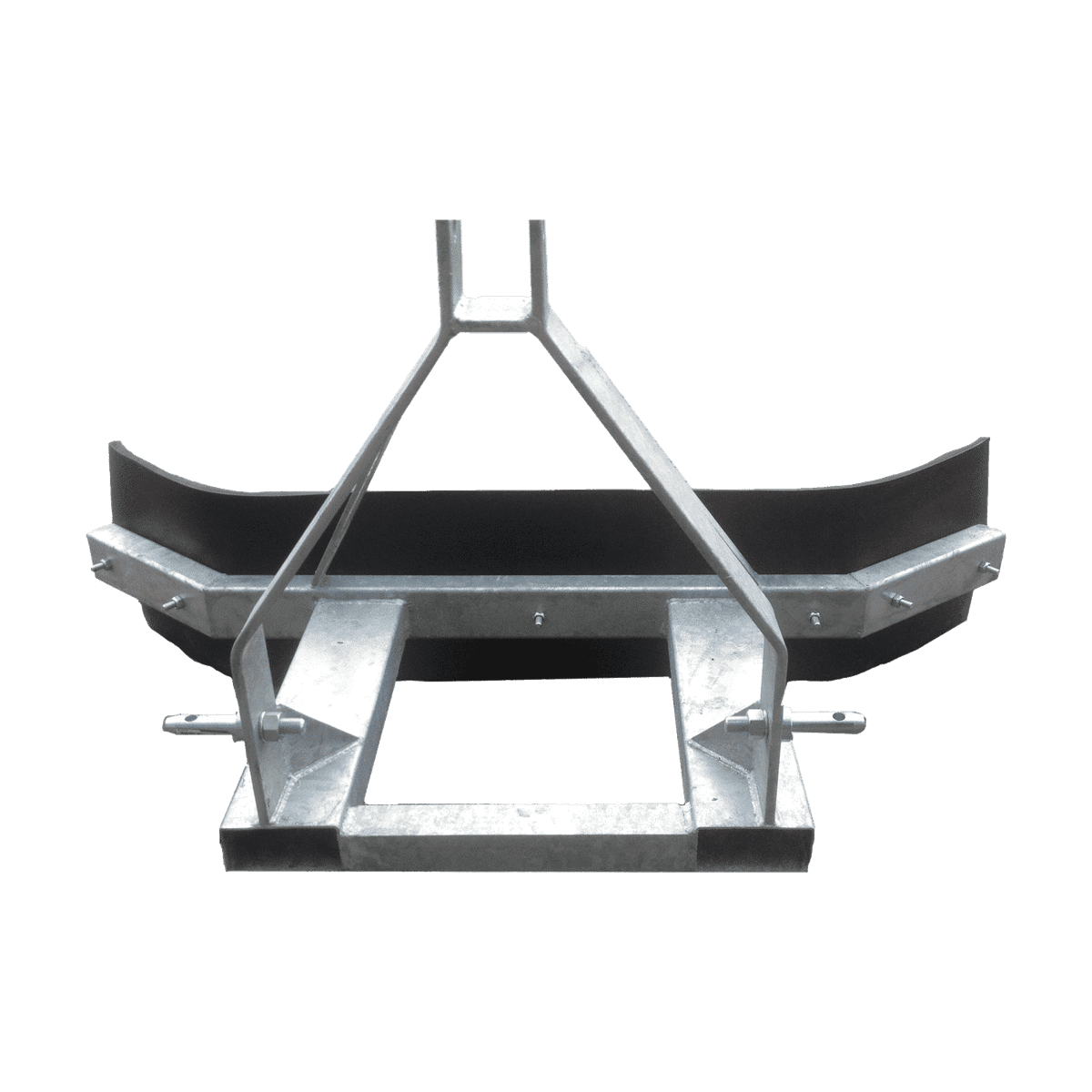
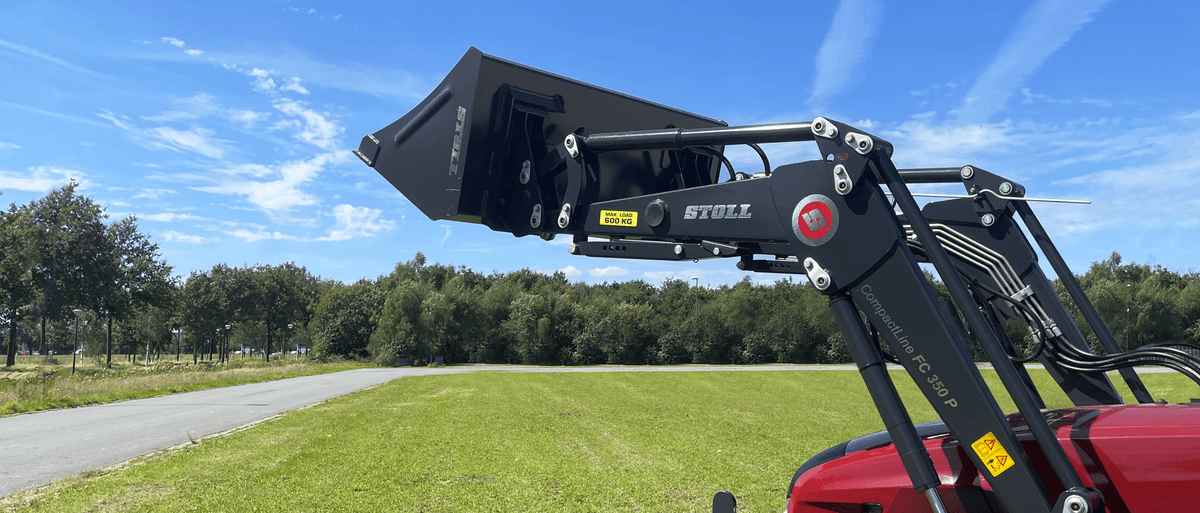
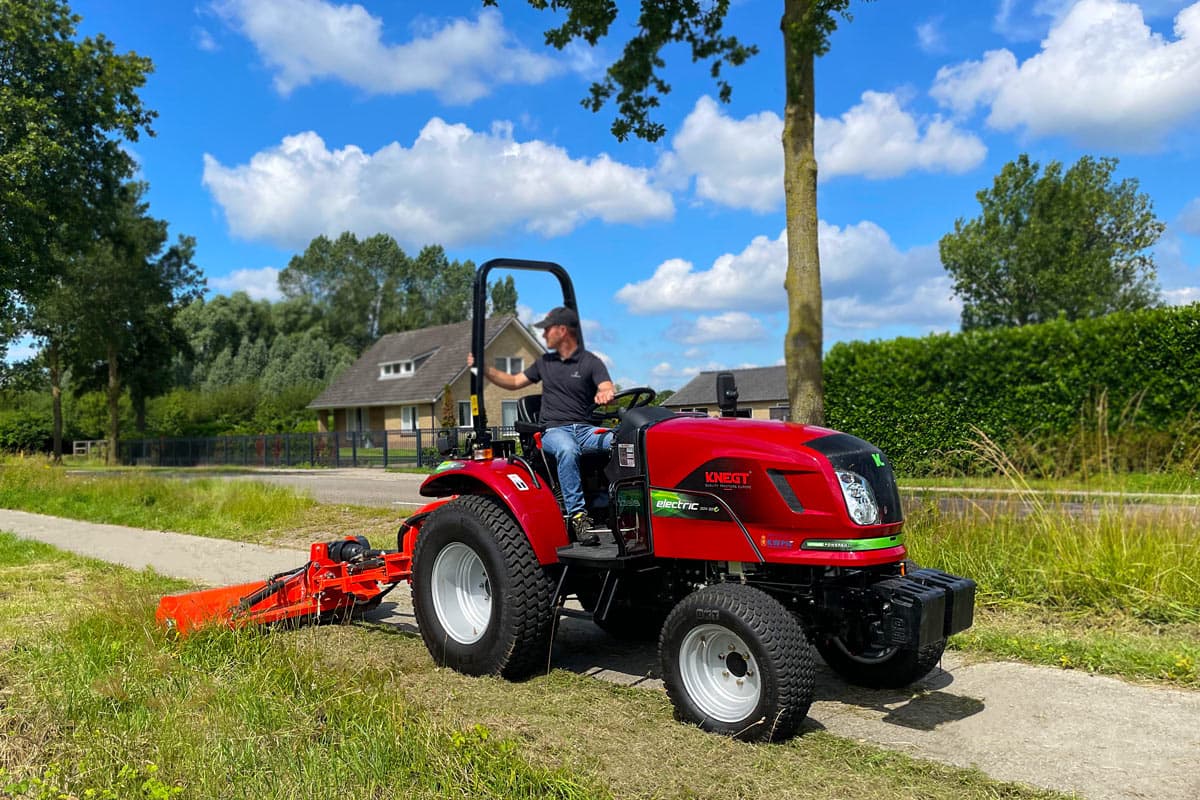
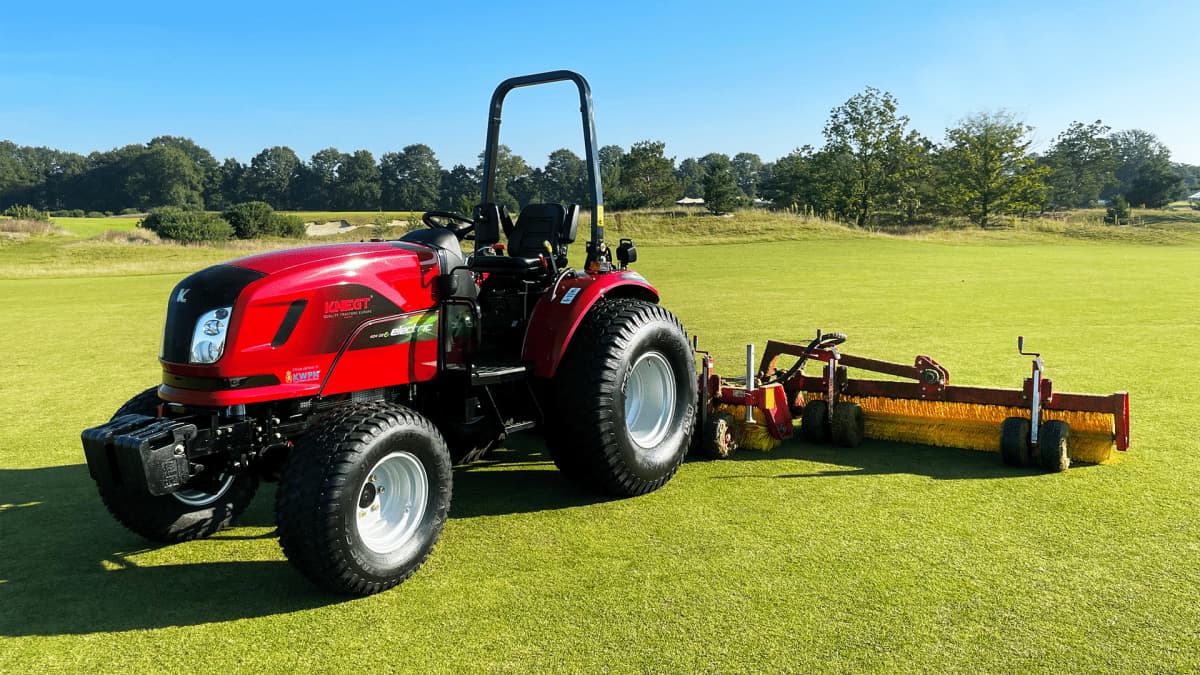
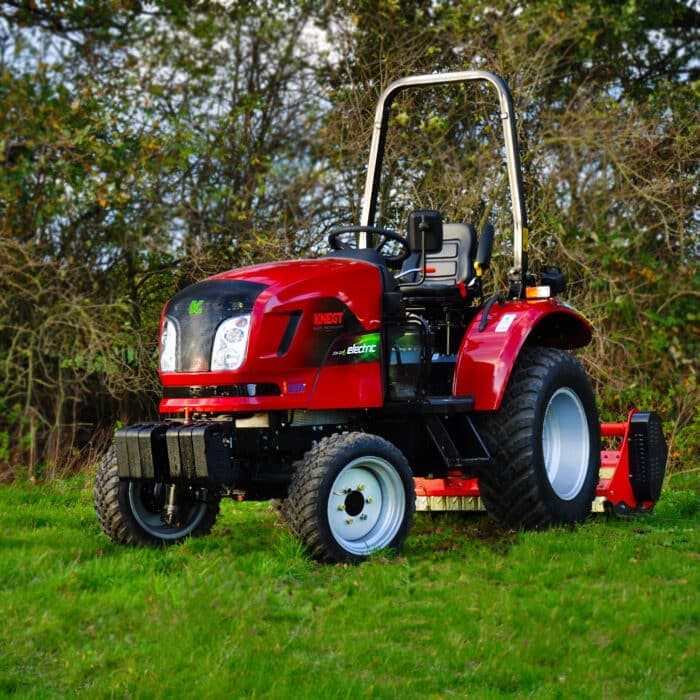
Knegt supplies a wide range of three-point implements, such as flail mowers, a reverse rotary tiller, a power harrow, a land leveller, a fertiliser spreader, a pallet carrier, a wood chipper and a three-point towing hitch. For the front there is a front linkage available as an accessory.
Frequently asked questions
What is the difference between a three-point hitch and a front linkage?
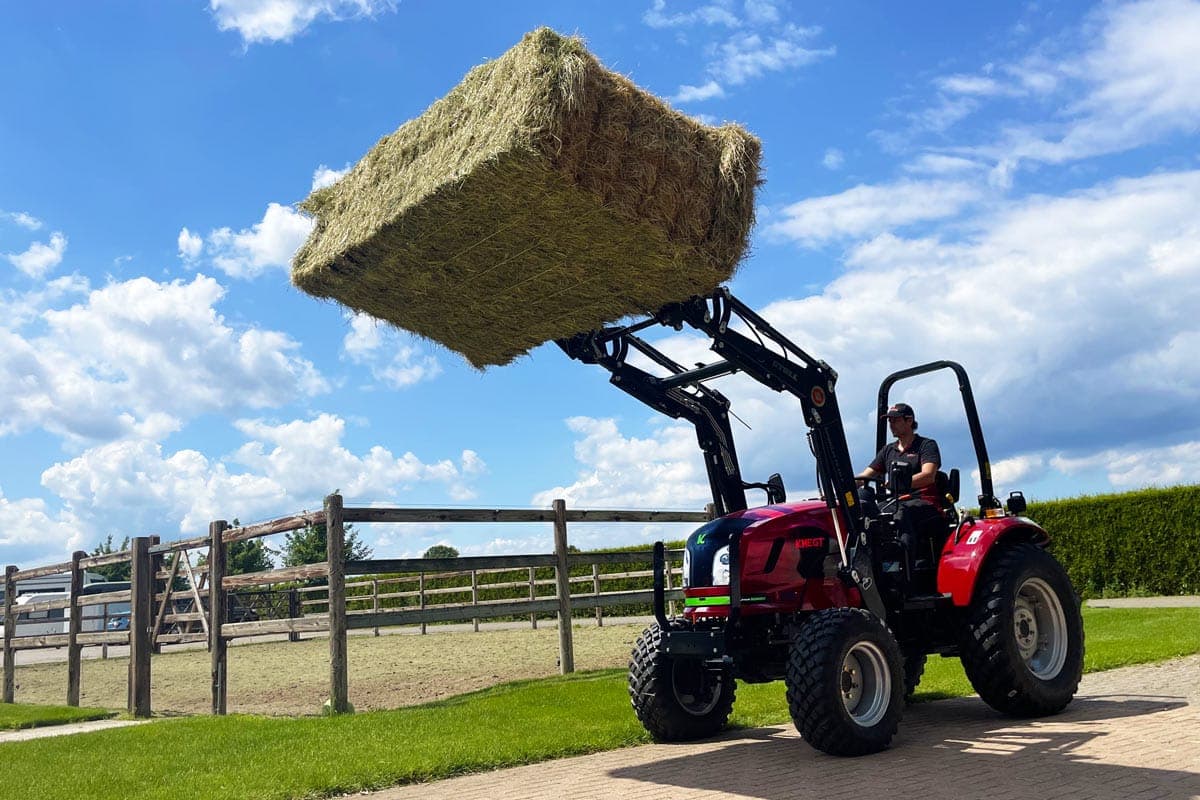
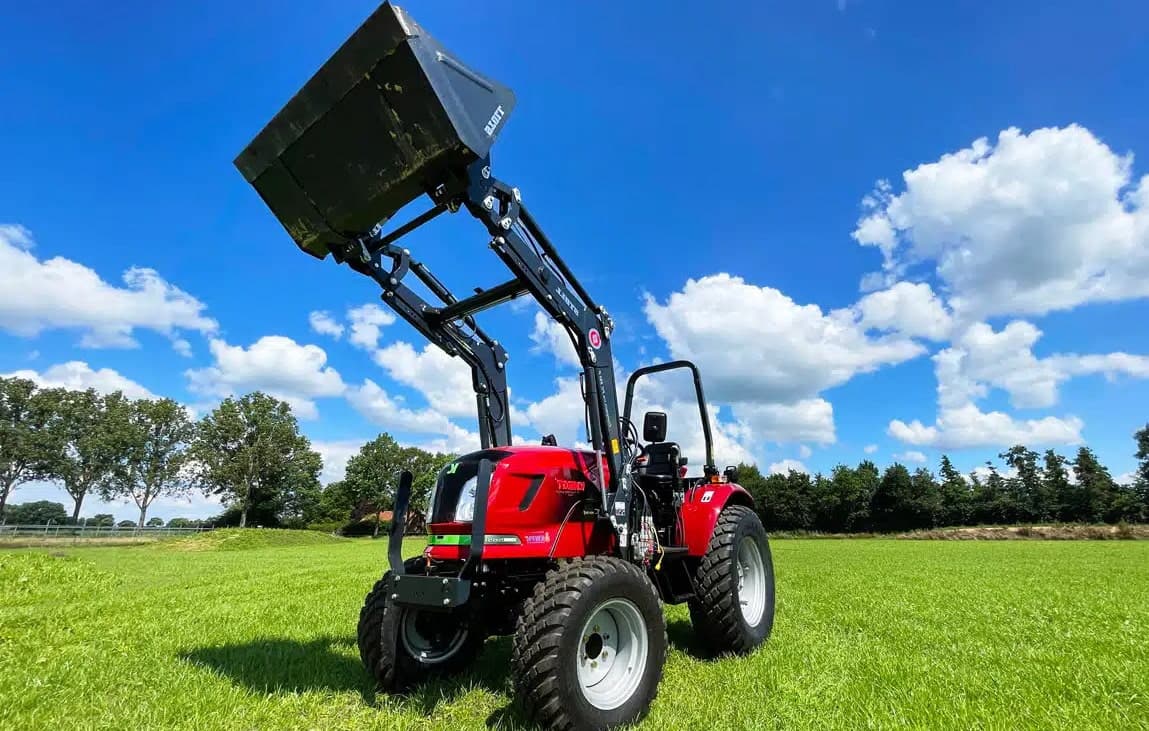
The three-point hitch sits at the rear of the tractor. A front linkage is a hitch at the front that lets you use an implement ahead of the tractor. Knegt supplies the front linkage as an accessory.
Does a Knegt electric tractor have a three-point hitch?
Yes. Knegt electric tractors come with a three-point hitch and PTO as standard, so they work with many existing implements.
How much can the three-point hitch of a compact tractor lift?
That varies per tractor and depends on the measuring point. On the Knegt 404G2E it is 665 kg and on the 504G3E 1,100 kg, measured 61 cm behind the ball ends.
What is the top link for?
The top link sets the angle of the implement. A top link that is too short or too long makes the implement work at a slant or not sit properly on the ground.
Advice on hitches and implements
Not sure whether an implement suits the three-point hitch of your tractor? Request an advice meeting or find a Knegt dealer near you. Together we look at category, lift capacity and PTO, so that tractor and implement match well.
Would you like to experience a Knegt electric compact tractor with an implement on the hitch for yourself? Request a free demo. For the price of an implement or tractor, simply request a quote.