KNEGT
Electric tractor in winter: cab, battery and snow
07/11/2026  | Peter

Electric tractor in winter: cab, battery and snow

The short answer

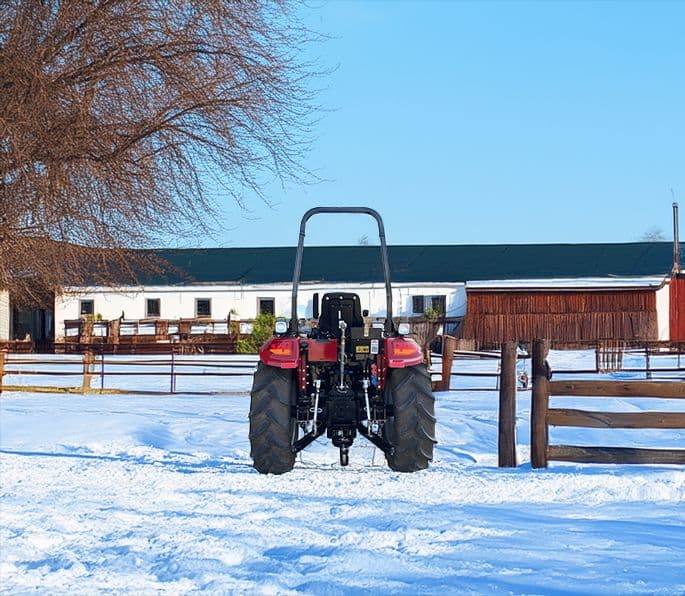
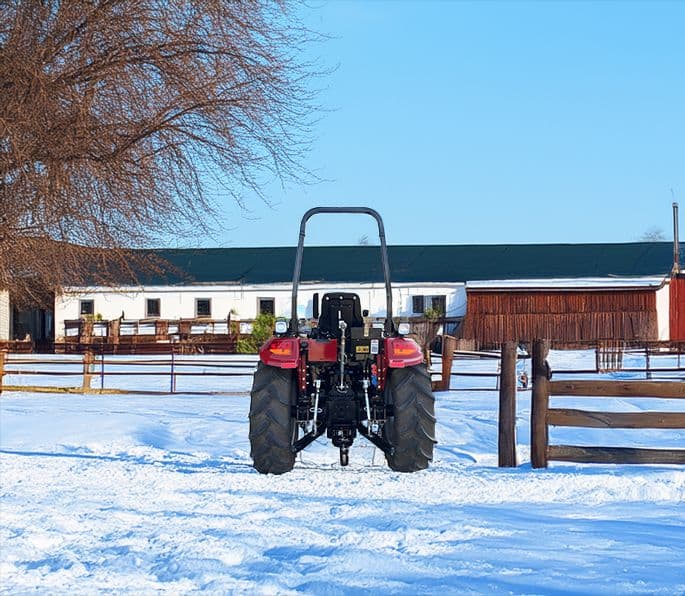
Yes, you can use an electric tractor all winter long: for clearing snow, sweeping, mucking out and transport around the yard. Winter does call for a little planning, though. In the cold, a lithium battery temporarily delivers less and charges more slowly, so it is best to store and charge the tractor indoors and to allow for somewhat less working time per charge.

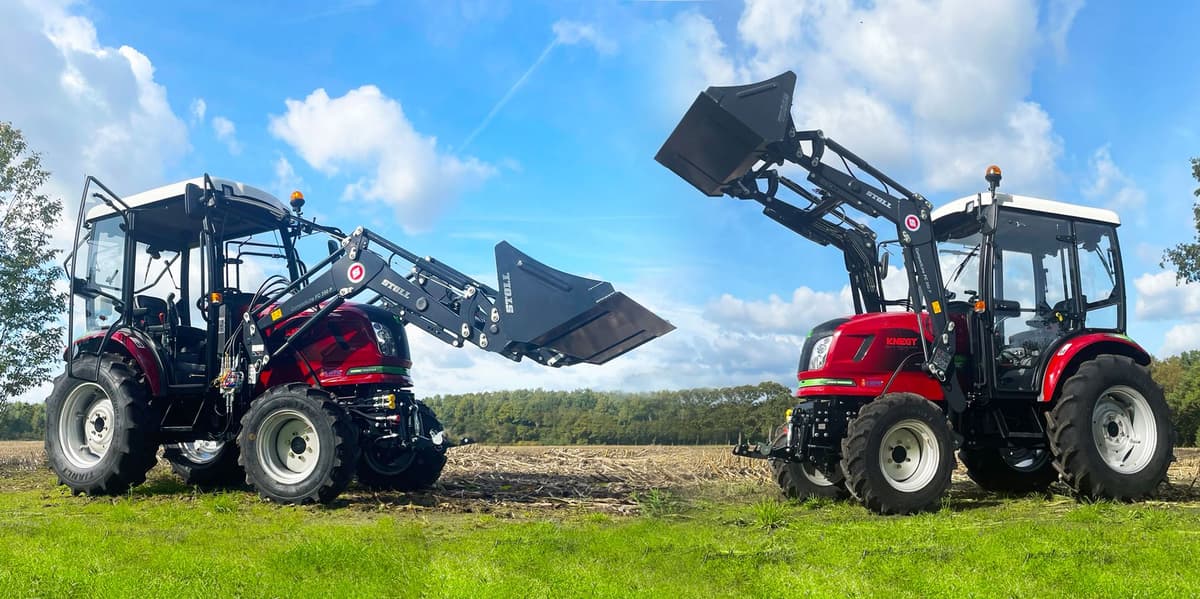
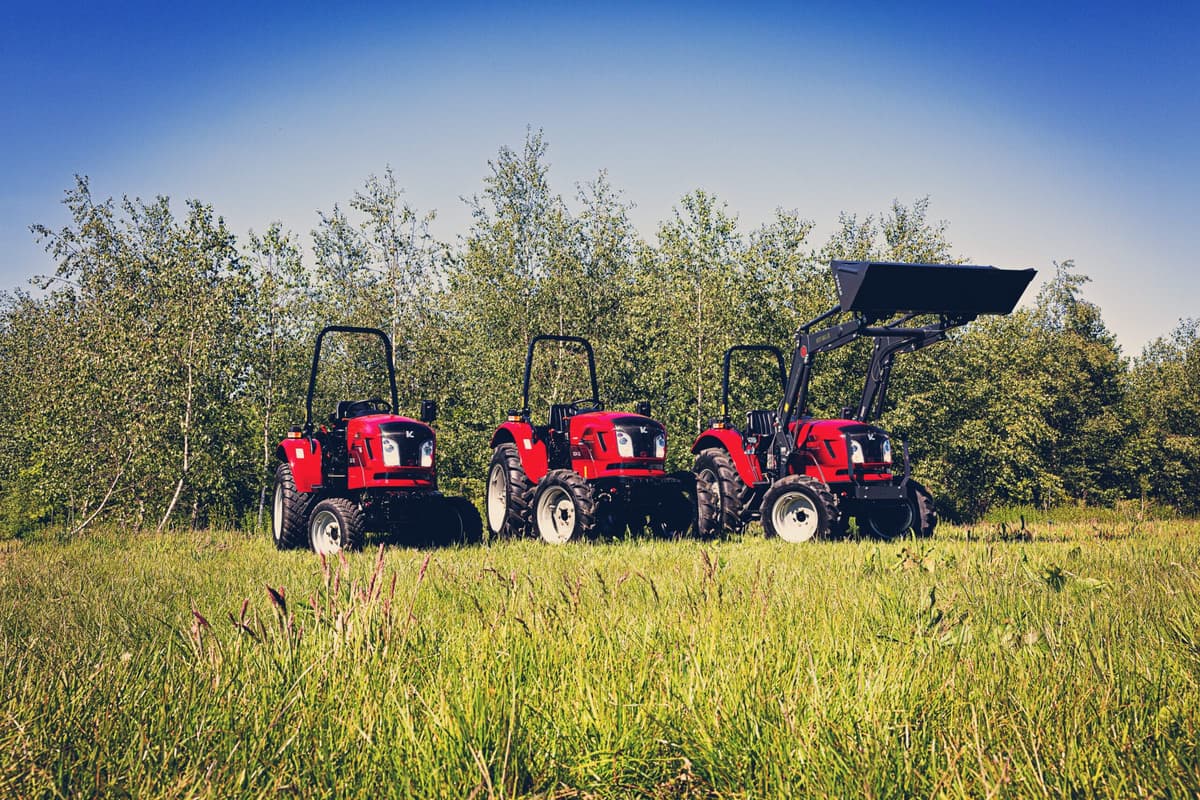
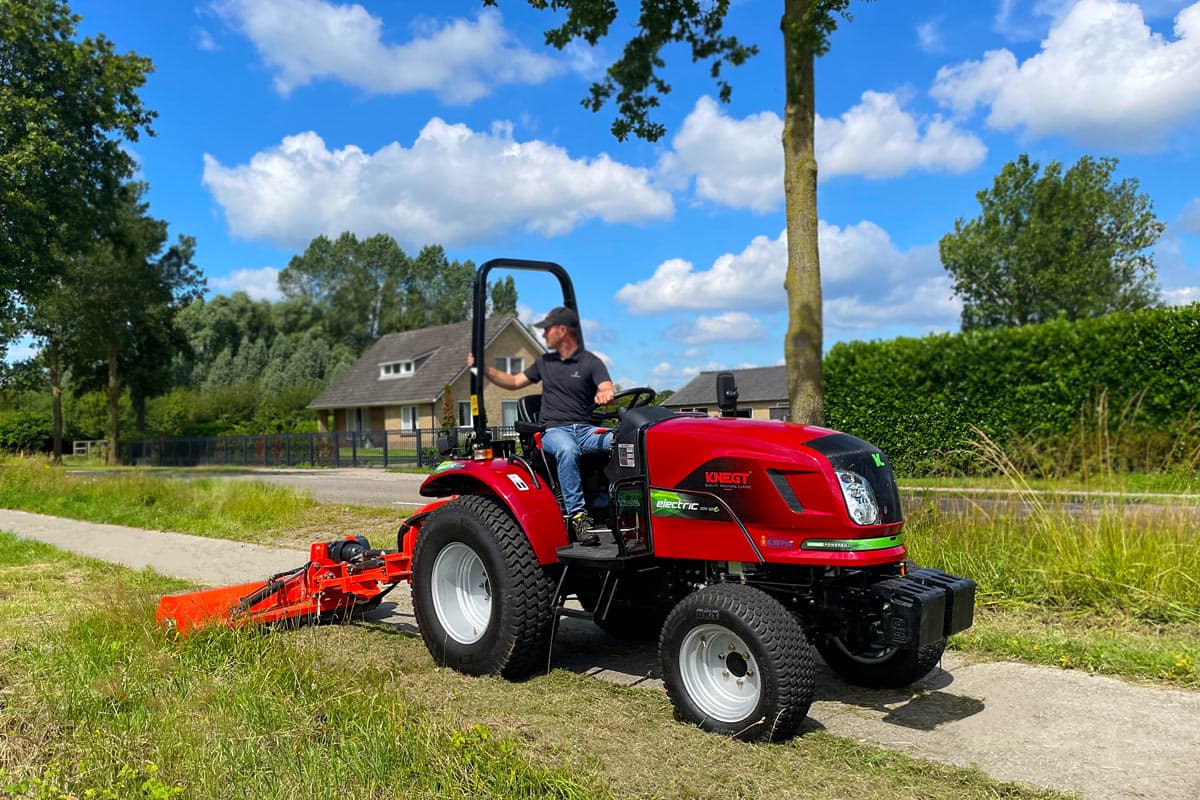
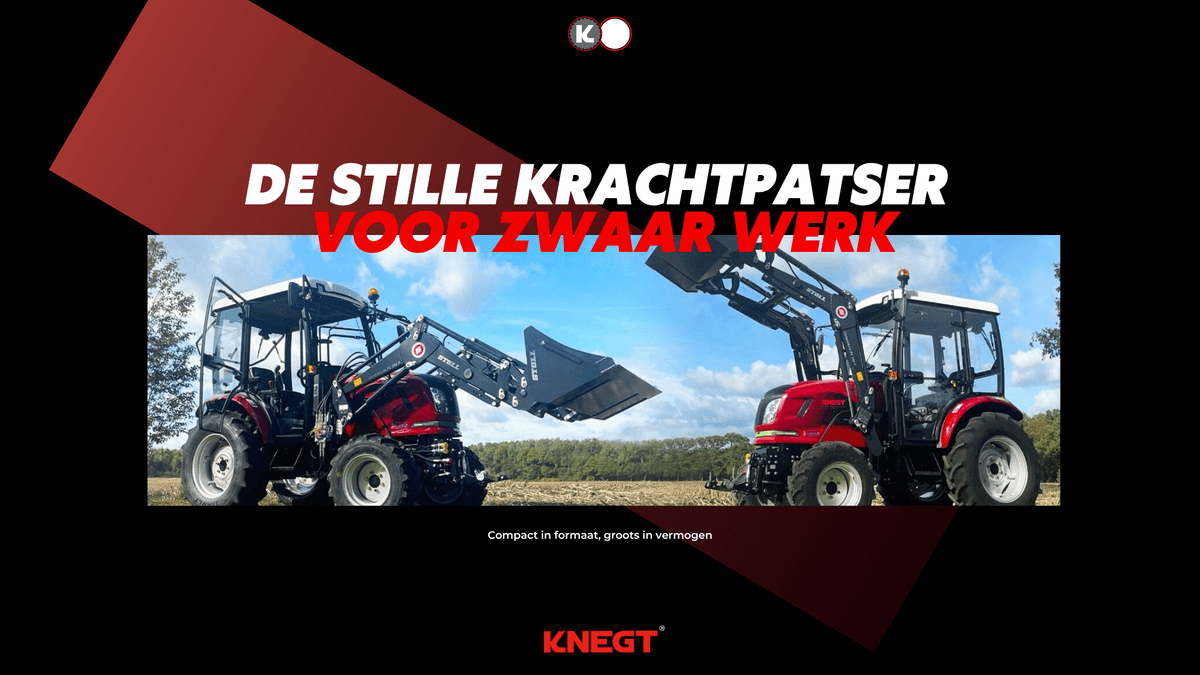
With a cab or half cab you work sheltered from wind, rain and cold. All electric Knegt models, the 304G2E, 404G2E and 504G3E, are available with a luxury cab and have four-wheel drive.

What does the cold do to the battery?

Electric Knegt tractors run on a lithium battery rated for 3,500 charge cycles. Like any lithium battery, it performs best at a moderate temperature. In freezing conditions two things happen:

  • The available capacity is temporarily lower, so you can work slightly less per charge than in spring or summer.
  • Charging takes longer when the battery is cold.

This is a property of lithium batteries in general and not a permanent loss: once the battery is back up to temperature, the capacity returns. How much working time you have in winter depends on the temperature, the intensity of the work and your choice of battery. On the electric models you choose between a 24 kWh and a 34 kWh battery, and an extra battery pack is available as an option.

The good news: winter work often consists of short jobs, such as clearing the paths of snow in the morning or mucking out the barn. Opportunity charging is possible, so you can top up the battery between two jobs.

Cab or half cab: working comfortably in cold and rain

If you work outdoors a lot in winter, you notice the difference between an open tractor and a tractor with a cab straight away. At Knegt you choose from four versions in the configurator: basic, with front loader, with cab, or cab plus front loader.

  • Luxury cab: fully sheltered from wind, rain, snow and cold. The best choice if you spend long hours on the tractor every day in autumn and winter.
  • Half cab: protects against rain and wind while partly keeping the open character of the tractor. Convenient if you often get on and off.
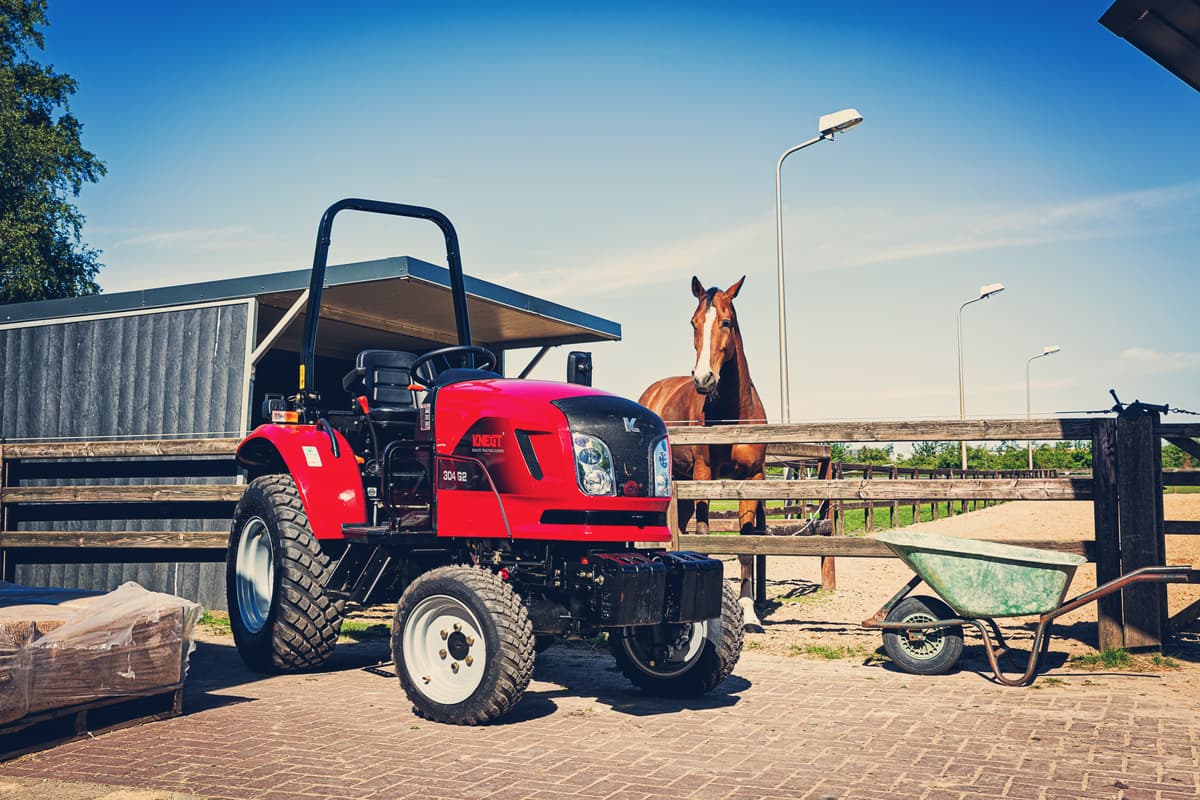
  • Open tractor: sufficient if you only do short jobs in winter and plan the heavy work for spring and summer.

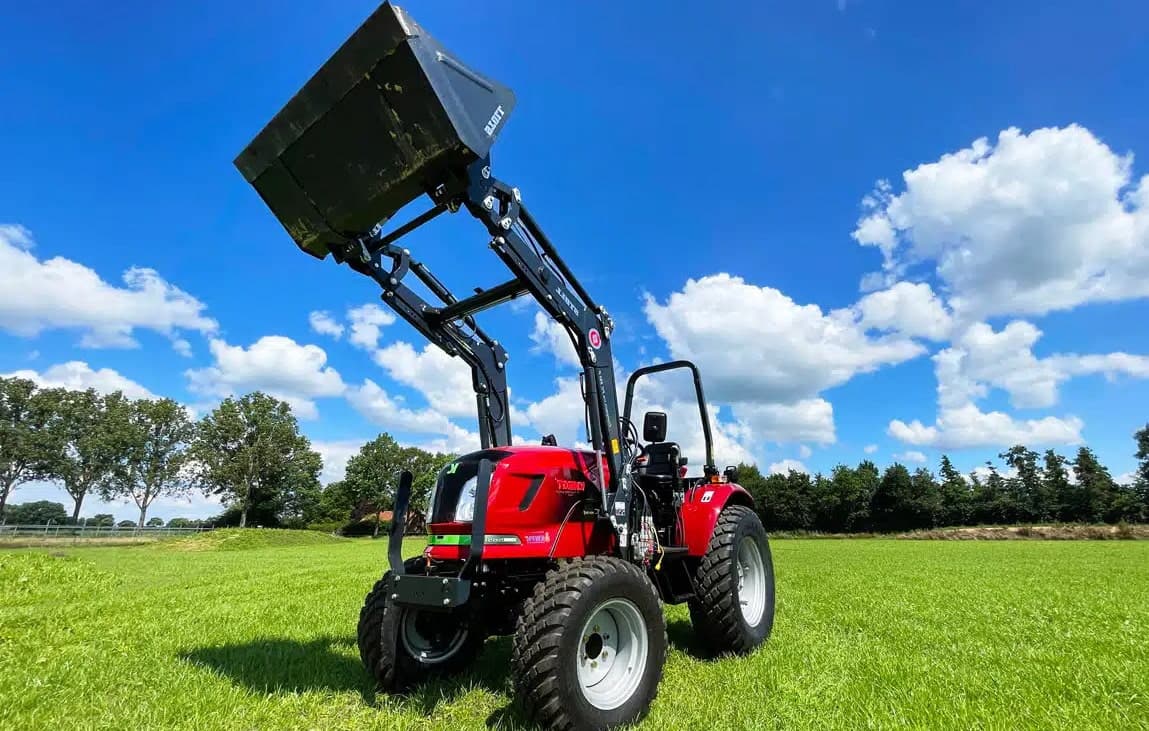
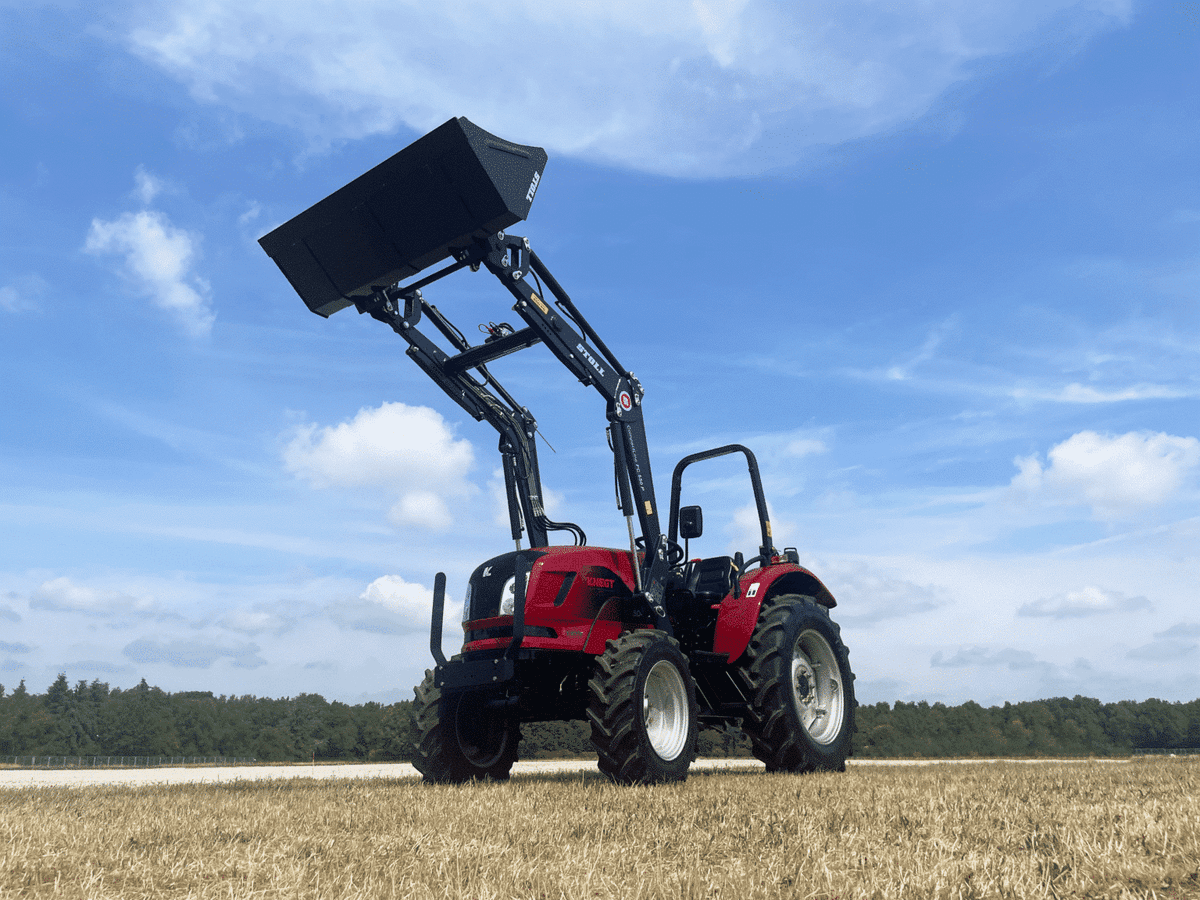
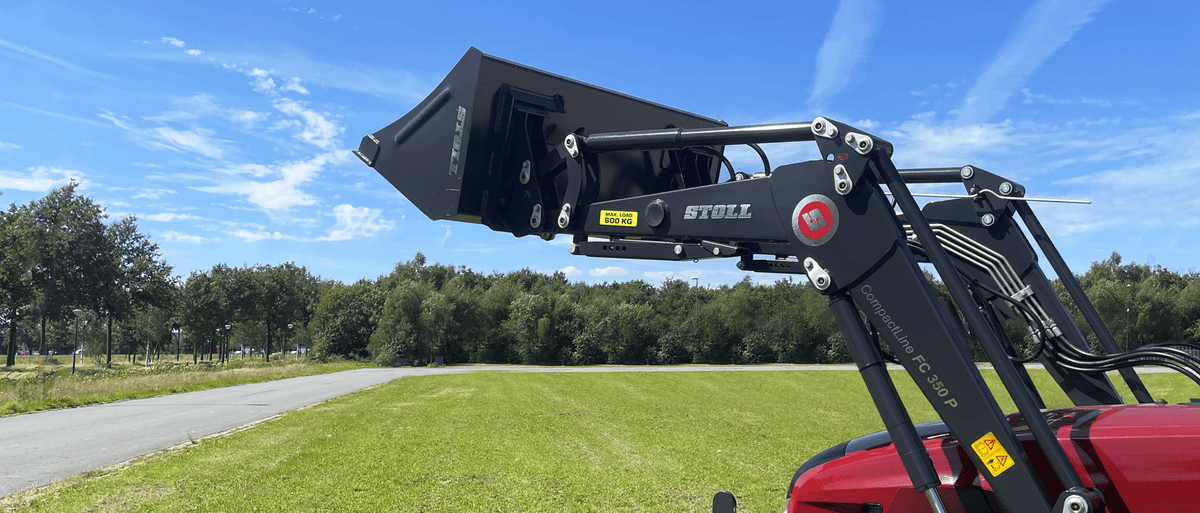
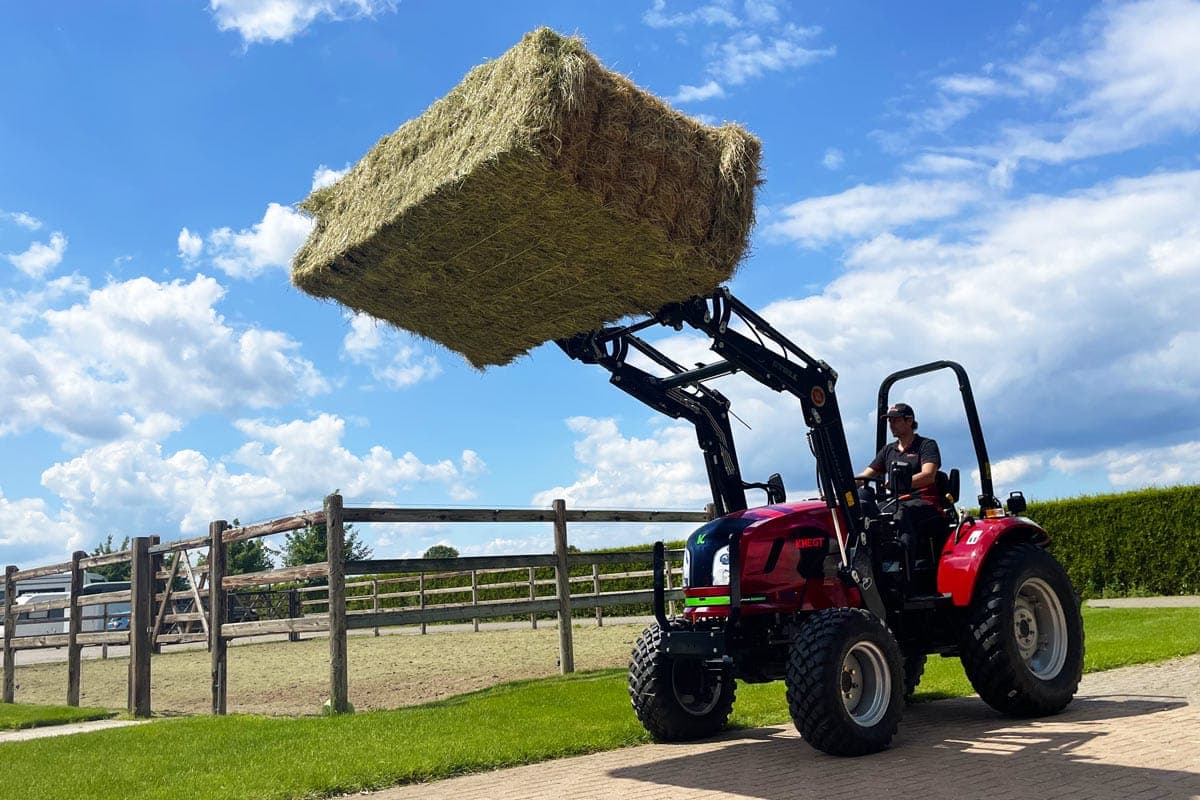
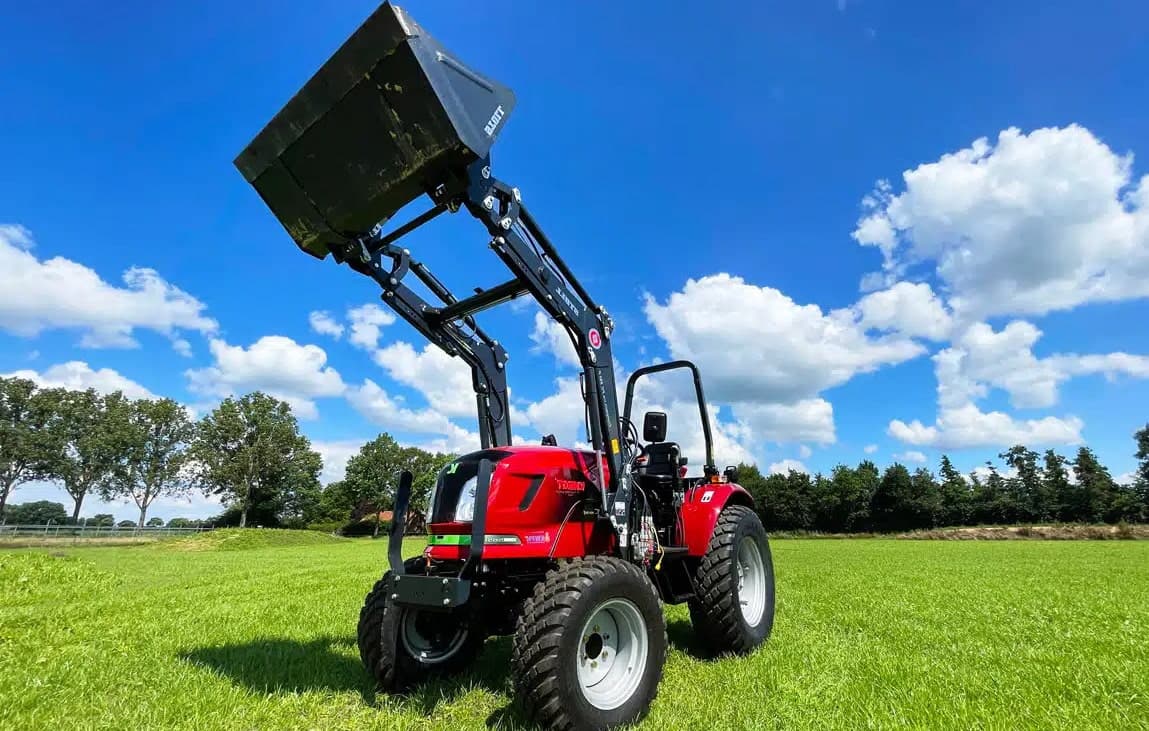
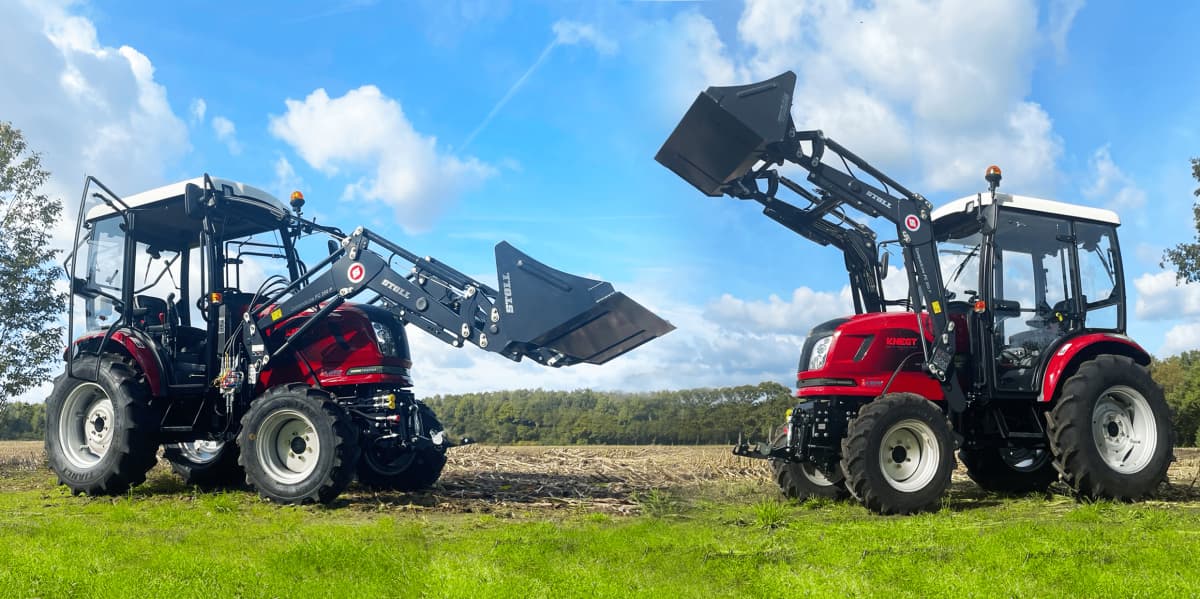
Combine the cab with a Stoll front loader and you can load snow, manure and materials in bad weather without standing out in the cold yourself. Knegt or your dealer can tell you which cab version is available for which model.

Clearing snow, sweeping and gritting with your tractor

In winter the work shifts from mowing to keeping things clean. With the right implements, a compact tractor does this quickly and thoroughly:

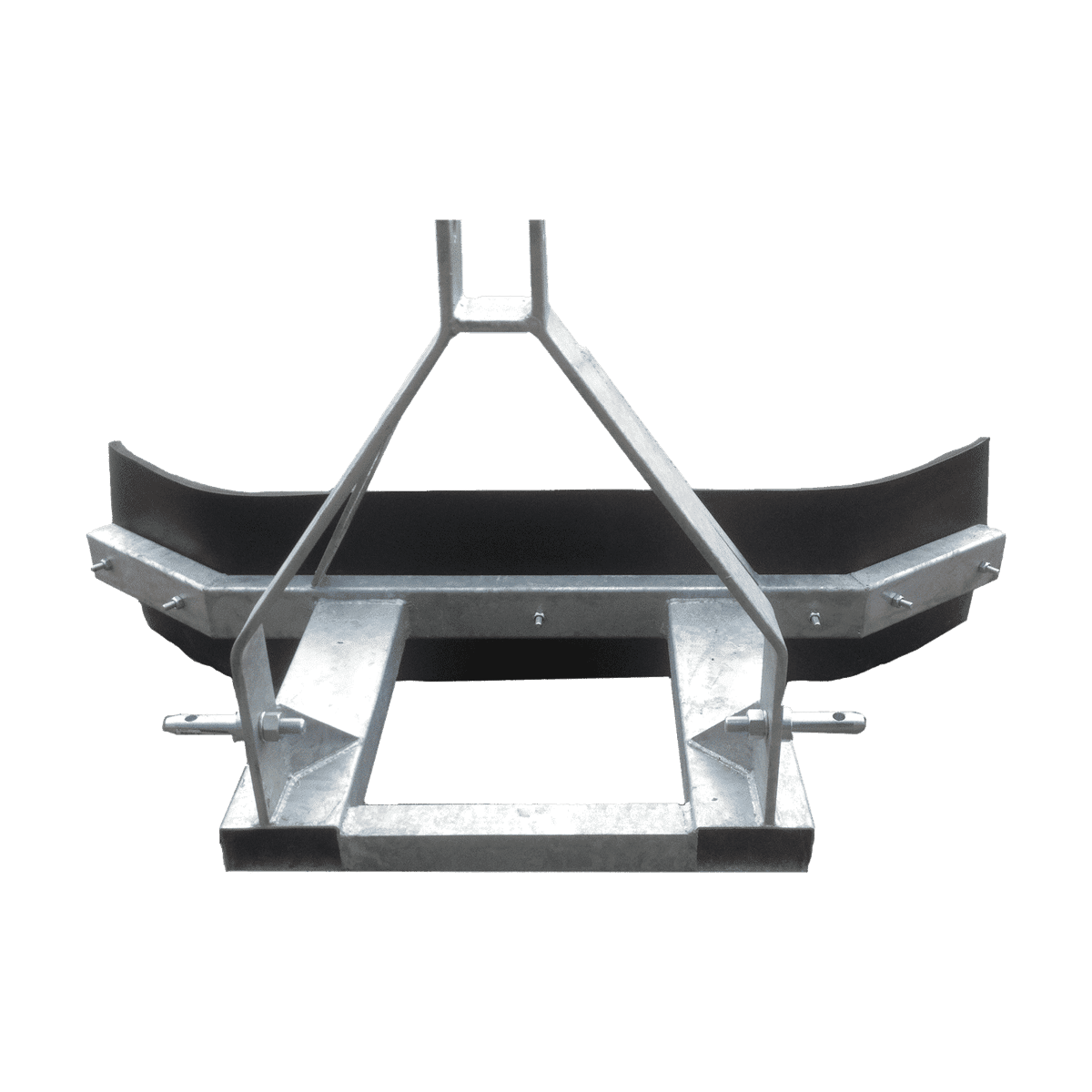
  • Clearing snow: a snow plough or a sturdy blade with a wear-resistant bottom edge keeps yards, access roads and car parks passable.
  • Sweeping: a sweeper clears paths, yards, barn aisles and car parks of leftover snow, leaves and mud.
  • Loading and removing: with the STOLL pelican bucket on the front loader you move loose snow, soil or manure to a fixed spot.
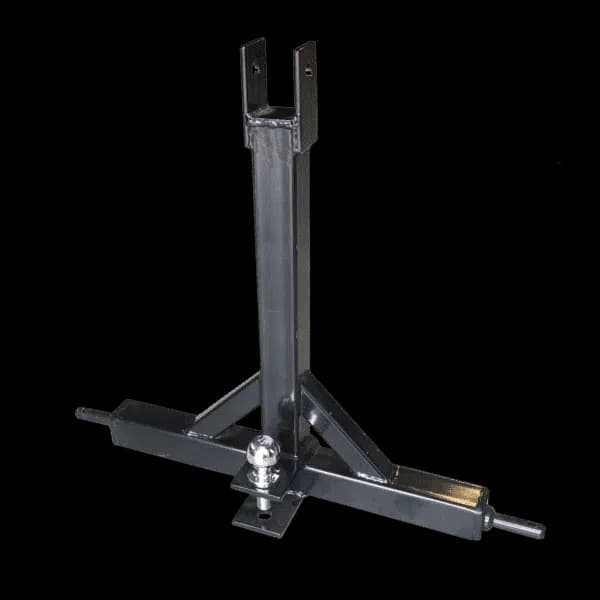
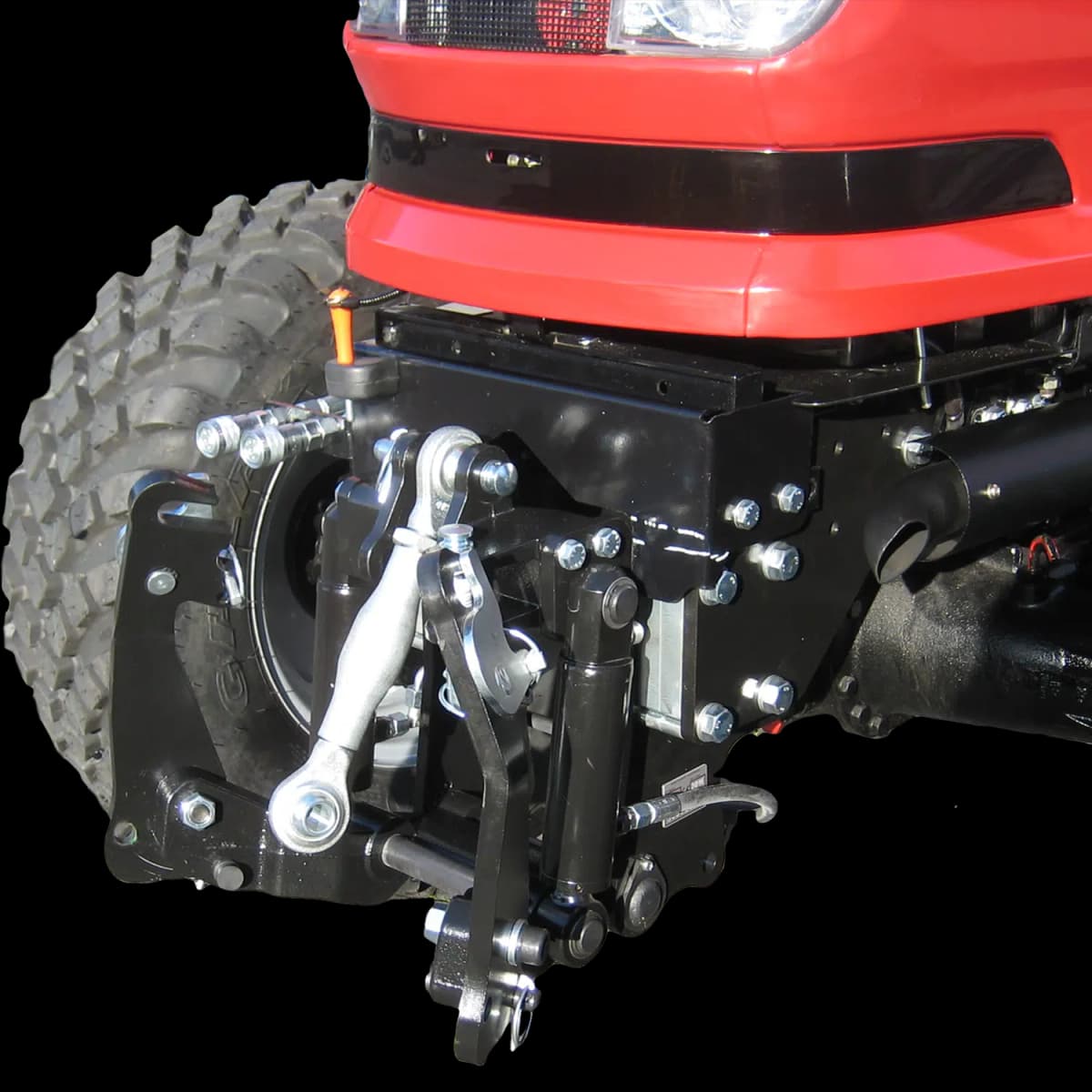
  • Working in front of the tractor: with the Zuidberg front linkage you hitch an implement in front of the tractor, handy for sweeping and clearing snow while driving forward with a clear view.
  • Gritting: ask your dealer which spreader suits your paths and grounds.

Four-wheel drive and power steering help on slippery and snowy surfaces. Because the electric Knegt tractors are CE-approved and road-legal in Europe, you can also keep access roads and paths along public roads clear.

One advantage of electric in winter: there is no combustion engine that needs to warm up and no exhaust fumes. So you can drive straight into the barn, shed or warehouse, and work early in the morning without engine noise disturbing animals or neighbours.

Getting your electric tractor ready for winter in 5 steps

A few fixed habits help you get the most out of your battery and tractor in winter:

  • Step 1, store and charge indoors: keep the tractor in a sheltered, preferably frost-free space. A warm battery delivers more and charges faster.
  • Step 2, charge right after use: plug the tractor in straight after work, while the battery is still warm. On 230V a full charge takes 8 to 10 hours; with a fast charger the battery goes from 30 to 80 percent in about 2.5 hours.
  • Step 3, plan short blocks: spread winter work over short sessions and top up in between. If you work long winter days, consider the larger battery or an extra battery pack.
  • Step 4, use a trickle charger when idle: if the tractor stands still for a long time, keep the battery topped up, as Knegt recommends in its maintenance tips.
  • Step 5, have servicing done on time: Knegt recommends a service every 350 hours or once a year. Autumn is a logical moment to have tyres, lights, hydraulics and implements checked.

Frequently asked questions

Can an electric tractor handle frost?

Yes. Electric tractors can be used in most weather conditions, including the cold. In frost the battery temporarily delivers less capacity and charges more slowly, which is why it is best to store and charge it indoors.

How much shorter is the working time in winter?

That depends on the temperature, the intensity of the work and the battery you choose. There is no fixed figure. Opportunity charging, the larger battery or an extra battery pack make up the difference.

Do I need a cab for winter work?

Not necessarily. For short jobs an open tractor or a half cab is enough. If you spend long hours on the tractor every day in winter, a luxury cab offers the most comfort.

Can I clear snow on public roads with a Knegt tractor?

The electric Knegt tractors are CE-approved and road-legal in Europe. Clearing public roads is often subject to arrangements with the road authority, so check this in advance.

Get your tractor winter-ready with expert advice

Would you like to know which model, battery and cab suit your winter work? Request a free demo and see the tractor at work on your own site, or book an advice session. You can also request a quote or find a Knegt dealer near you.
Bekijk elektrische modellenBekijk dieselmodellen

Keep Reading

Electric mini tractor for small acreage and hobby farms

Electric mini tractor for small acreage and hobby farms

An electric mini tractor for your paddock, hobby farm or yard? What it does, why electric suits small plots and how to choose the right model in 5 steps.

Read More
Electric tractor or compact tractor: what's the difference?

Electric tractor or compact tractor: what's the difference?

Electric tractor, electric compact tractor or electric tug: what do the terms mean, what makes a tractor electric and which models are available?

Read More
Fully electric tractor: what does 100% electric mean?

Fully electric tractor: what does 100% electric mean?

What makes a tractor fully electric? The difference from hybrid and diesel, how to recognise a 100% electric compact tractor and what it means in daily use.

Read More
Three-point hitch explained: how it works and lift capacity

Three-point hitch explained: how it works and lift capacity

How does the three-point hitch on a compact tractor work? Learn what lower links, top link, category and lift capacity mean, and how to attach an implement.

Read More
Electric tractor leasing or financing: how it works

Electric tractor leasing or financing: how it works

Lease, finance or buy an electric compact tractor? See which options exist, what they mean for Dutch tax relief and what to compare before you decide.

Read More
Electric tractor in horticulture: tasks and choice

Electric tractor in horticulture: tasks and choice

An electric compact tractor in horticulture: which jobs it does in greenhouses, open fields and tree nurseries, which implements fit and how to choose a model.

Read More
How does an electric tractor work? Drive and battery

How does an electric tractor work? Drive and battery

How does an electric compact tractor work? Learn how electric motors, battery, hydraulics and charging work together, and what it means for your work.

Read More
Electric tractor for sports fields and golf courses

Electric tractor for sports fields and golf courses

An electric compact tractor for sports fields and golf courses: quiet mowing and maintenance during training, with zero emissions. Tasks and choices explained.

Read More
Tractor wood chipper: how to choose the right one

Tractor wood chipper: how to choose the right one

Choosing a PTO wood chipper for your tractor? Check infeed diameter, feeding, PTO, power and weight. Including the specifications of the Knegt HV5m.

Read More
Electric tractor in agriculture: where does it fit?

Electric tractor in agriculture: where does it fit?

Where does an electric tractor fit in agriculture? See which farmyard, barn and pasture jobs an electric compact tractor handles and how to choose one.

Read More
Buying a diesel compact tractor: 304G2, 404GT or 504GT?

Buying a diesel compact tractor: 304G2, 404GT or 504GT?

Buying a diesel compact tractor? Compare the Knegt 304G2, 404GT and 504GT on power, price and use, and find out when diesel or electric is the better fit.

Read More
Charging an electric tractor: wall socket or fast charger?

Charging an electric tractor: wall socket or fast charger?

Charge an electric compact tractor from a standard 230V socket or a fast charger. See how long charging takes and how to keep working a full day.

Read More
Electric tractor with front loader: what can it do?

Electric tractor with front loader: what can it do?

An electric compact tractor with a front loader lifts, loads and moves materials quietly and emission-free. See what it can do and how to choose the right one.

Read More
3-point hitch tow bar: choosing Cat 1 or Cat 2

3-point hitch tow bar: choosing Cat 1 or Cat 2

A 3-point hitch tow bar turns your rear linkage into a height-adjustable towing point for trailers. Learn how it works and how to choose Cat 1 or Cat 2.

Read More
Electric implement carrier: one tractor, many implements

Electric implement carrier: one tractor, many implements

What is an implement carrier and why is an electric compact tractor so well suited to the job? See which implements you can attach and how to pick a model.

Read More
Front linkage on a compact tractor: when is it useful?

Front linkage on a compact tractor: when is it useful?

A front linkage lets you mount implements on the front of your compact tractor. Learn how it works, when it pays off and what to check before you choose.

Read More
Manure scraper for your tractor: how to choose and use one

Manure scraper for your tractor: how to choose and use one

A manure scraper on your compact tractor keeps paddocks, runs and yards clean in no time. Learn which types exist, how to choose one and how to work with it.

Read More
Pallet forks for your tractor: uses and buying tips

Pallet forks for your tractor: uses and buying tips

Pallet forks on the front loader turn your compact tractor into a rough-terrain forklift. Learn what they are for, how to choose them and how to work safely.

Read More
Choosing a flail mower: which one fits your tractor?

Choosing a flail mower: which one fits your tractor?

Which flail mower suits your compact tractor? Compare standard, sideshift and offset models on working width, power and hitch, and pick the right Knegt mower.

Read More
Turf tyres or tractor tyres: which suits your tractor?

Turf tyres or tractor tyres: which suits your tractor?

Turf tyres or agricultural tyres on your compact tractor? Find out when turf tyres are the best choice, which types Knegt offers and how to choose.

Read More
Electric tractor price: what does an e-tractor cost?

Electric tractor price: what does an e-tractor cost?

What does an electric tractor cost? See the starting prices of the Knegt 304G2E, 404G2E and 504G3E, what drives the price and how to compare total costs.

Read More
Small electric tractor: what can a compact e-tractor do?

Small electric tractor: what can a compact e-tractor do?

An electric compact tractor is small, quiet and emission-free, yet a real tractor. See where it fits, what it can do and which Knegt model suits your work.

Read More
Pasture topper cutting height: how to set it right

Pasture topper cutting height: how to set it right

How do you set the cutting height of a pasture topper? Learn why topping works, how to adjust it step by step and which Knegt pasture topper suits you.
Read More
Do electric tractors exist? What they can do today

Do electric tractors exist? What they can do today

Yes, electric tractors exist and you can buy one today. Learn what an electric compact tractor can do, where its limits are and how it compares with diesel.
Read More
Buying an electric tractor: what to look for

Buying an electric tractor: what to look for

Buying an electric compact tractor? Compare power, run time, charging, lift capacity, dimensions and total cost, and find out which Knegt suits your work.

Read More
The battery myth debunked: uninterrupted work in greenhouses and fields with Knegt e-tractors

The battery myth debunked: uninterrupted work in greenhouses and fields with Knegt e-tractors

In intensive cultivation and growing operations, planning and precision are critical. Many growers fear downtime when switching to electric machinery. This article explains how Knegt supports greenhouse and cultivation workflows with predictable operating time, zero idle losses and smart charging strategies.

Read More
Reliable in cultivation: less maintenance, more productive time

Reliable in cultivation: less maintenance, more productive time

Unexpected downtime can disrupt your cultivation schedule. This article explains why the simplicity of electric technology results in minimal wear, predictable service costs and maximum uptime — especially in humid and dusty greenhouse environments.

Read More
Emission-free and precise: the power of torque for growers and cultivators

Emission-free and precise: the power of torque for growers and cultivators

In cultivation, success depends on maneuverability, control and emission-free operation in (semi-)enclosed spaces. This article explains why Knegt’s direct electric torque delivers stable pulling power at crawling speed, superior precision in cultivation work and a healthier greenhouse environment without emissions.

Read More
Smart charging on the nursery: your own power, no more refuelling

Smart charging on the nursery: your own power, no more refuelling

Concerns about charging infrastructure are often linked to the desire for full self-sufficiency. Discover how Knegt offers a simple, flexible charging solution that integrates seamlessly with solar panels and existing power supplies — without fuel storage or permits.

Read More
The true costs in horticulture: why Knegt electric TCO increases your return

The true costs in horticulture: why Knegt electric TCO increases your return

The initial purchase price of electric machinery is often higher, but in intensive horticultural operations the TCO advantage quickly becomes clear. Discover how Knegt reduces energy and maintenance costs, benefits from subsidy schemes and retains a higher residual value thanks to future-proof technology.

Read More
Why 2026 is the perfect moment to switch to an electric Knegt tractor

Why 2026 is the perfect moment to switch to an electric Knegt tractor

The year 2026 marks a turning point. Subsidies and tax incentives are more favourable than ever, clients increasingly demand zero-emission machinery, and with the SSEB covenant you will only qualify for tenders from 2028 onwards if your equipment is fully zero-emission. That’s why switching to electric now is the smart choice.

Read More
Quiet, clean and stress-free: the Knegt as a key factor in animal welfare

Quiet, clean and stress-free: the Knegt as a key factor in animal welfare

The electric Knegt tractor reduces stress in horses, improves air quality in stables and creates a quieter, safer working environment for people and animals.

Read More
Power for heavy work: impressive torque and manoeuvrability in the yard

Power for heavy work: impressive torque and manoeuvrability in the yard

Electric is anything but weak. The Knegt e-tractor combines instant torque with compact manoeuvrability and full implement compatibility – ideal for heavy work in and around the stables.

Read More
A full working day: no range anxiety with the Knegt power strategy

A full working day: no range anxiety with the Knegt power strategy

With smart battery technology, fast charging and modular battery packs, the Knegt e-tractor eliminates range anxiety and stays operational for a full working day.

Read More
The smart investment: lower TCO despite higher purchase price

The smart investment: lower TCO despite higher purchase price

An electric Knegt tractor costs more to purchase than a comparable diesel model, but pays for itself through lower maintenance and energy costs over its full life.

Read More
Maximise your benefit: MIA/Vamil and a strong green image

Maximise your benefit: MIA/Vamil and a strong green image

With MIA and Vamil, combined with lower operating costs, the investment in an electric Knegt tractor can, in some scenarios, turn out significantly more favourable than expected.

Read More
Always power, wherever you are: the electric Knegt tractor as a mobile energy hub

Always power, wherever you are: the electric Knegt tractor as a mobile energy hub

Professionals in green maintenance and construction can work more quietly and cleanly thanks to electrification, but often struggle on-site with rapidly draining batteries and a lack of power sources. The electric Knegt tractor solves this by acting as a mobile energy hub: a powerful, zero-emission powerbank on wheels for all your tools and lighting.

Read More
Driving electric with subsidies: how your Knegt tractor pays for itself

Driving electric with subsidies: how your Knegt tractor pays for itself

Working electrically isn’t just better for the environment — it’s also smart for your wallet. Discover how subsidies and tax incentives help you recoup the investment in an electric Knegt tractor faster.

Read More
Top 5 Front-Loader Accessories to Fully Equip Your Compact Tractor

Top 5 Front-Loader Accessories to Fully Equip Your Compact Tractor

A front-loader makes your compact tractor suitable for a wide range of transport jobs — and with the right accessories, you can expand those capabilities even further.

Read More
Top 5 Accessories for Compact Tractors to Improve Comfort and Productivity

Top 5 Accessories for Compact Tractors to Improve Comfort and Productivity

With the right accessories, you can make your compact tractor even more versatile and ready for a wide range of tasks.

Read More
Maintenance tips for your electric compact tractor: 6 ways to extend its lifespan

Maintenance tips for your electric compact tractor: 6 ways to extend its lifespan

Electric compact tractors need less maintenance than diesel models, but proper care is still essential for peak performance and long service life. Discover the six most important tips.

Read More
Top 5 Implements for Compact Tractors to Boost Your Productivity

Top 5 Implements for Compact Tractors to Boost Your Productivity

One machine, many applications. By attaching implements to your tractor, you can handle a wide range of tasks without needing multiple machines.

Read More
How electric compact tractors are shaping the future of sustainable work

How electric compact tractors are shaping the future of sustainable work

Electric compact tractors are changing the way many businesses operate: no emissions, less noise and lower maintenance demands.

Read More
Electric vs. diesel compact tractors: which is the best choice for your business?

Electric vs. diesel compact tractors: which is the best choice for your business?

If you’re looking for a compact tractor, it’s important to choose a model that matches your specific needs...

Read More