PTO 540 or 1000 rpm: what is the difference?
The short answer
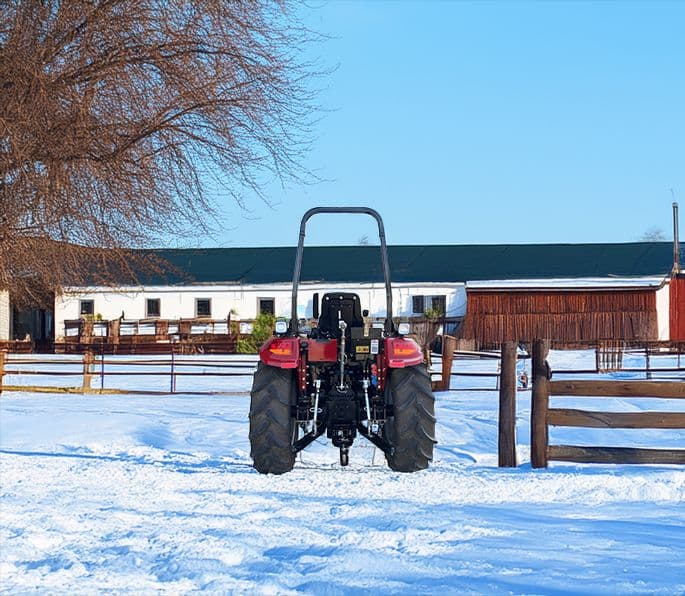
The PTO (power take-off) is the rotating shaft at the rear of the tractor that drives implements such as a flail mower, rotary tiller or wood chipper. 540 and 1000 rpm are the two standard PTO speeds: the number of revolutions per minute of that shaft. Every implement is built for one of the two and must run at that speed.
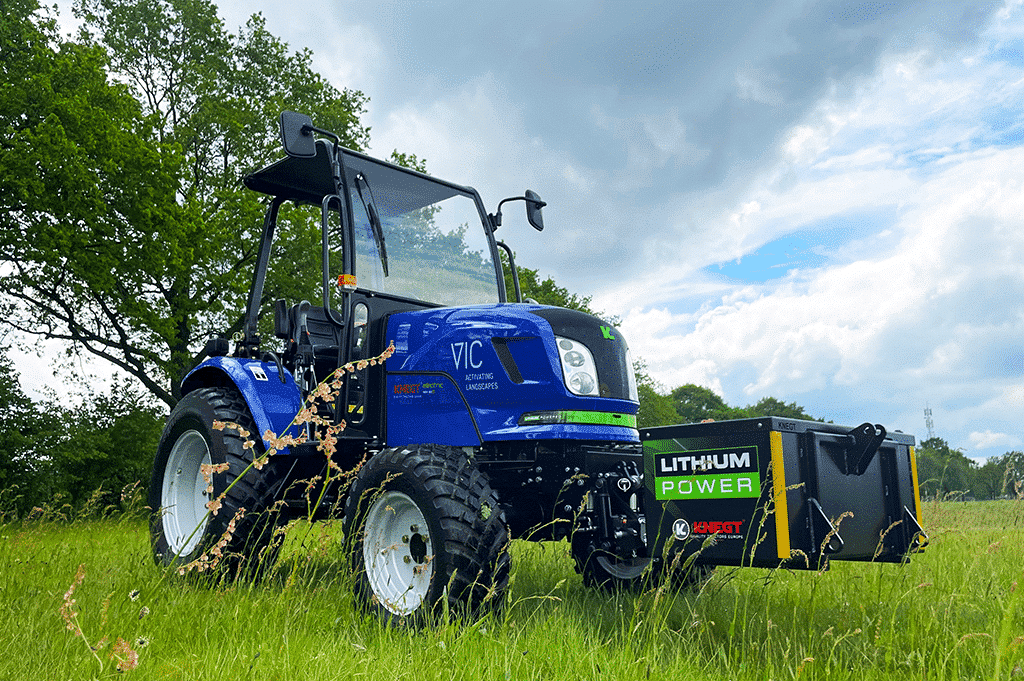
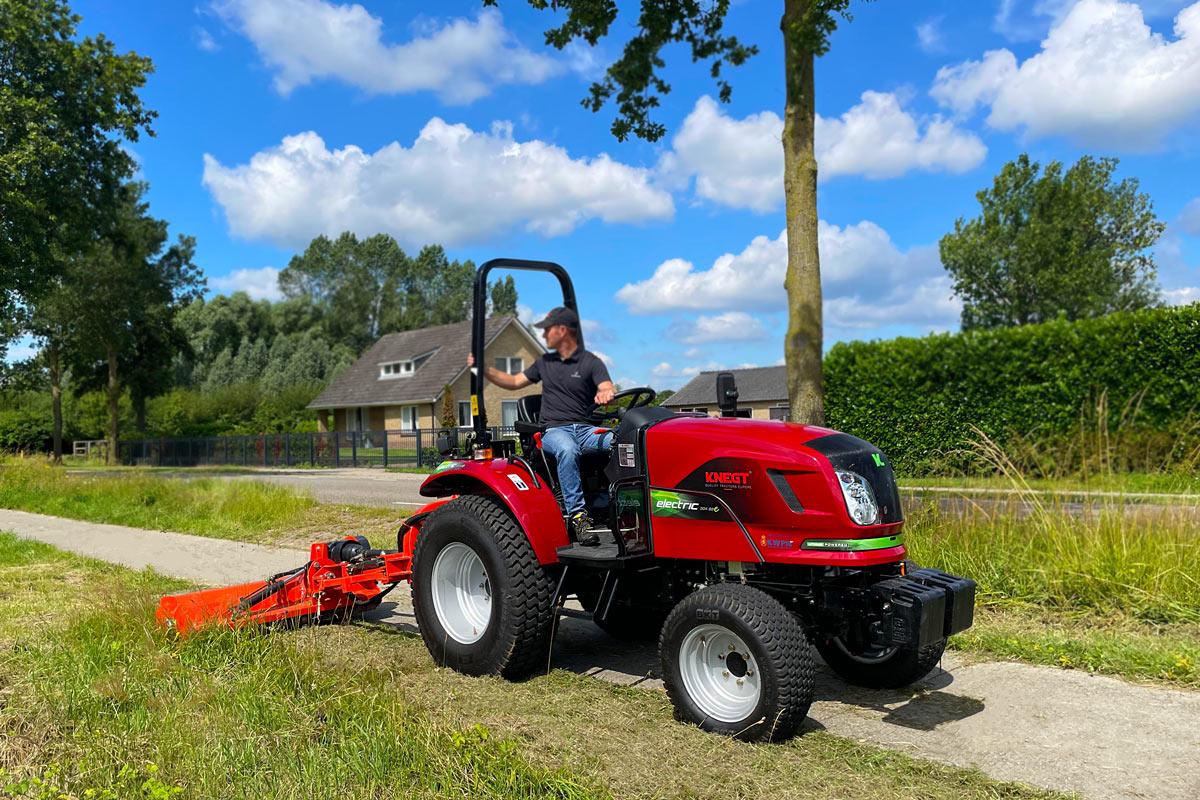
Most implements for compact tractors run at 540 rpm. A 1000 rpm PTO transfers the same power with less torque and is mainly used for heavier implements. The Knegt 404G2E and 504G3E electric compact tractors have a PTO with 540 and 1000 rpm, so you can drive both types of implement.
What does the PTO do?
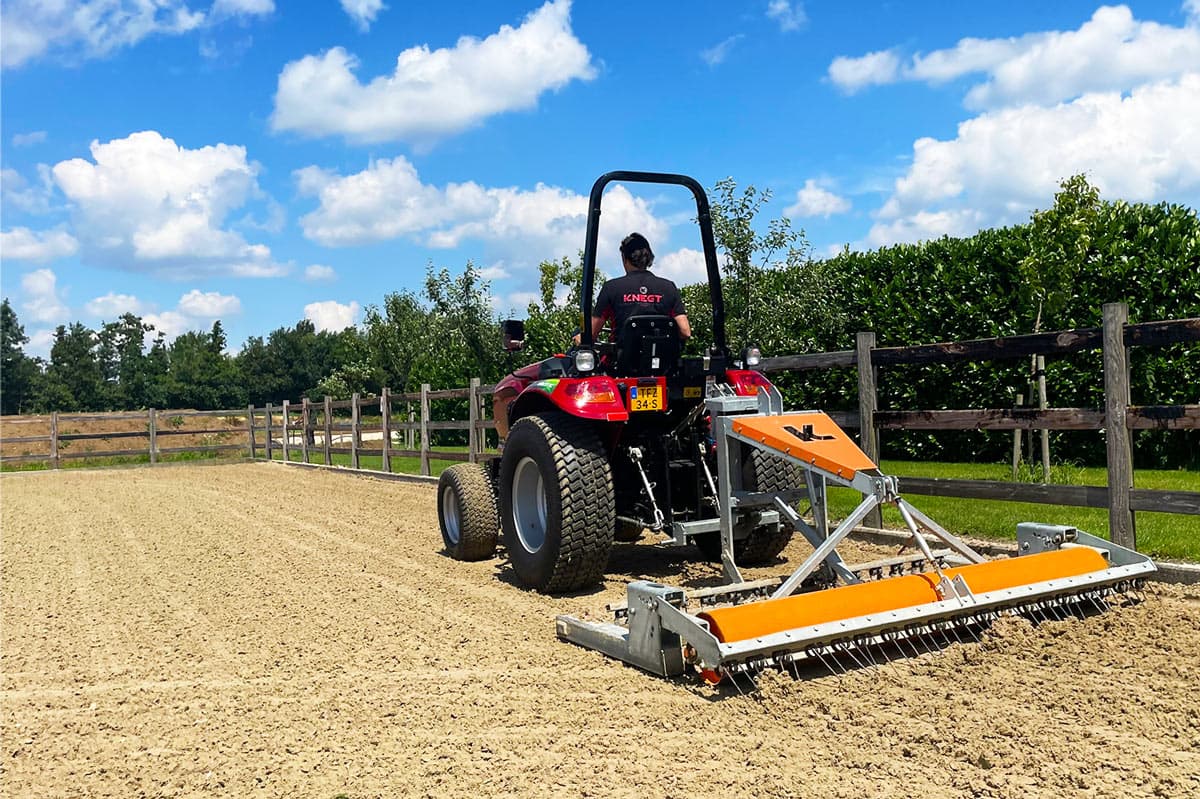
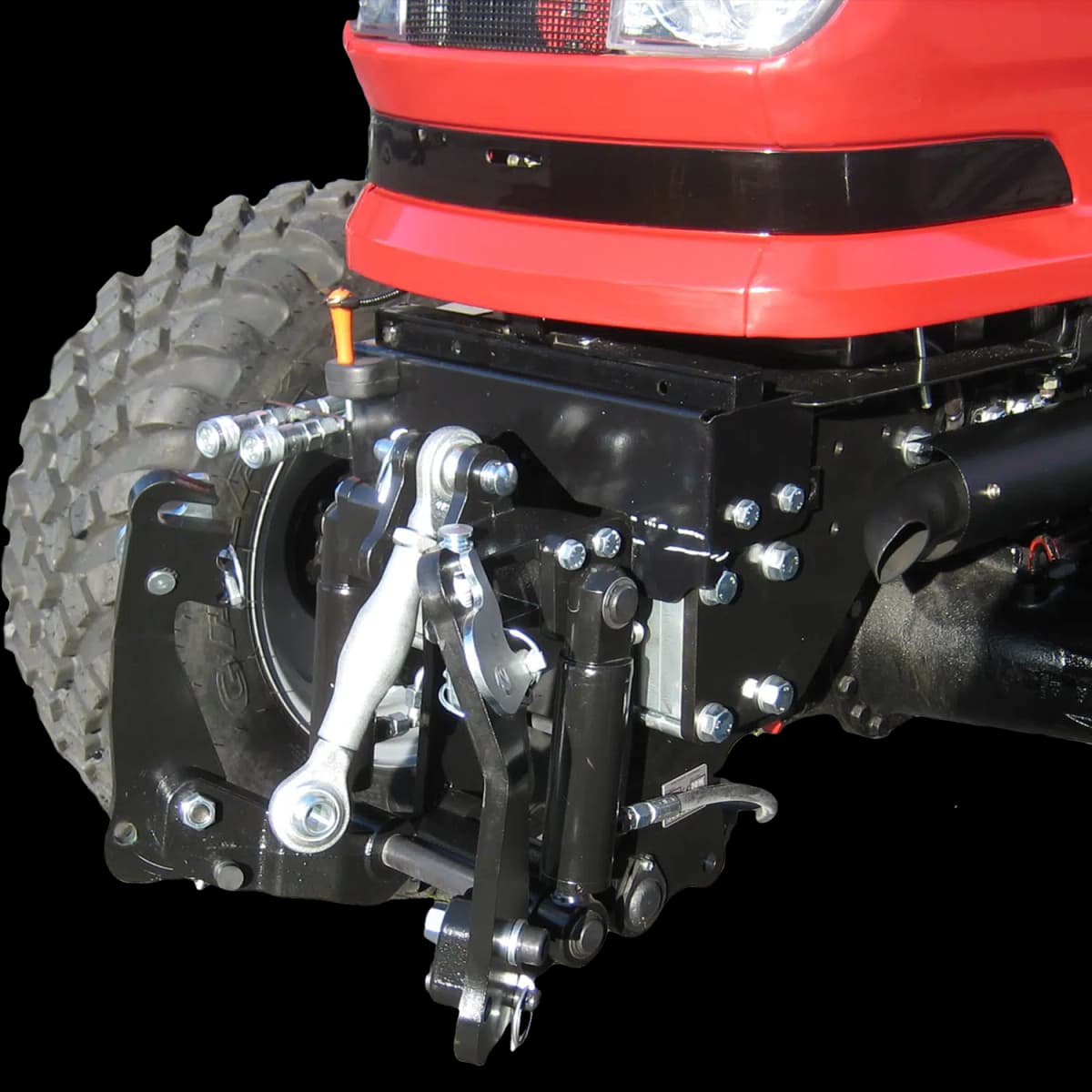
The three-point linkage carries an implement; the PTO makes it turn. A PTO driveshaft, the separate shaft with universal joints between tractor and implement, transfers the rotation to the implement's gearbox. There it is converted into the movement the implement needs: the rotor of a flail mower, the blades of a pasture topper or the tines of a tiller.
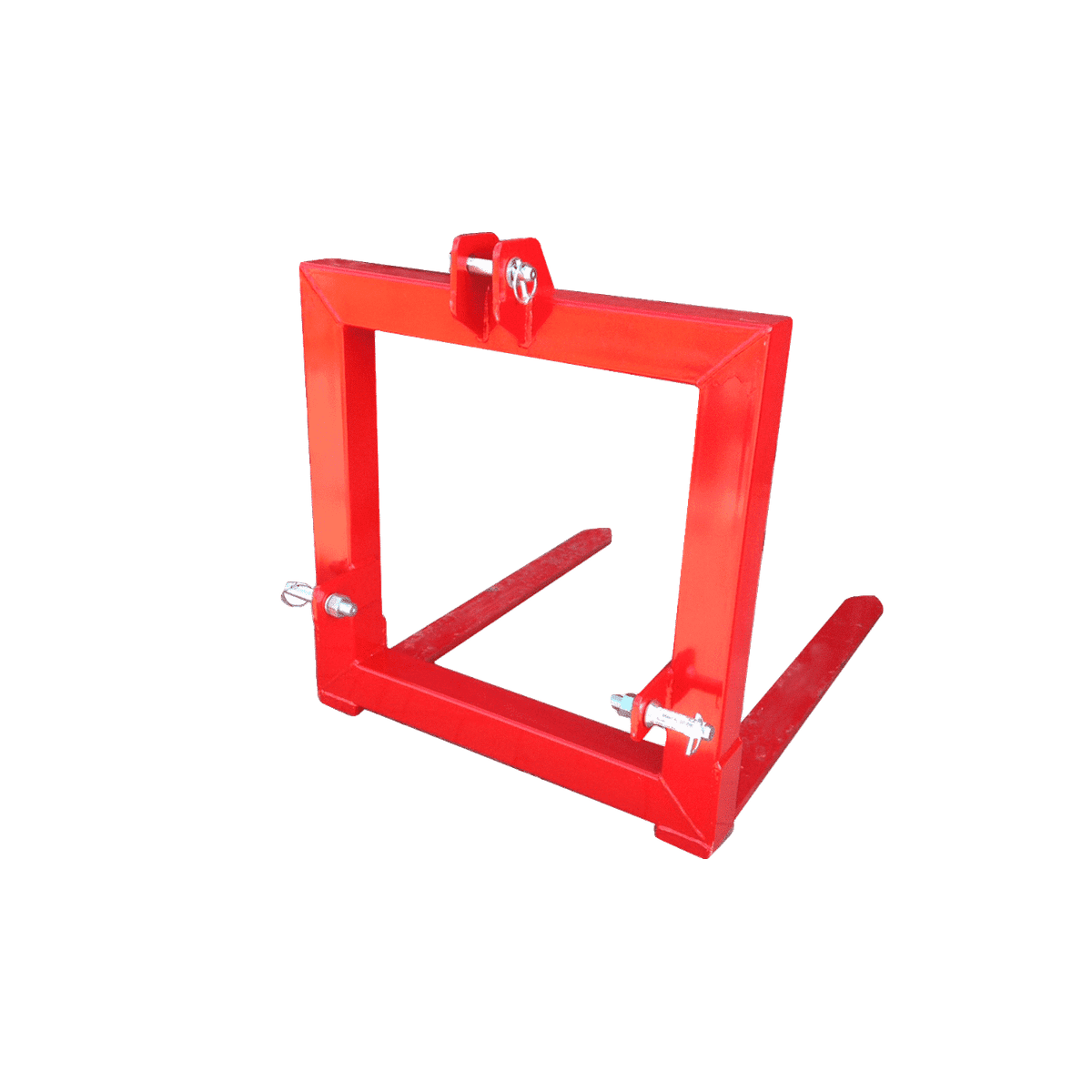
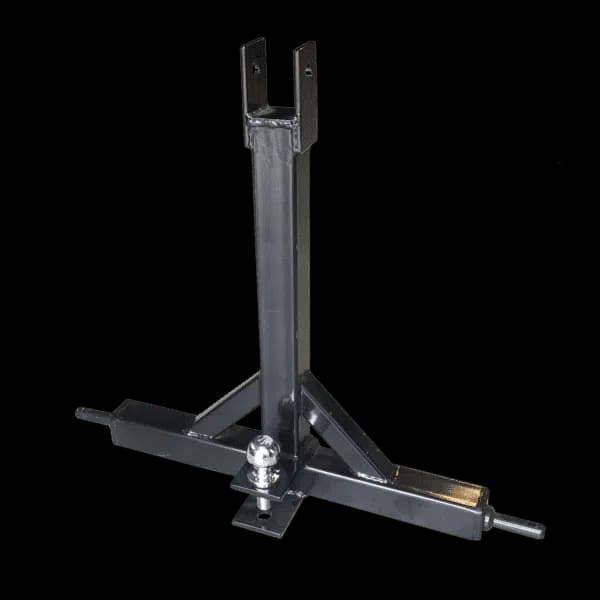
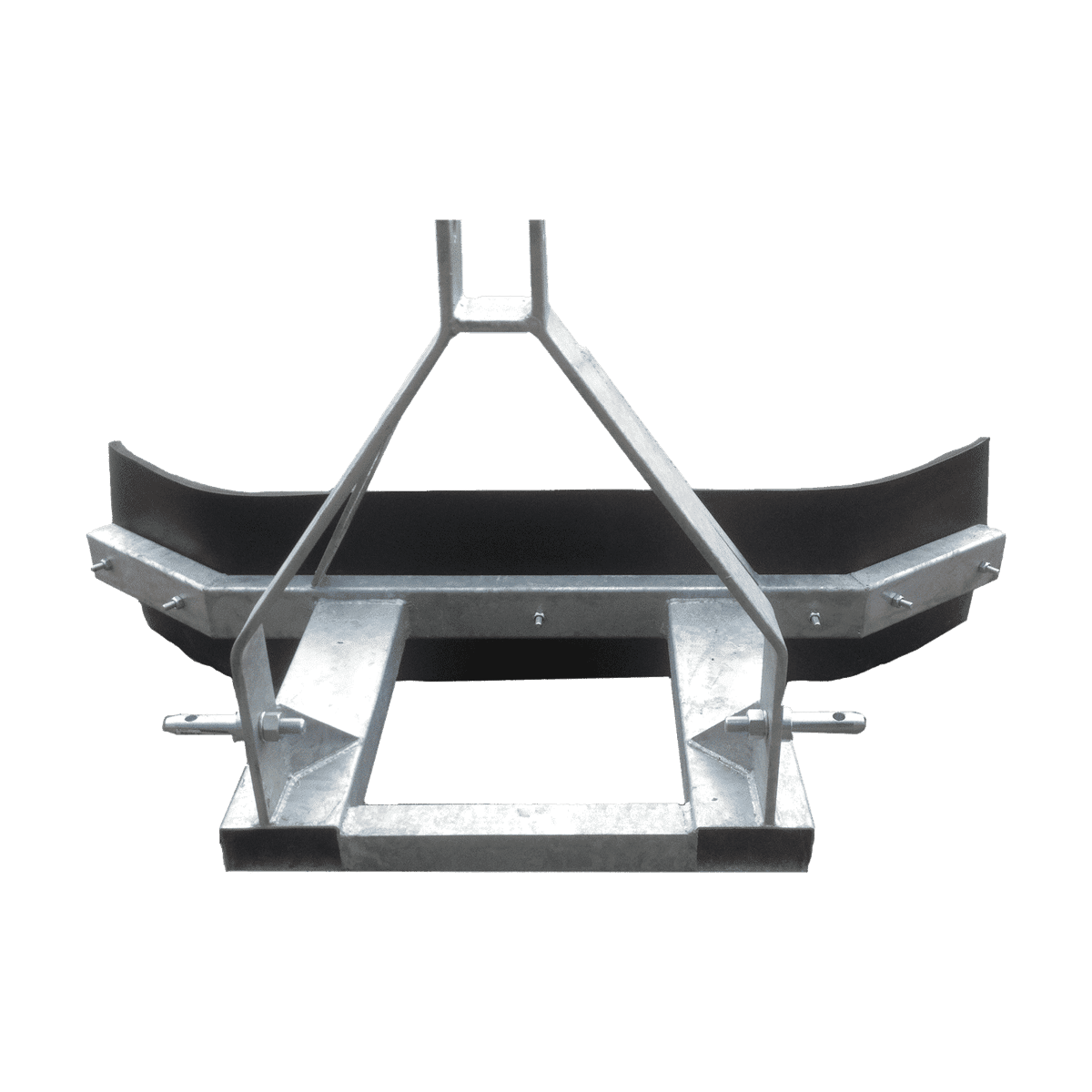
Not every implement needs a PTO. A pallet carrier, manure scraper or land leveller has no drive of its own and simply hangs in the linkage. Rotating implements do need the PTO, for example:
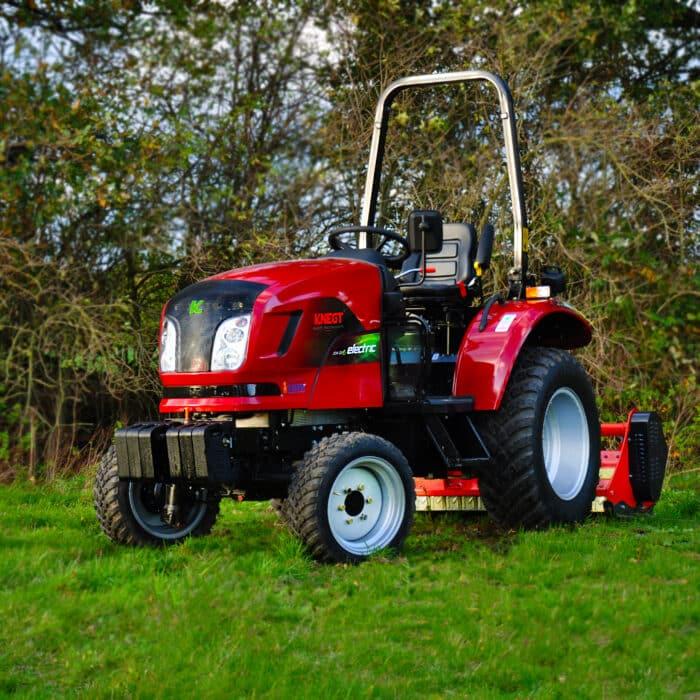
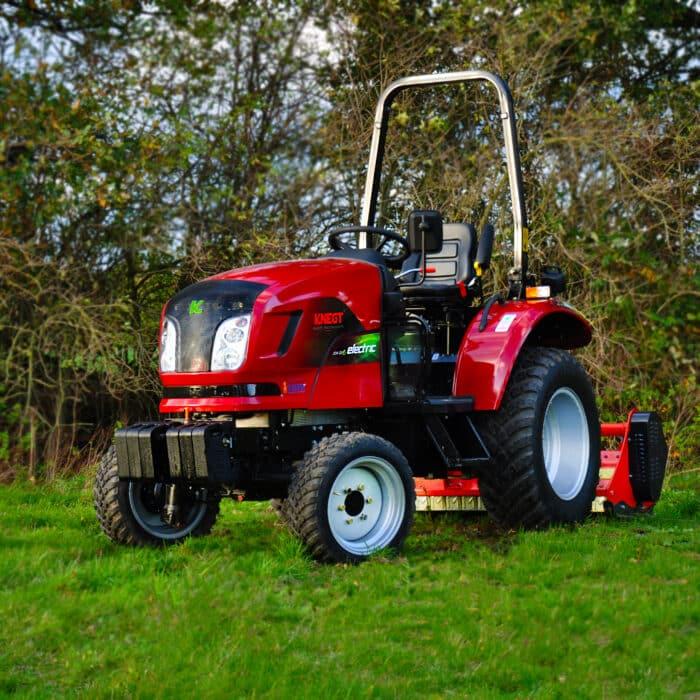
- flail mowers in standard, side-shift and verge versions
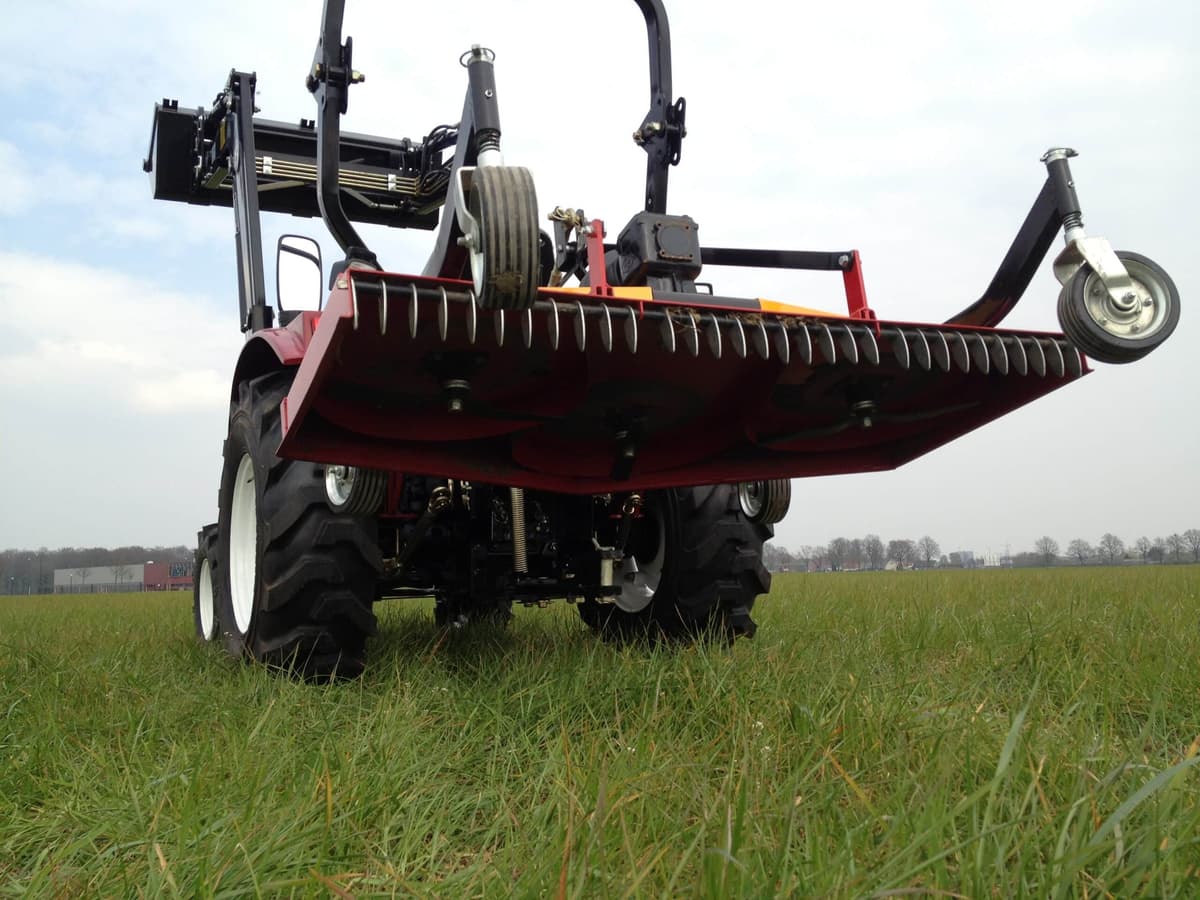
- the pasture topper
- the rotary tiller with reverse rotation and the power harrow
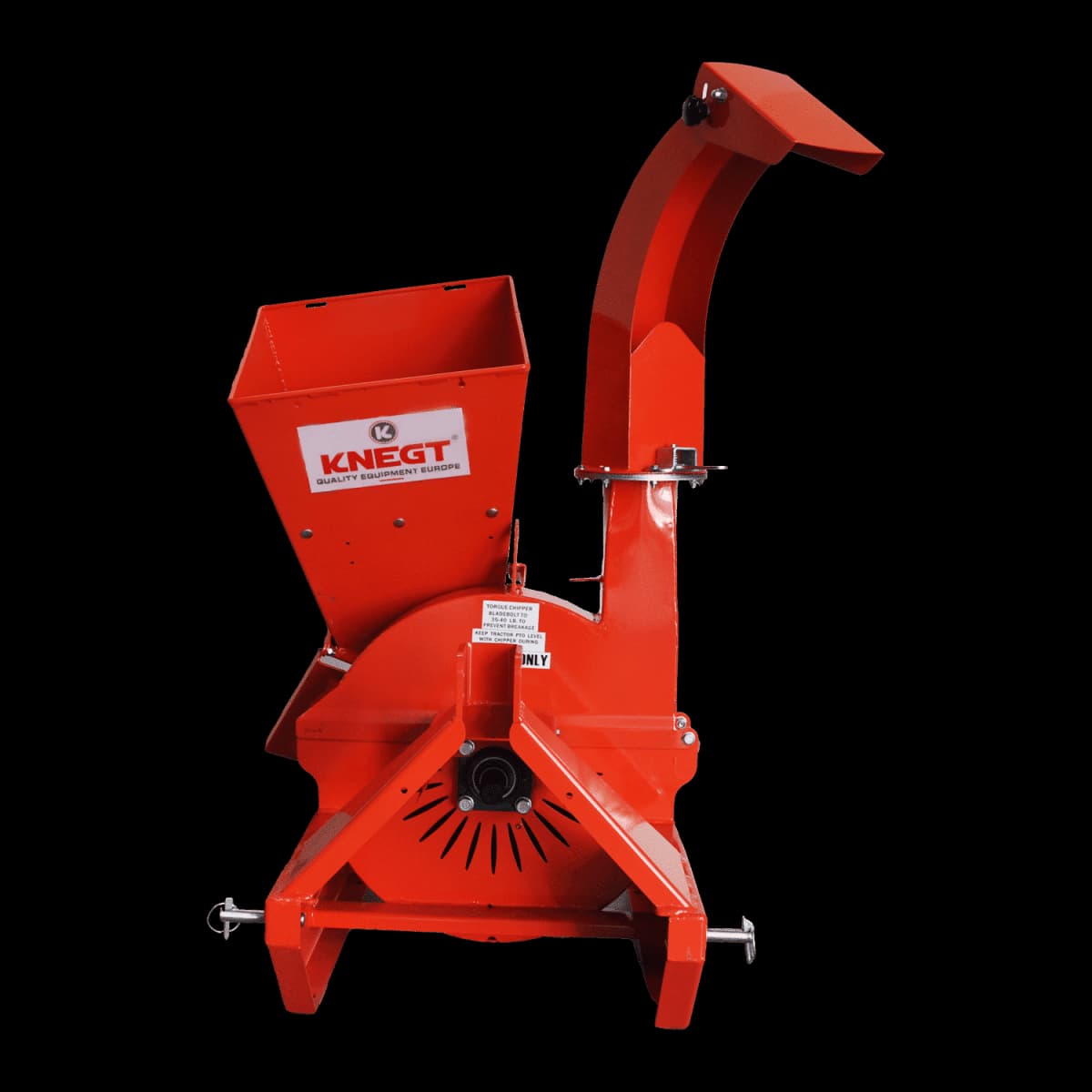
- the wood chipper
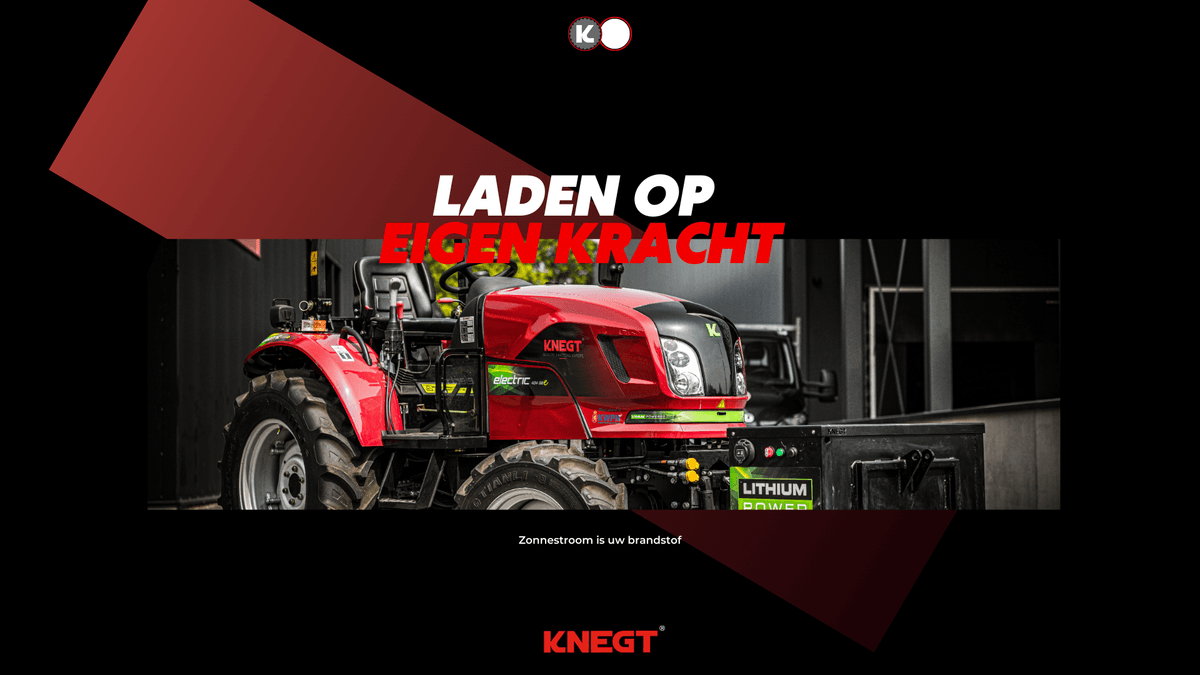
On an electric tractor, the energy for the PTO comes from the battery, just like the energy for driving and hydraulics. So there is no diesel engine that has to keep revving to drive the PTO.
540 and 1000 rpm: the difference
The power a PTO transfers is a combination of speed and torque. If the shaft turns faster, less torque is needed for the same power. That leads to the main differences:
- 540 rpm: the oldest and most widely used speed. Common on compact and mid-sized tractors and on most of the implements that go with them, such as mowers, tillers and chippers.
- 1000 rpm: intended for implements that need a lot of power. Because the shaft turns faster, torque is lower, so the shaft and couplings can be lighter for the same power.
You can often tell the difference from the shaft itself. A 540 rpm PTO usually has 6 splines. A 1000 rpm PTO usually has 21 splines on the same diameter, or 20 splines on a thicker shaft on heavy tractors. Because of this, an implement does not simply fit the wrong speed.
An adapter can make an implement fit a different spline profile, but it does not change the speed. The PTO speed of tractor and implement must always match.
Which PTO speed does your implement need?
The required speed is stated in the manual and often on a sticker or plate near the gearbox input. A few examples from the Knegt range:
- Pasture topper: 540 rpm PTO drive with overrunning clutch. The PTO shaft is supplied as standard.
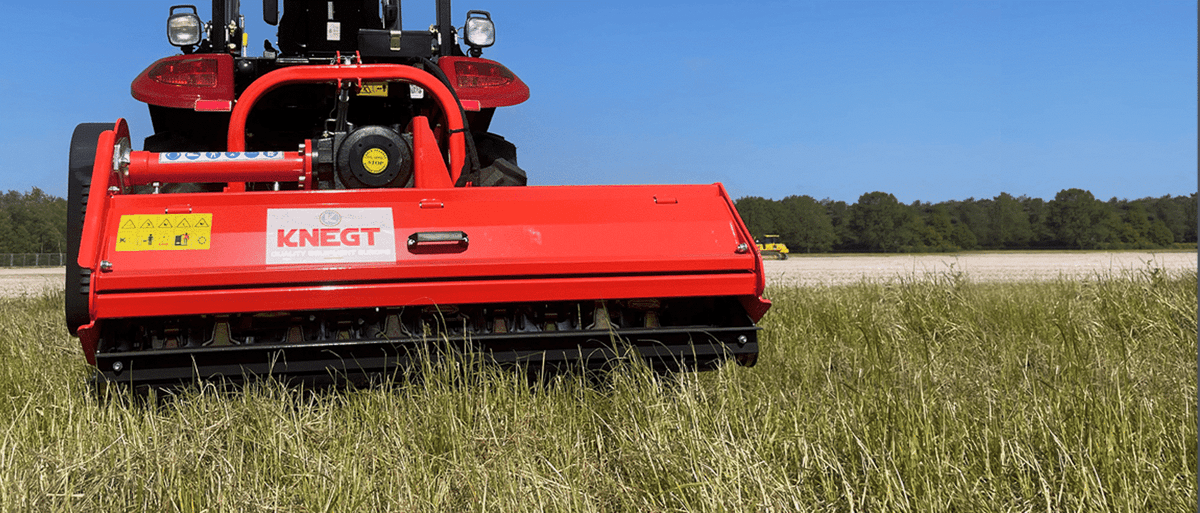
- Flail mowers: driven by the PTO and supplied with a telescopic PTO shaft as standard.
- Wood chipper: check that the PTO speed matches what the chipper requires, usually 540 rpm.
This is how you check whether tractor and implement match:
- Step 1: look up the PTO speed the implement requires.
- Step 2: check that your tractor delivers that speed. You will find the PTO data per model in the specifications on the models page.
- Step 3: compare the power the implement needs with the power of the tractor.
- Step 4: check the linkage category and the weight against the lift capacity. On the 404G2E this is 665 kg and on the 504G3E 1,100 kg, measured 61 cm behind the ball ends.
- Step 5: check that the PTO shaft has the right length in the highest and lowest position of the linkage.
In doubt? Have the combination checked by Knegt or a dealer.
Working safely with the PTO
A rotating PTO is powerful and can catch clothing or hair in a split second. Follow these rules:
- Before every use, check that the guards on the PTO shaft and the tractor are intact and secure.
- Only engage the PTO when everyone is at a safe distance, and never with an implement in the highest position of the linkage.
- Never run an implement at a higher speed than it was built for. A 540 rpm implement at 1000 rpm can be damaged or throw parts.
- Implements with a heavy rotor, such as mowers, keep turning for a while after you disengage. An overrunning clutch prevents that mass from pushing the tractor. Always wait until everything has stopped.
- Disengage the PTO, switch off the tractor and remove the key before clearing a blockage or making adjustments.
Wear close-fitting clothing and keep the manuals of tractor and implement at hand.
Frequently asked questions
Can I use a 1000 rpm implement at 540 rpm?
The implement will then turn far too slowly and will not do its job properly. Always use an implement at the speed it was built for.
Does an electric tractor have a PTO?
Yes. The Knegt 404G2E and 504G3E electric compact tractors have a PTO with 540 and 1000 rpm, so you use the same kind of implements as with a compact diesel tractor.
Does PTO work use more battery capacity?
Heavy PTO work, such as flail mowing or tilling, needs more energy than light work. Working time depends on work intensity and the battery option. You can top up the battery in between via 230V or with a fast charger.
What is the difference between a PTO and a PTO shaft?
The PTO is the output shaft on the tractor. The PTO shaft is the separate driveshaft with universal joints that connects the tractor to the implement.
Advice on PTO and implements
Want to be sure your implement matches the PTO and linkage of your tractor? Request an advice meeting or find a Knegt dealer near you. Together we look at PTO speed, power, linkage category and lift capacity.
Would you like to see for yourself how an electric Knegt drives a flail mower or tiller? Request a free demo. For the price of a tractor or implement, simply request a quote.