Electric tractor or compact loader for yard work?
The short answer
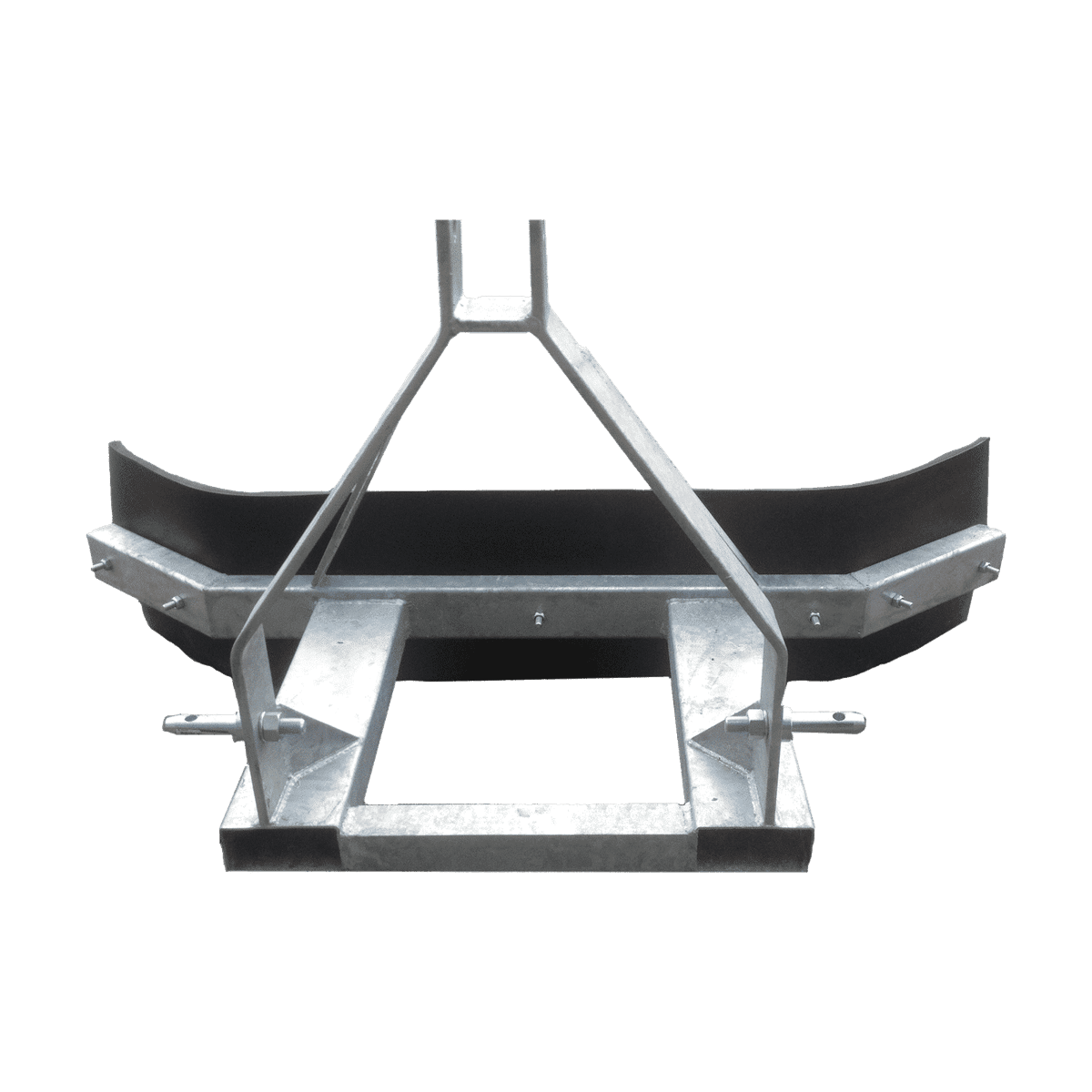
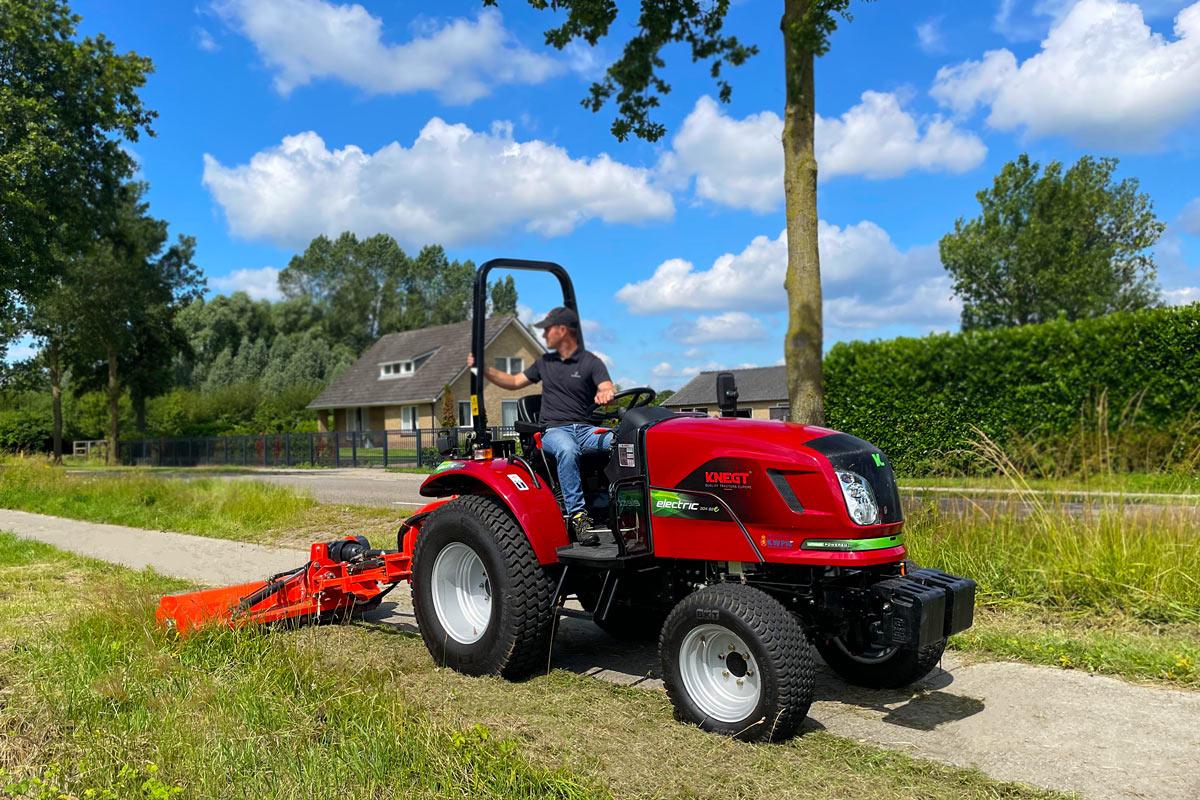
A compact yard loader is built for loading: scooping, lifting and moving. An electric compact tractor with a front loader loads too, but it also runs implements via the three-point hitch and PTO, such as a flail mower, arena leveller or manure scraper. If your yard work is almost entirely loading and unloading, a compact loader fits. If you want one machine that loads as well as mows, drags, scrapes and hauls, an electric tractor with a front loader is the more versatile choice.
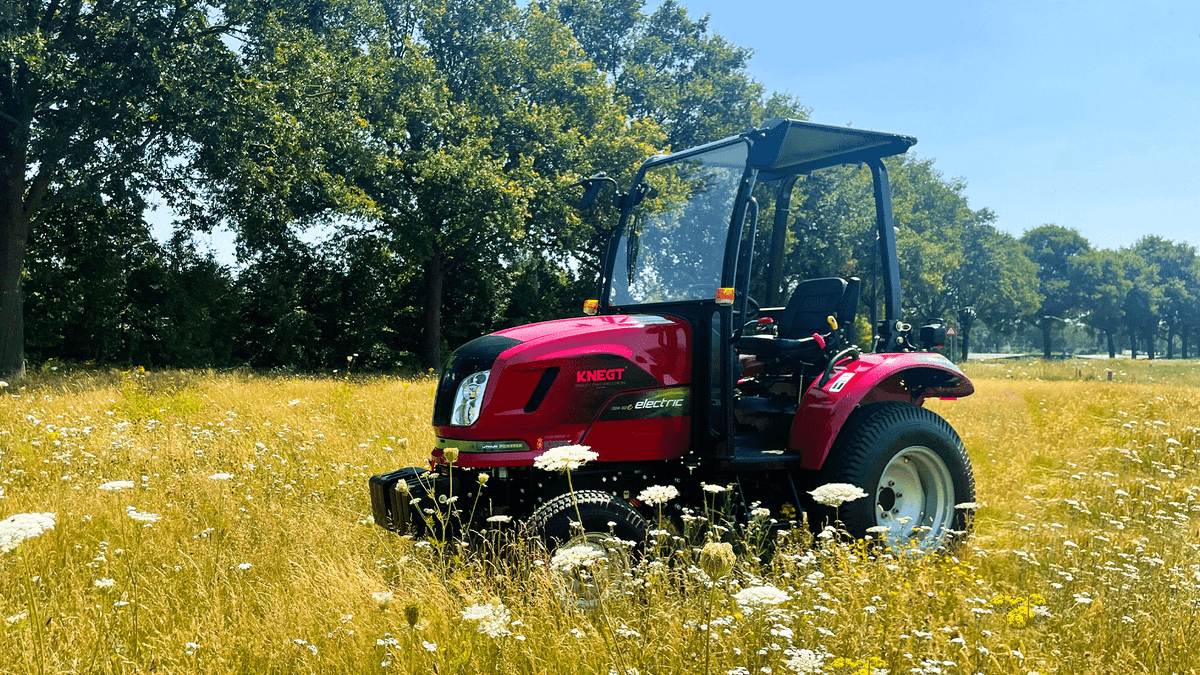
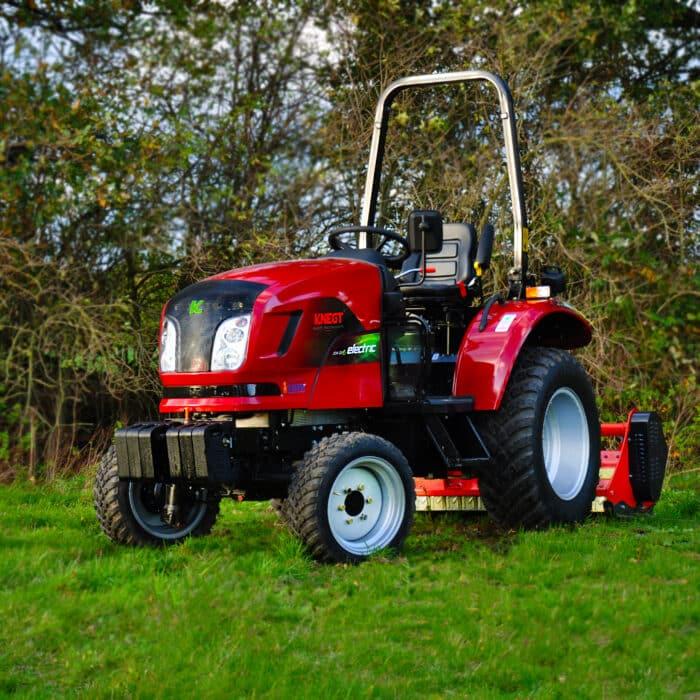
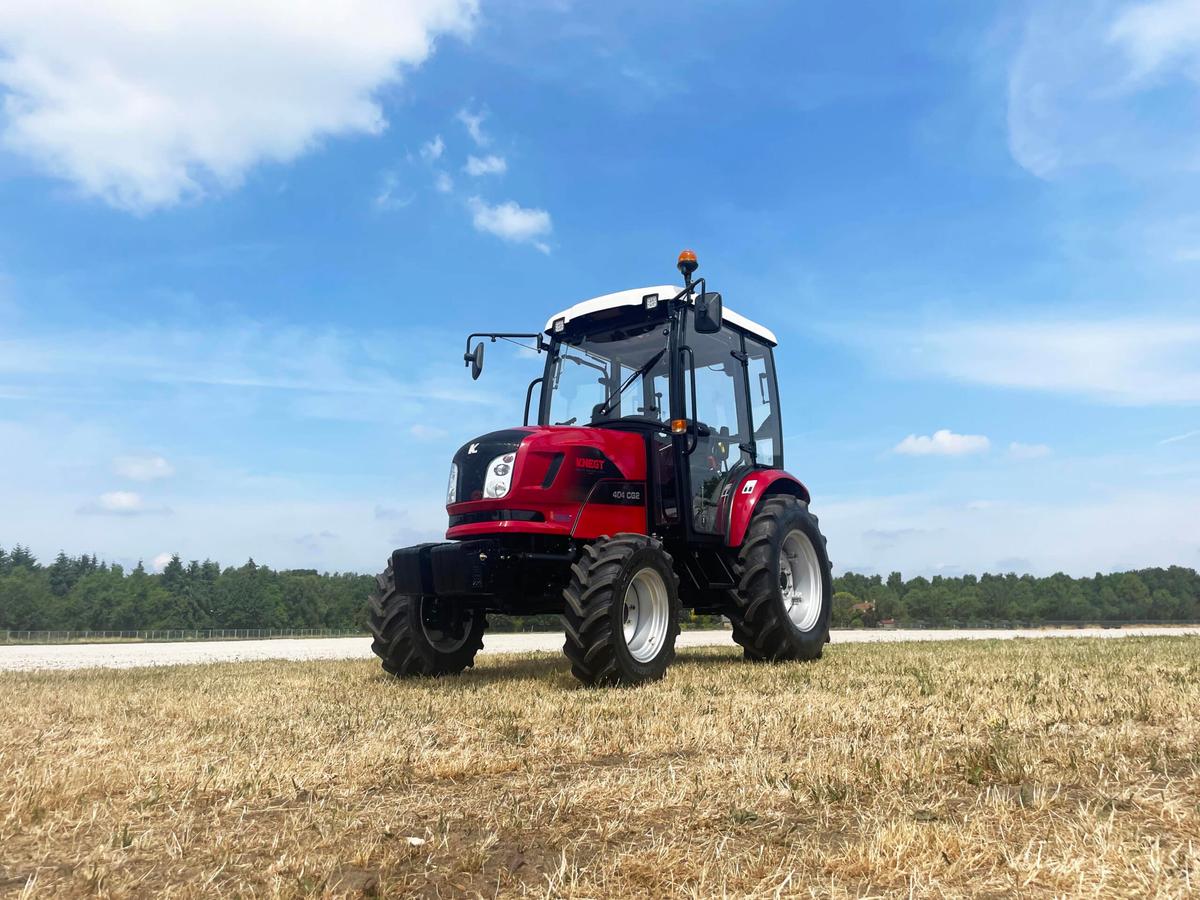
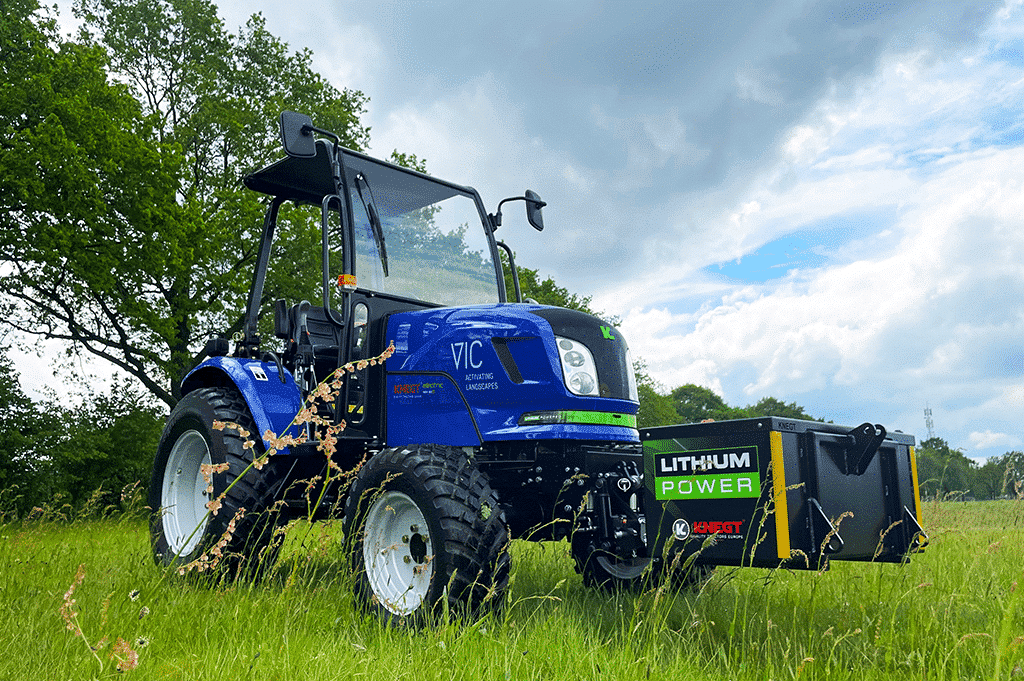
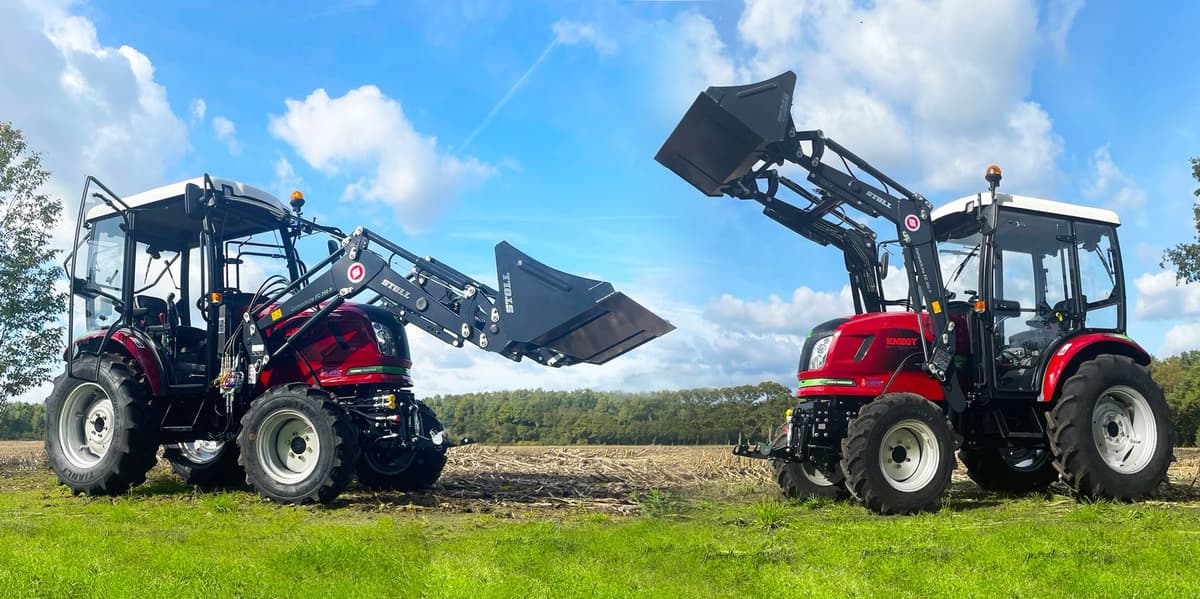
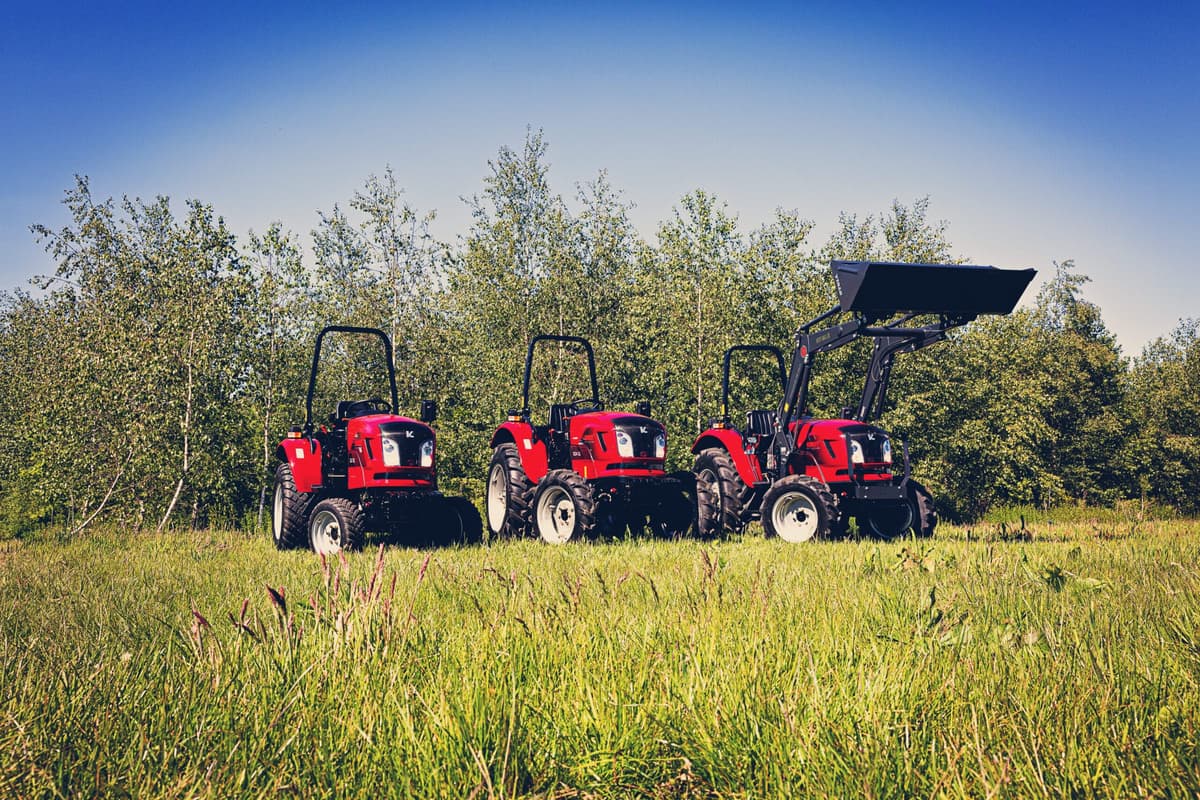
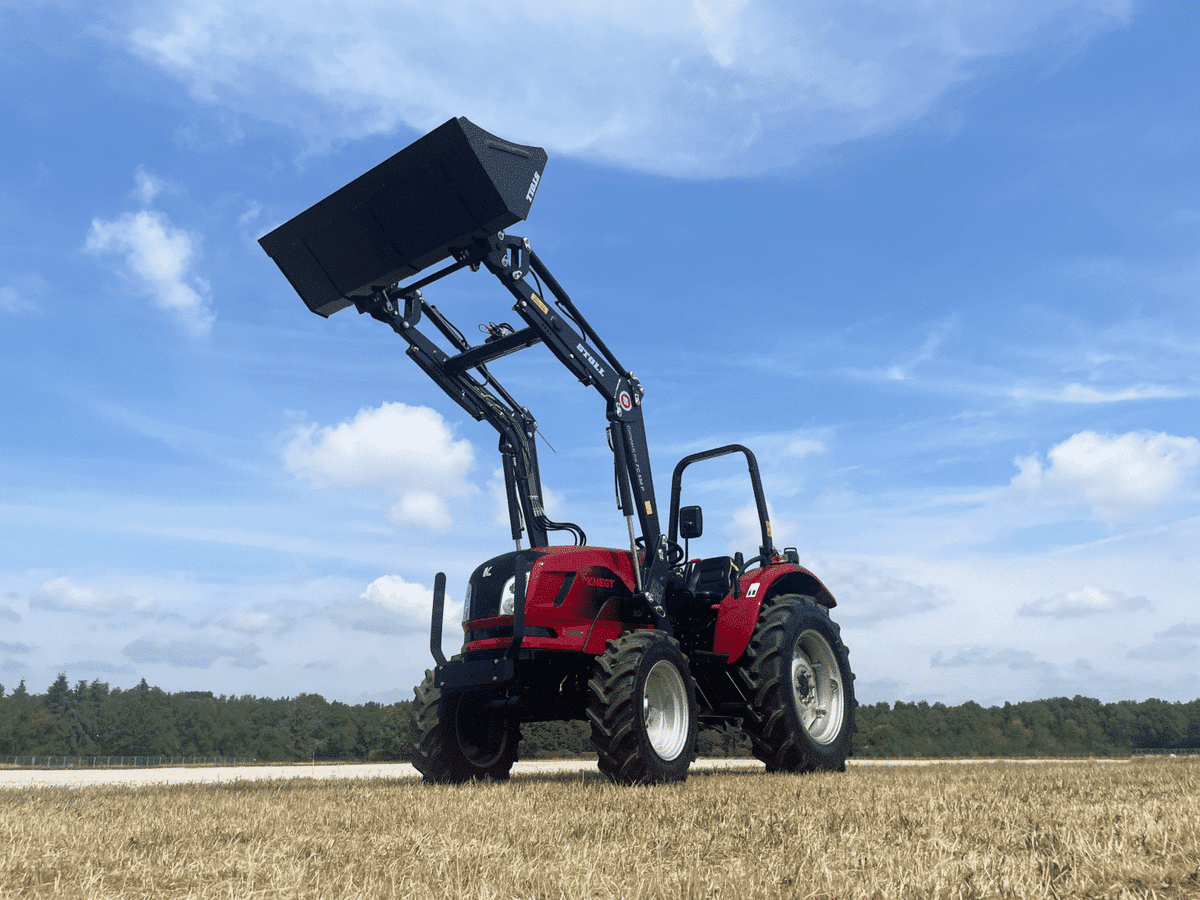
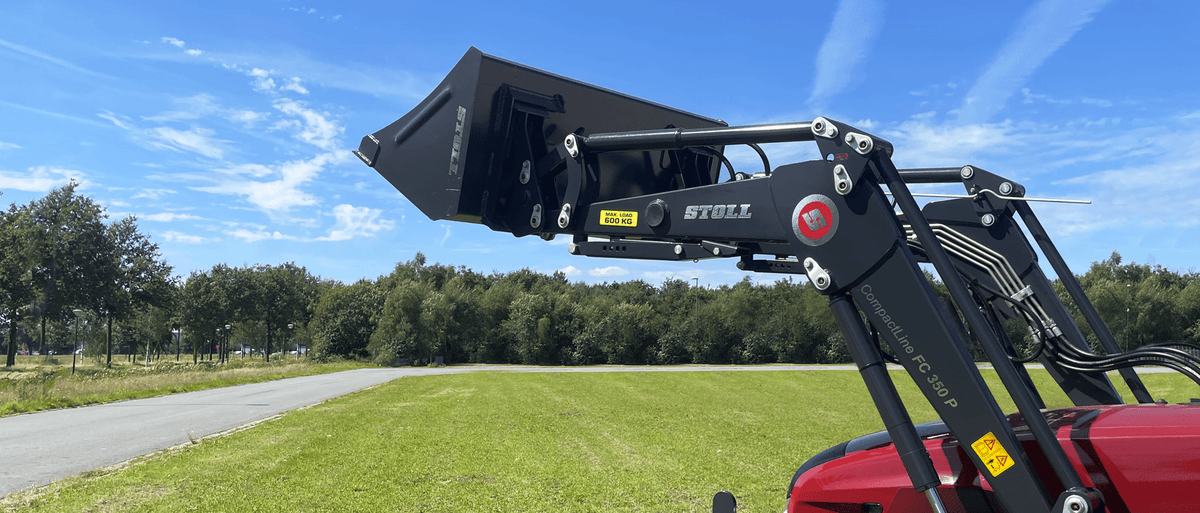
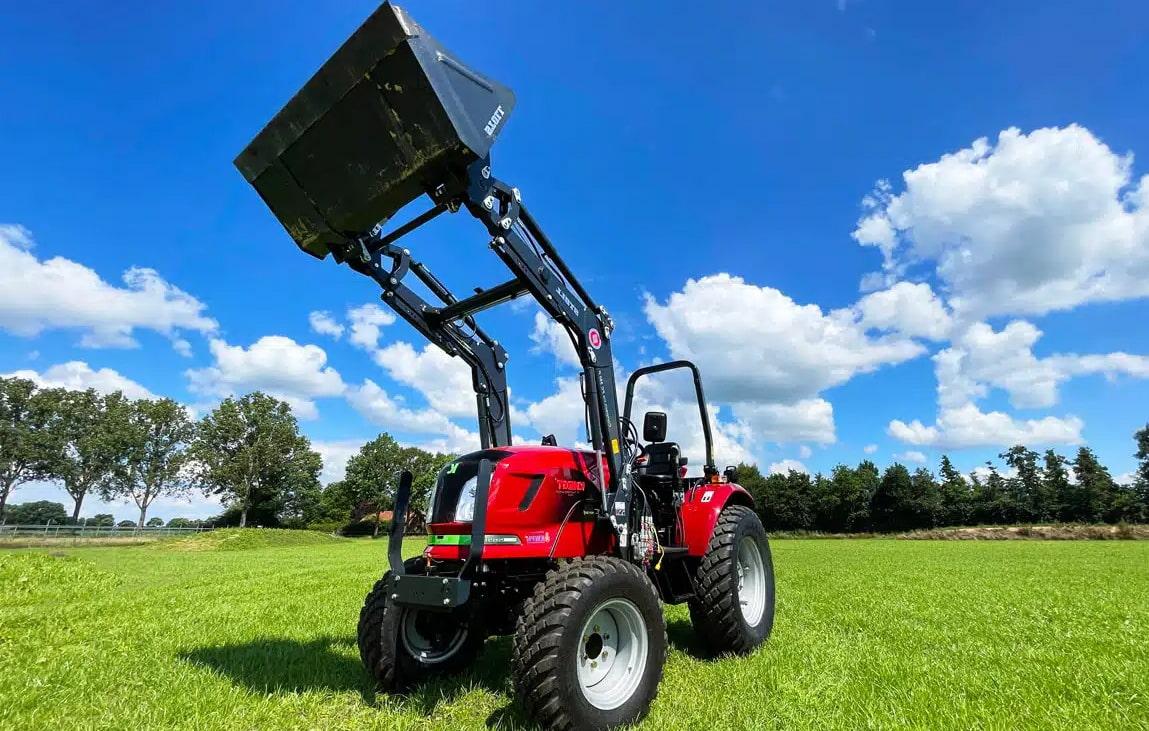
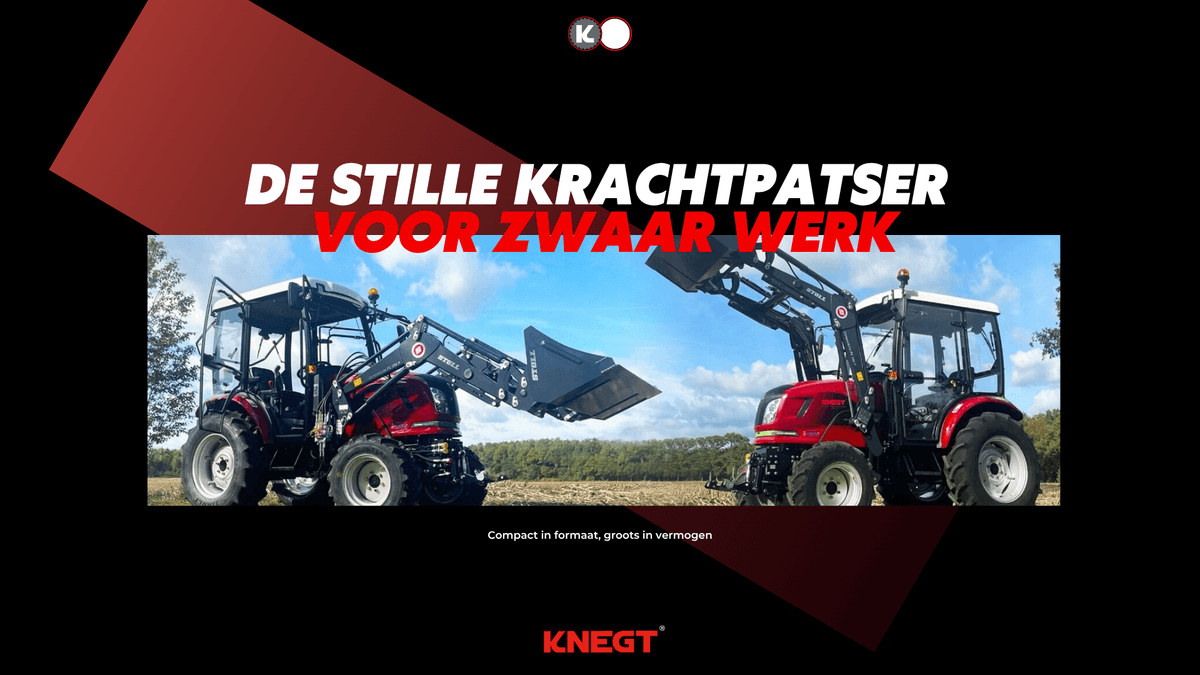
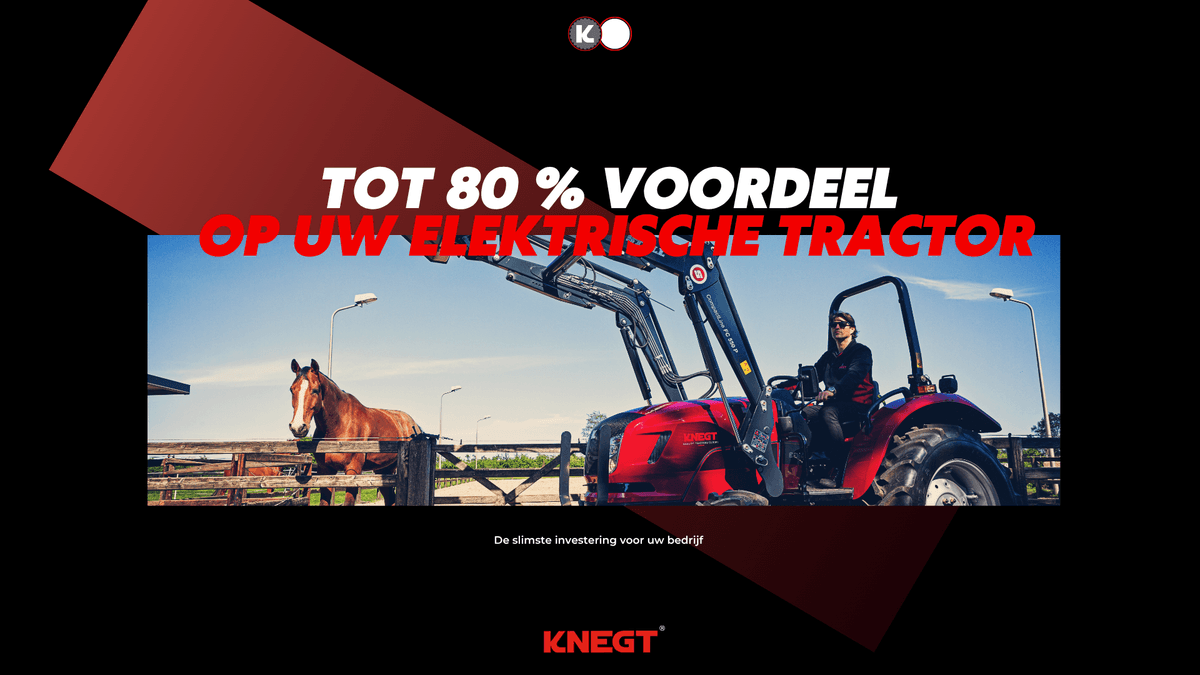
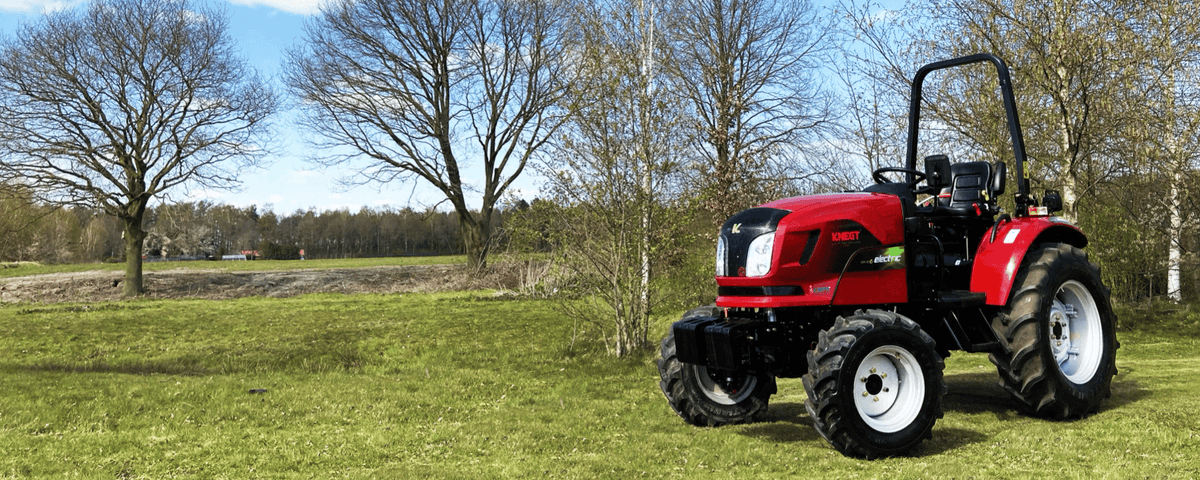
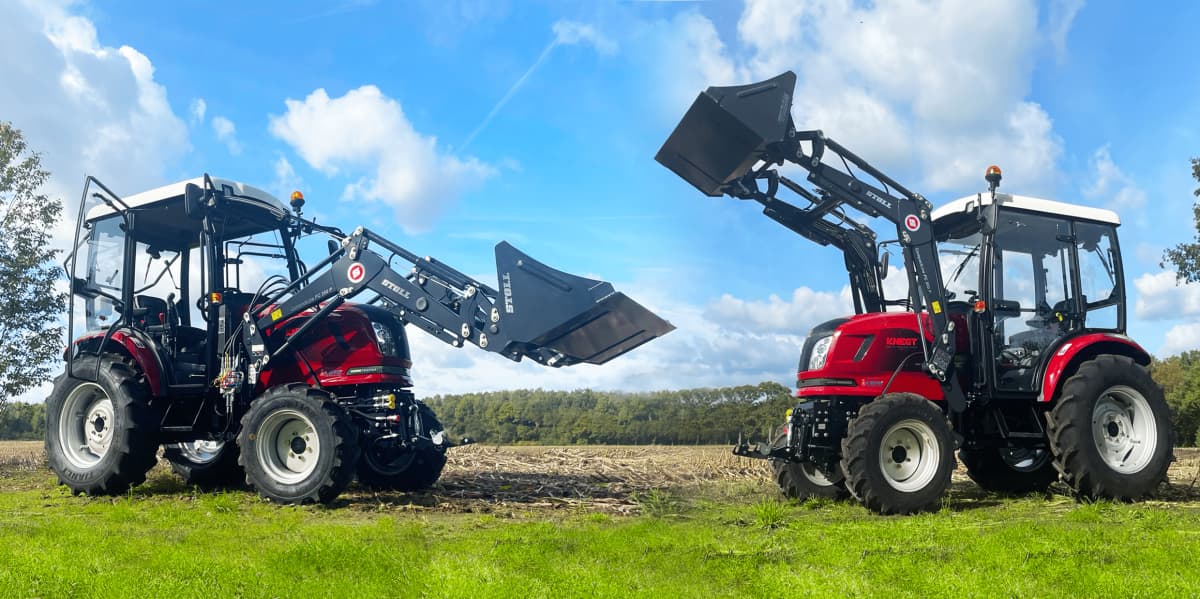
Knegt builds three electric compact tractors, the 304G2E, 404G2E and 504G3E, and all three are available with a STOLL front loader.
What is the difference between a yard loader and a compact tractor?
A yard loader, also called a compact loader or mini loader, is a compact loading machine. The loader arm is a fixed part of the machine and many yard loaders use articulated steering. That makes them agile and strong at repetitive loading work, such as moving feed, loading manure or carting bedding. A yard loader usually has no three-point hitch with PTO for mounted implements.
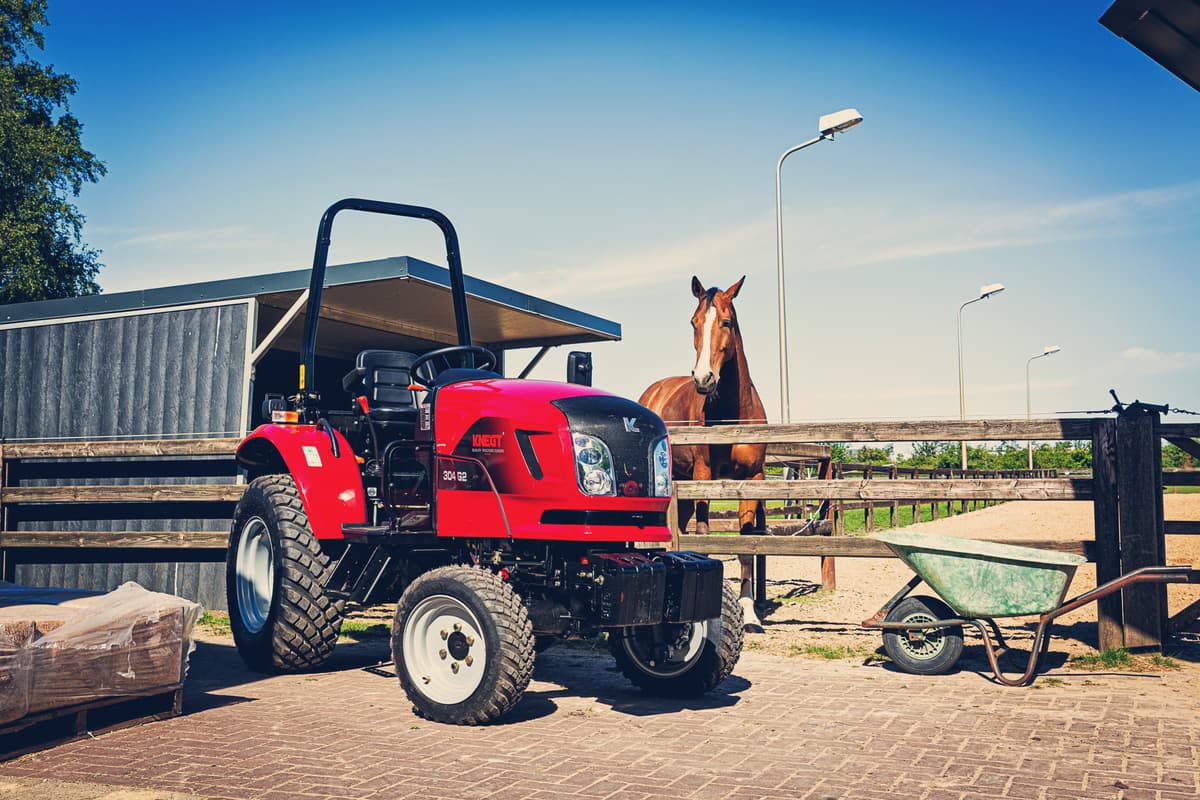
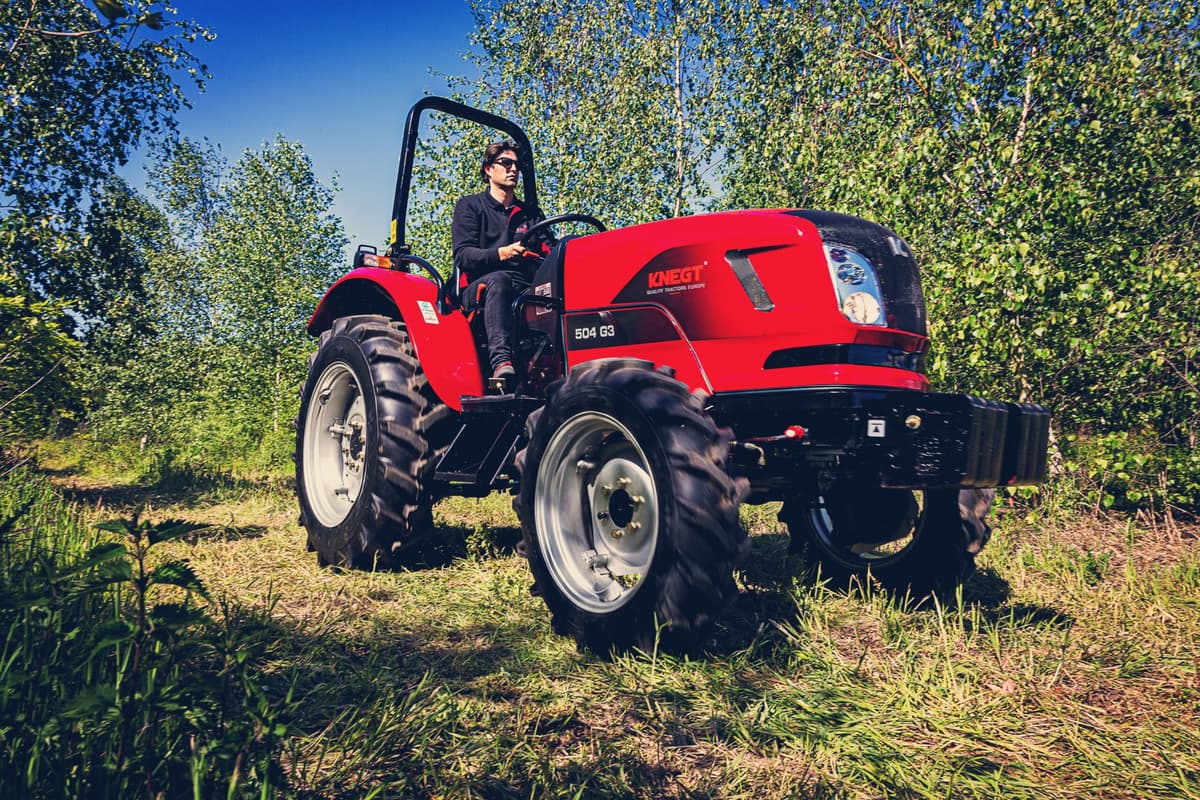
A compact tractor is a tractor in a small format. Its core job is driving and pulling, with a rear linkage for implements. Add a front loader and you gain loading work at the front, so you combine two machines in one.
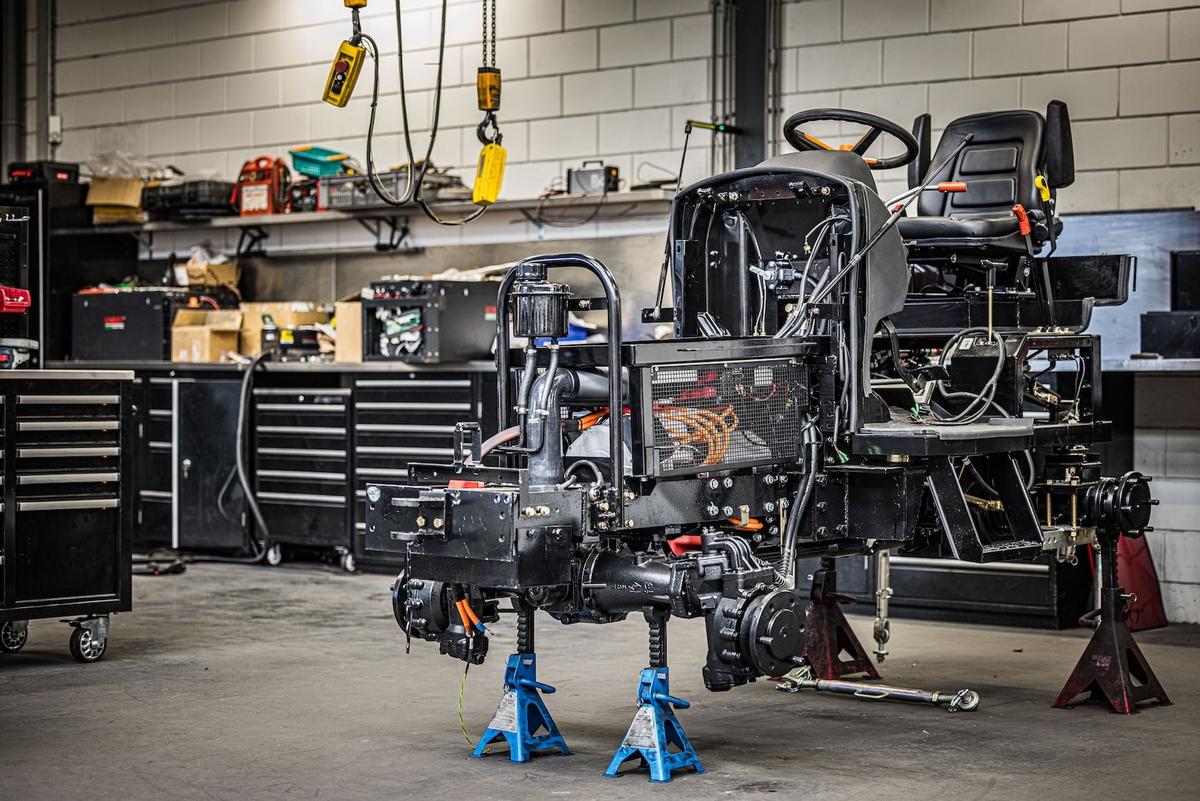
Knegt adds electric drive to that. The electric models have two separate motors: a drive motor and a 15 hp hydraulic motor. The front loader and implements run on that hydraulic motor, so hydraulic power stays available while you drive.
Yard loader and electric tractor compared
Put the two machines side by side and these differences stand out:
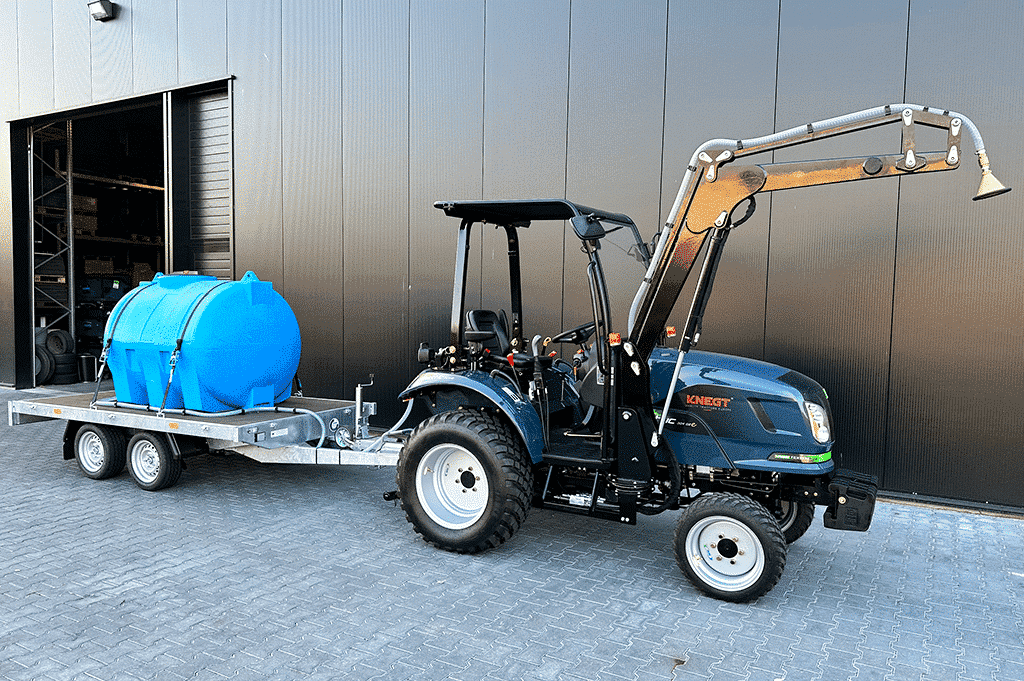
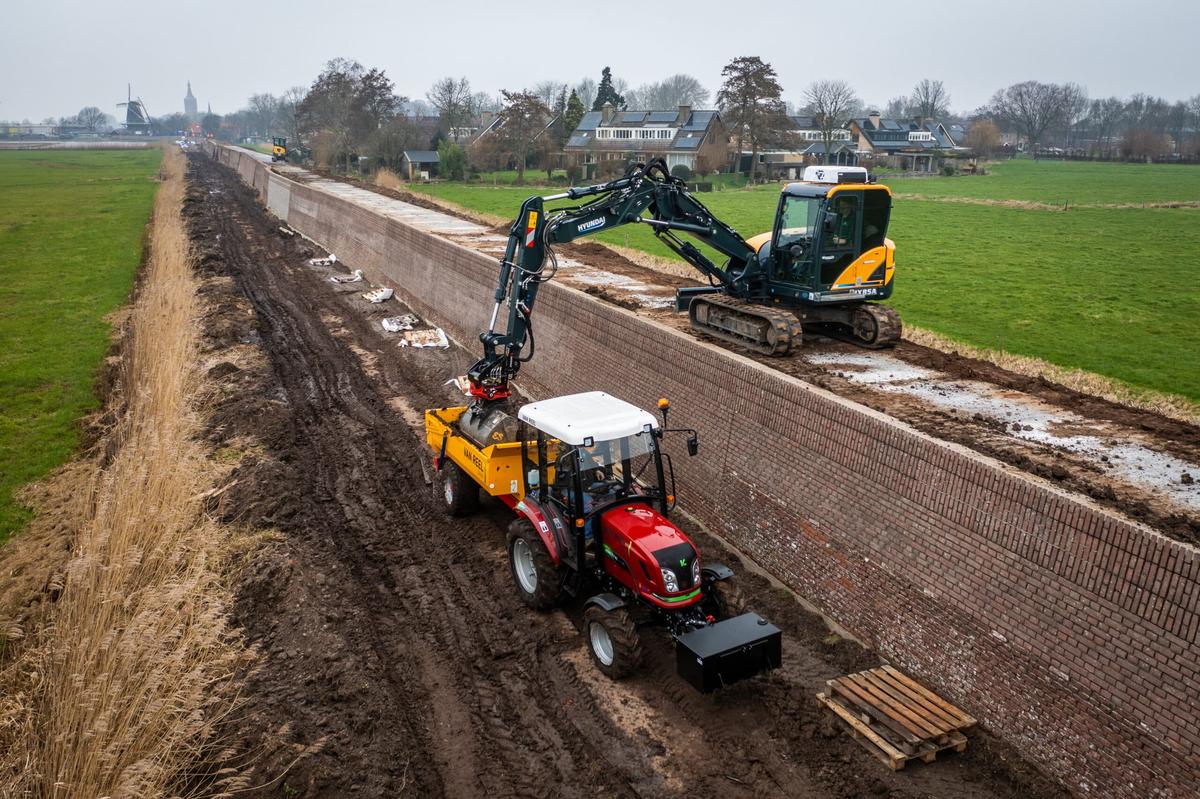
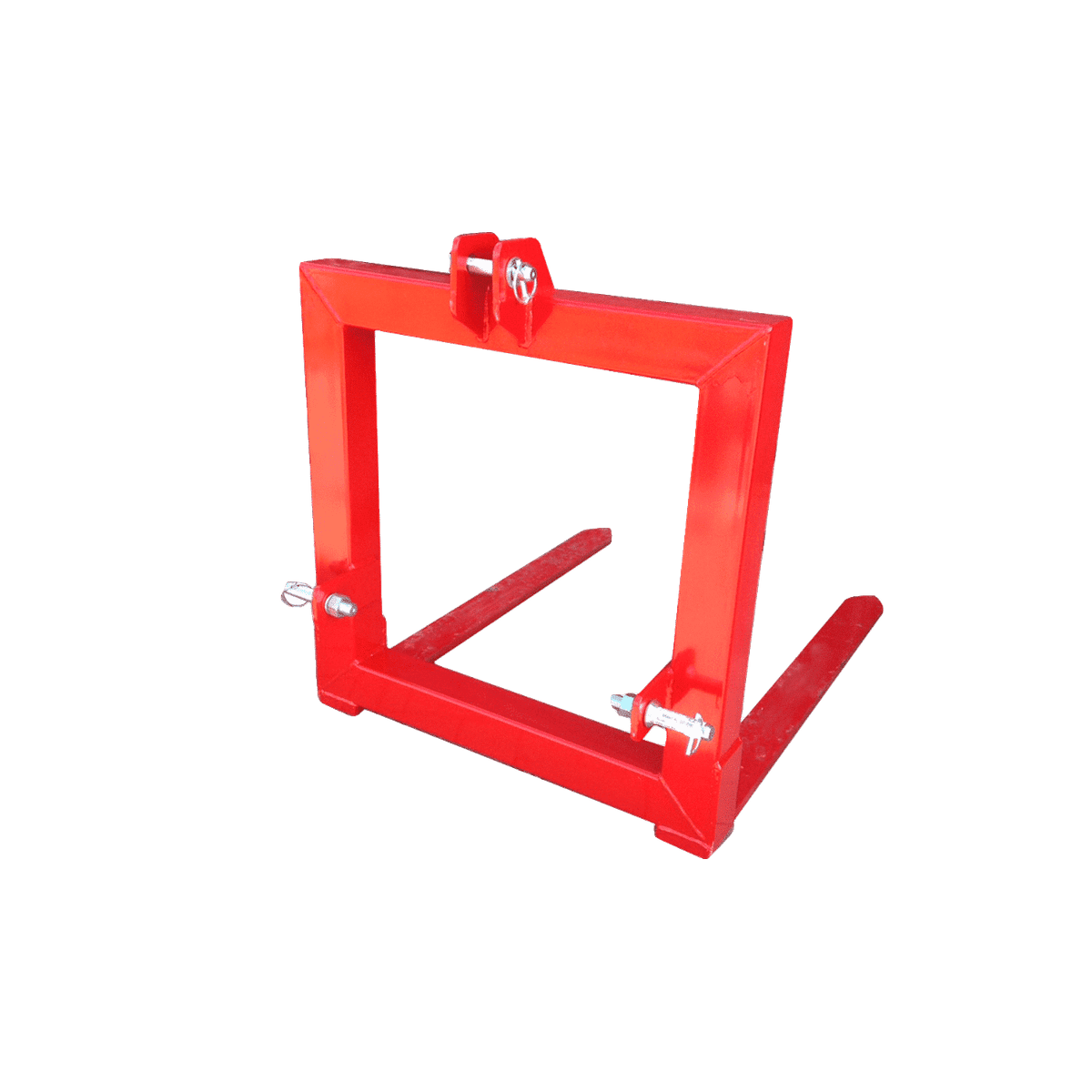
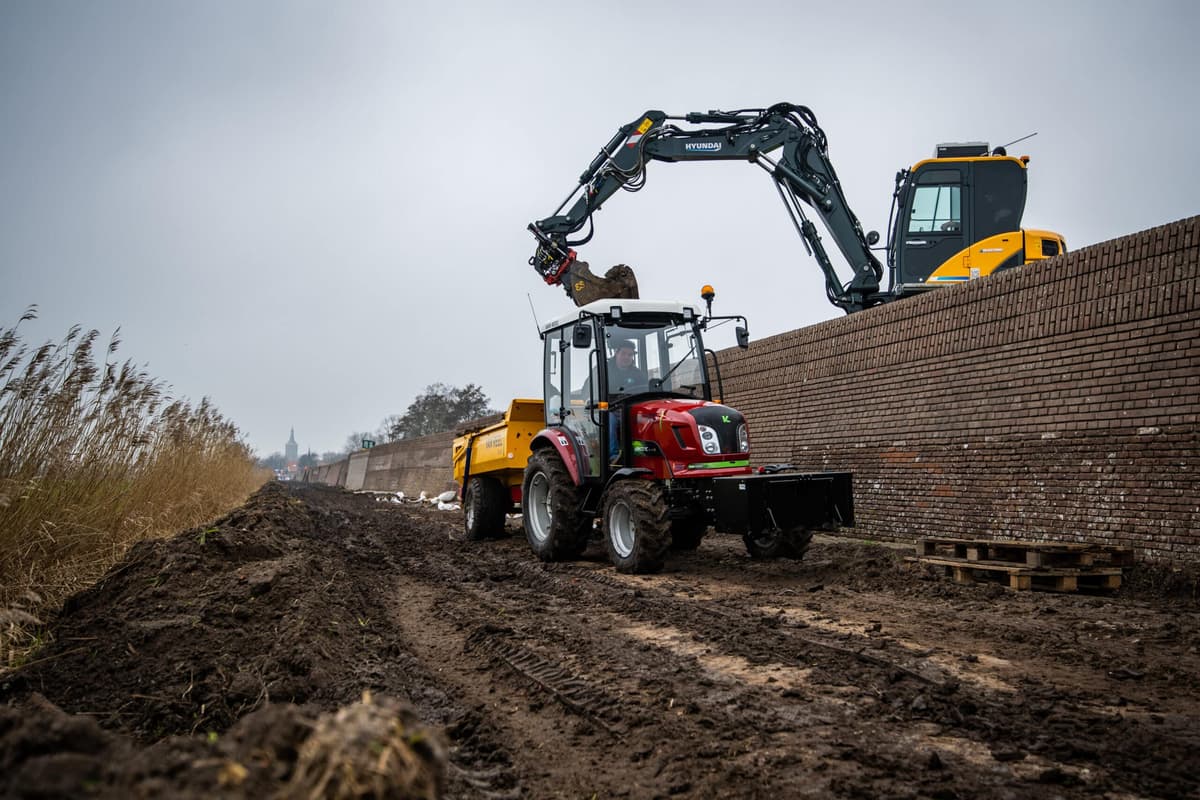
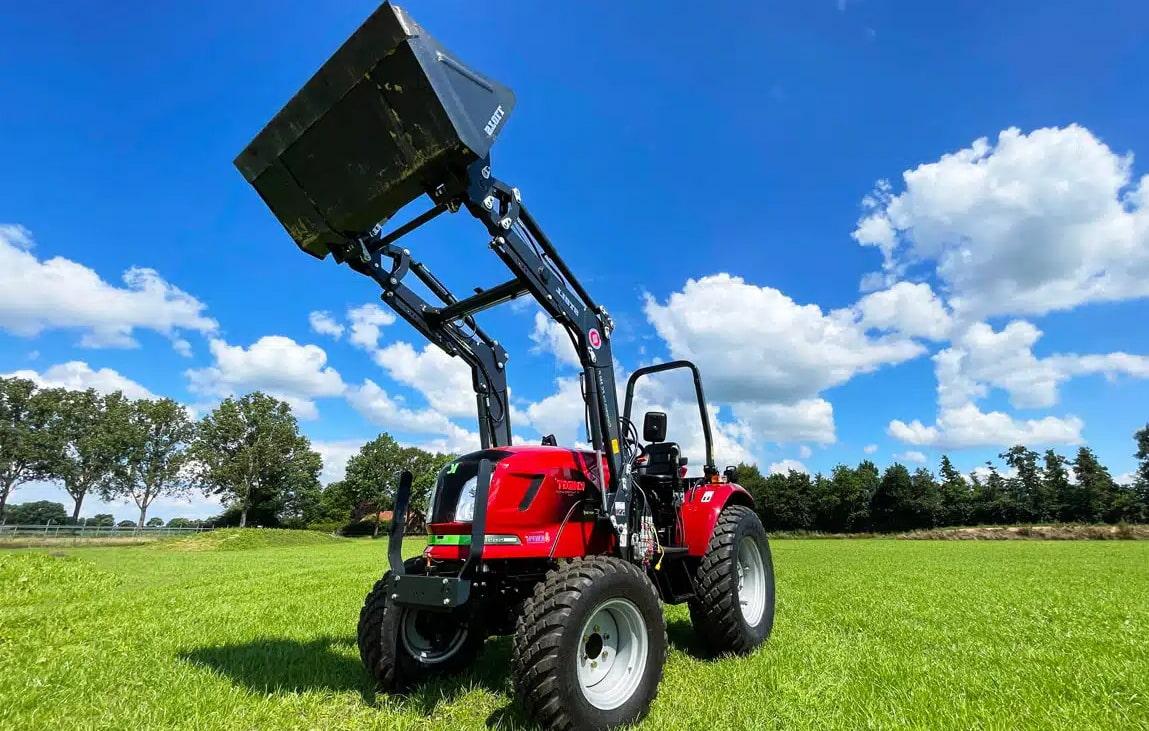
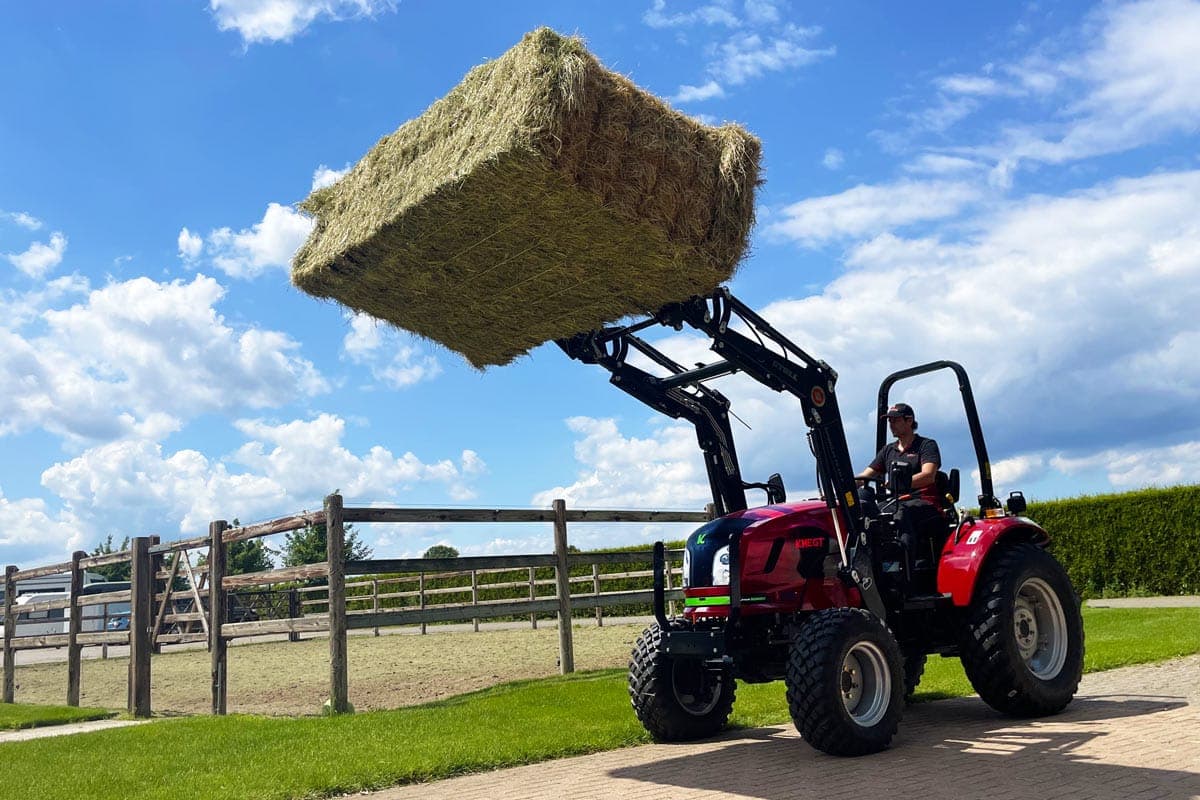
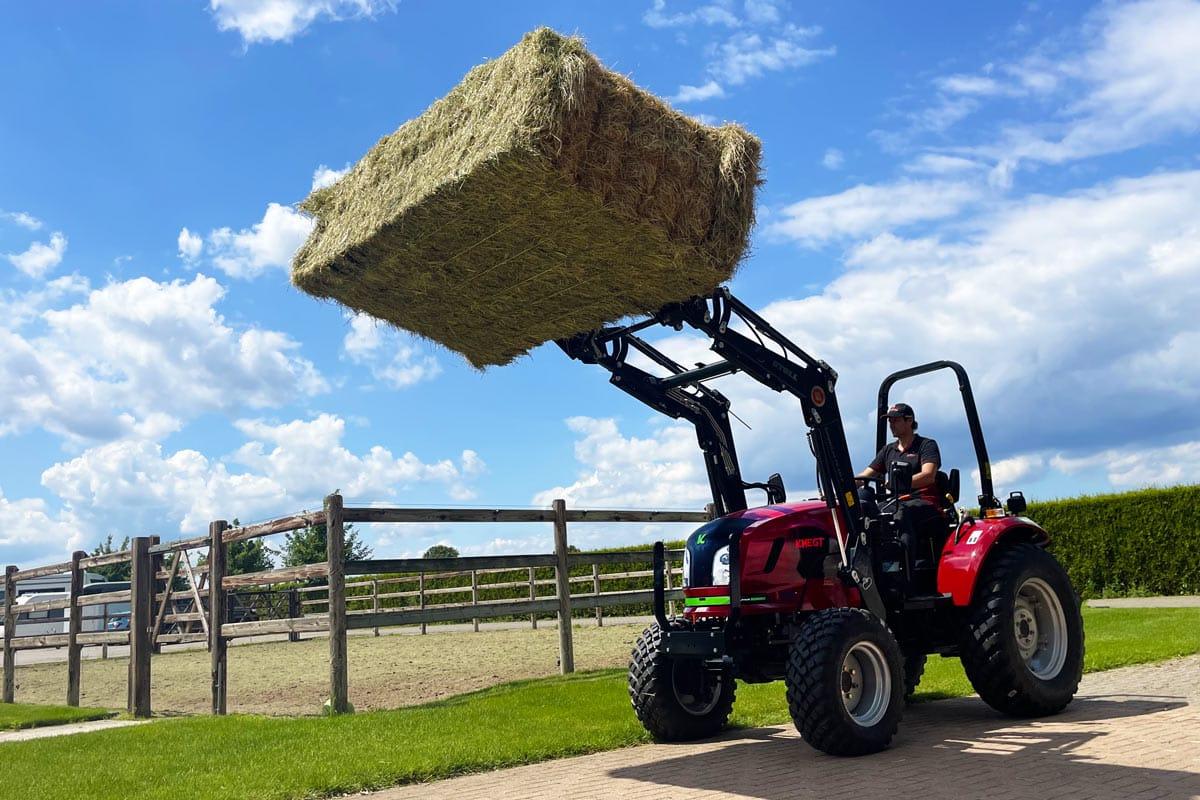
- Loading and lifting: this is what a yard loader is built for. A tractor with a STOLL front loader does the same work with a pelican bucket, bale spear, manure grab or pallet fork. How much the loader can safely lift depends on the loader and the tractor model; your dealer can give you the figures for your combination.
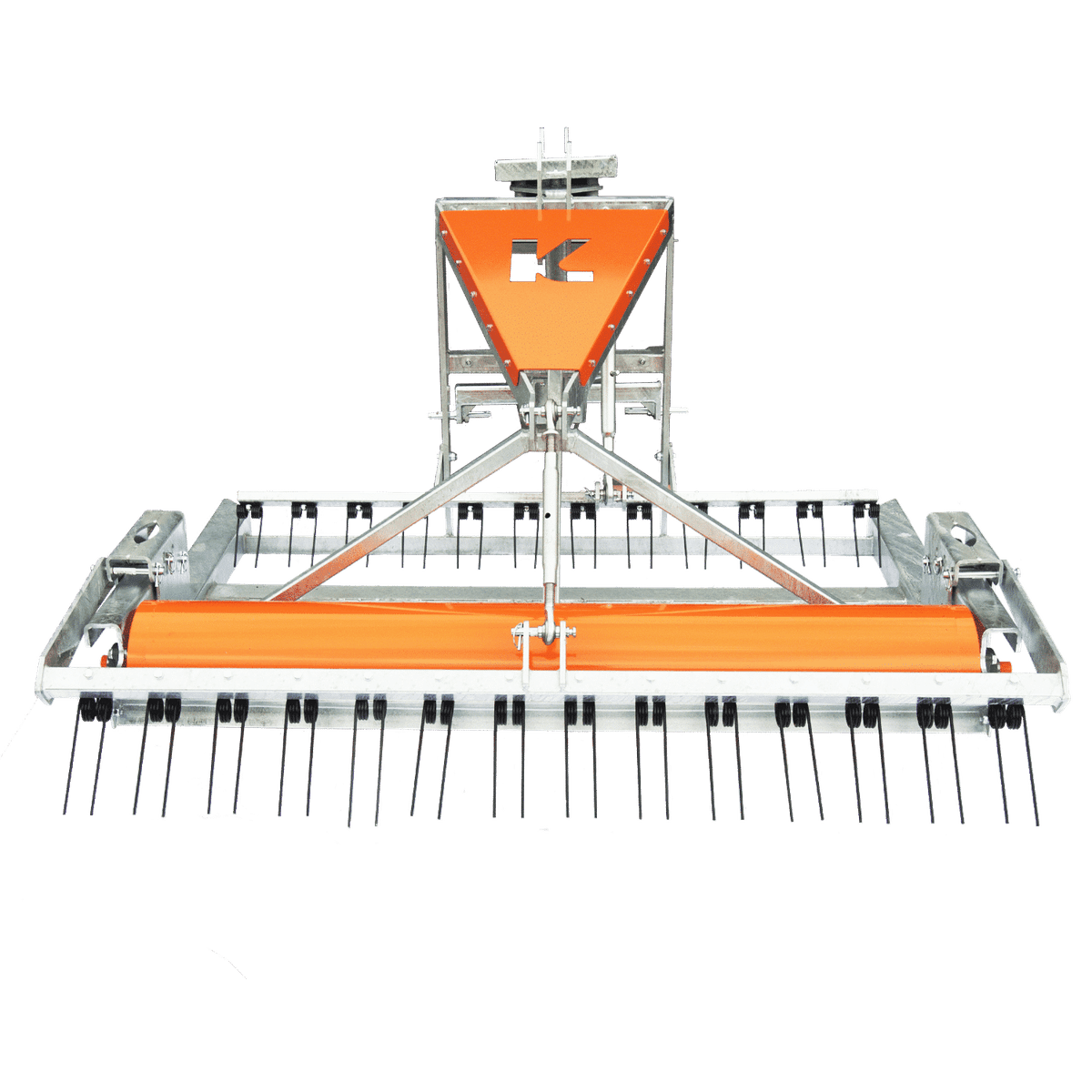
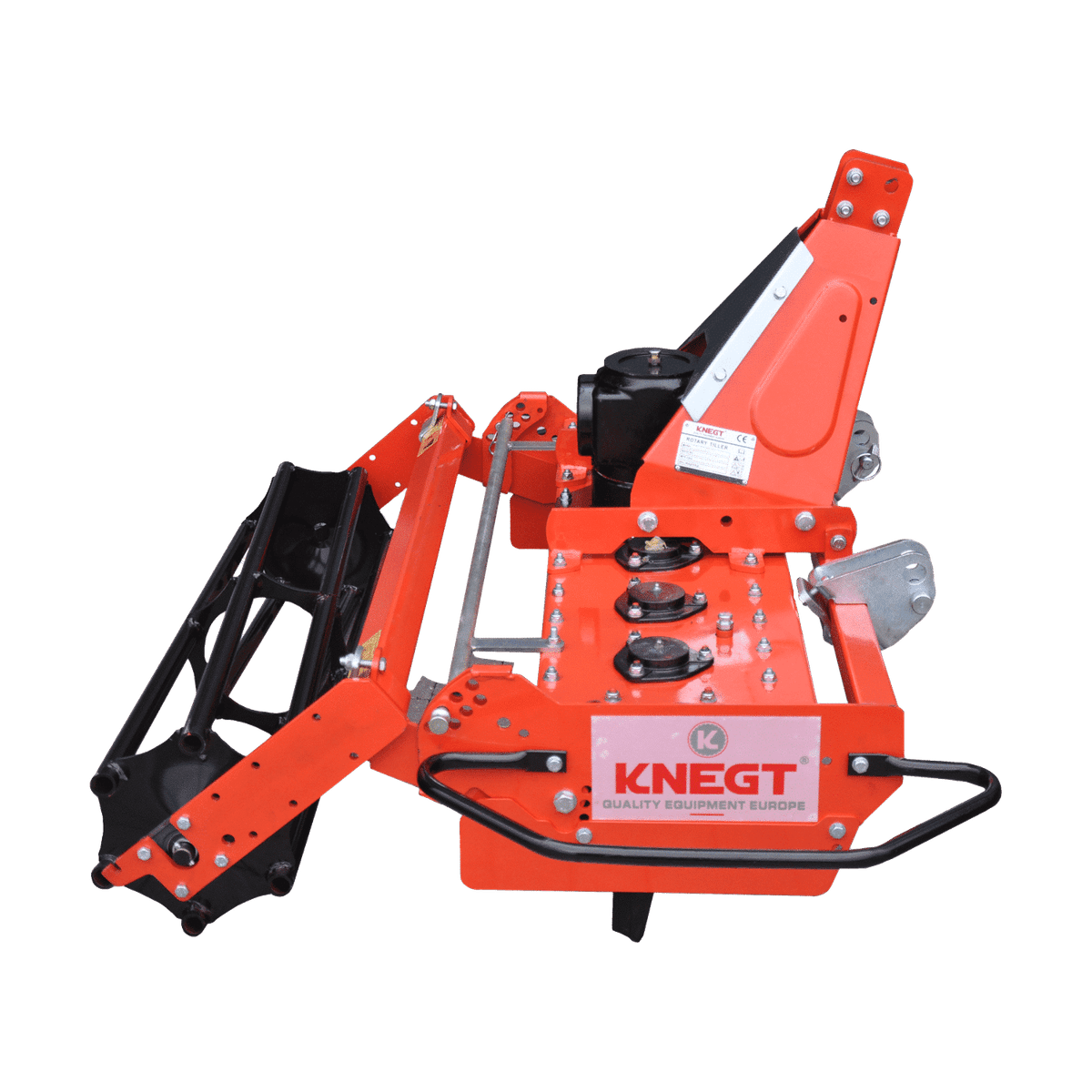
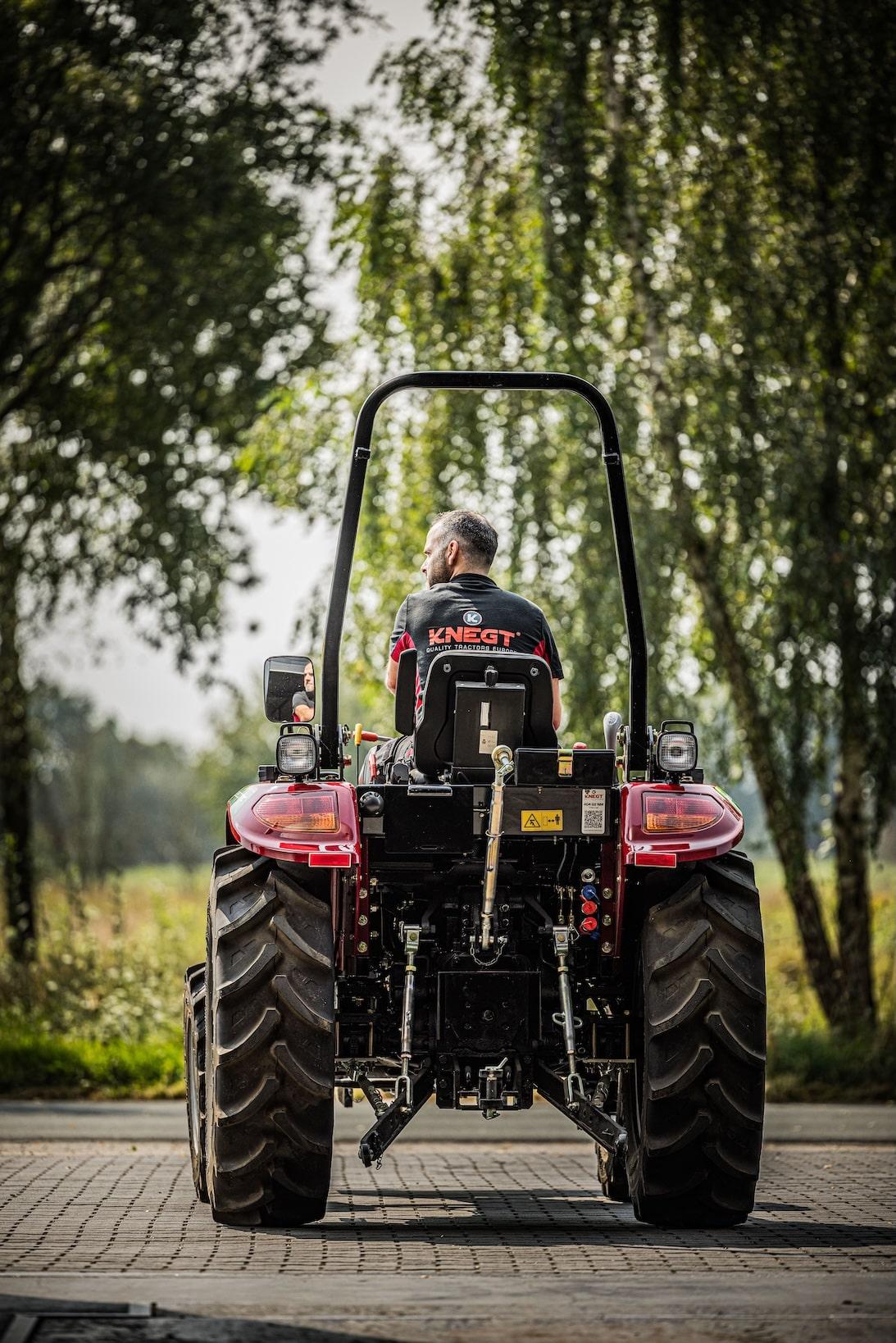
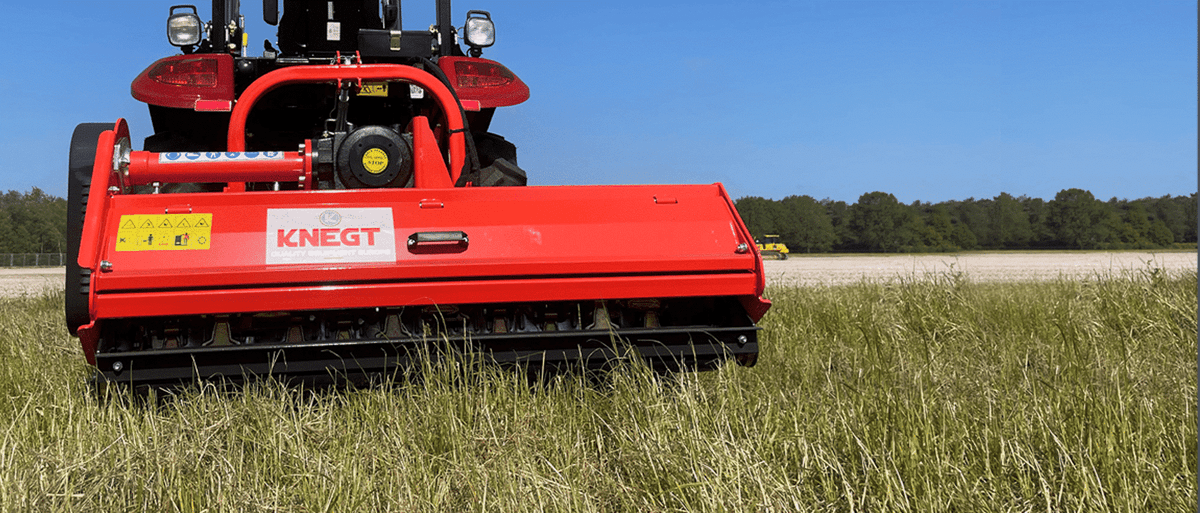
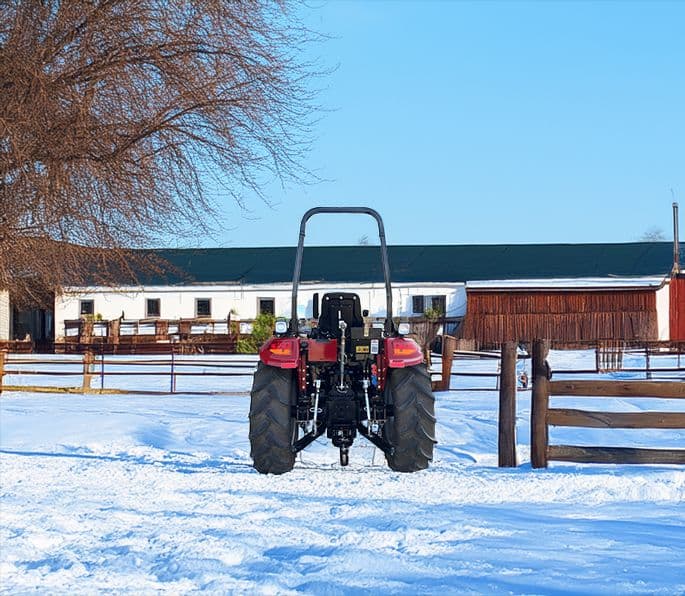
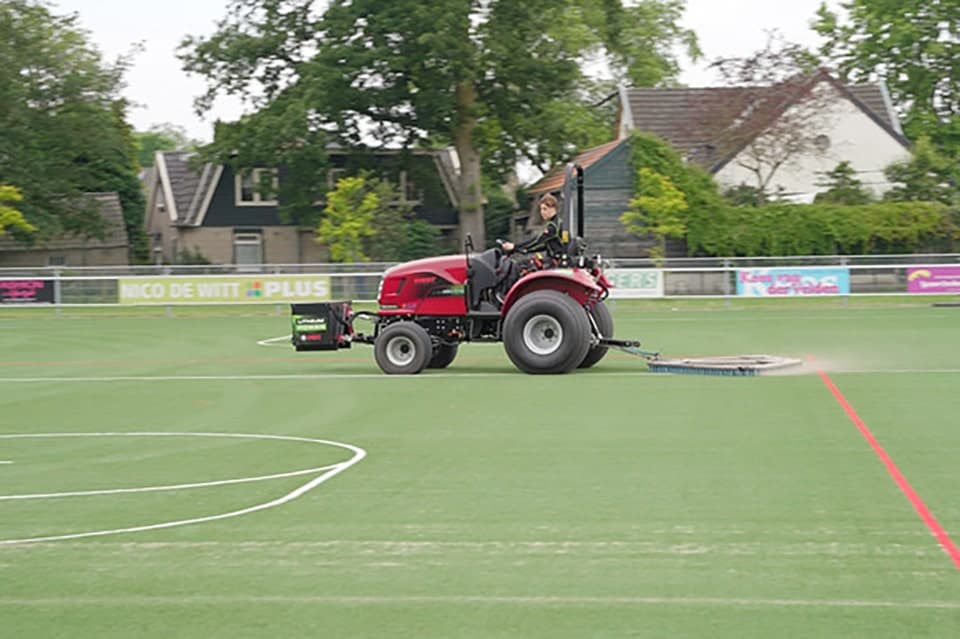
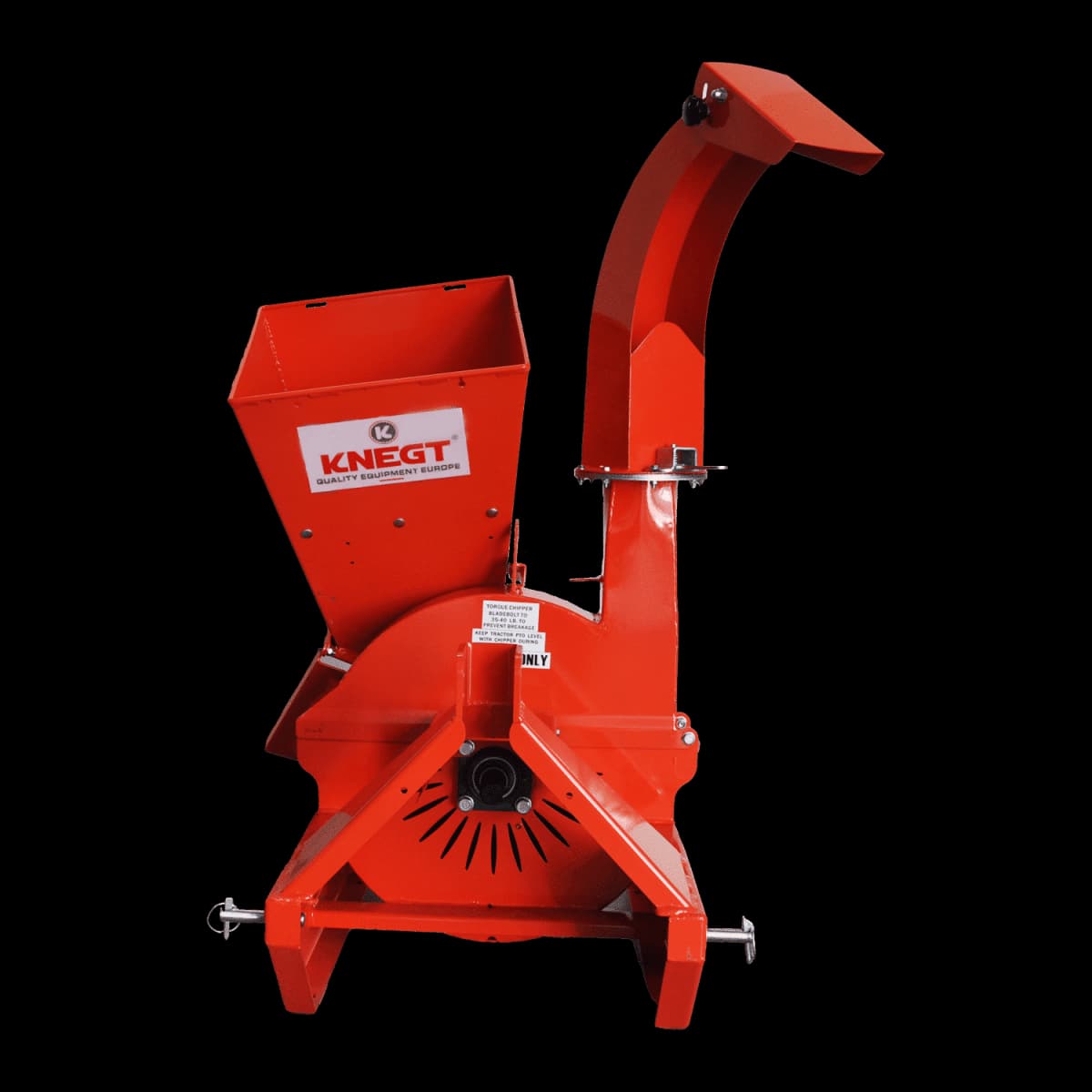
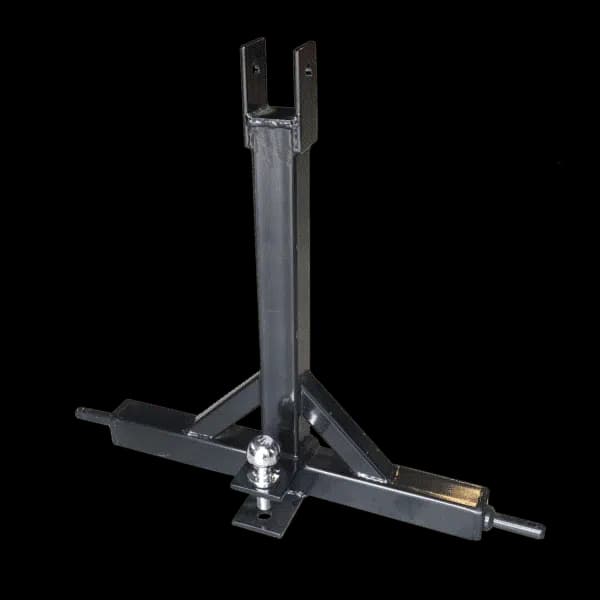
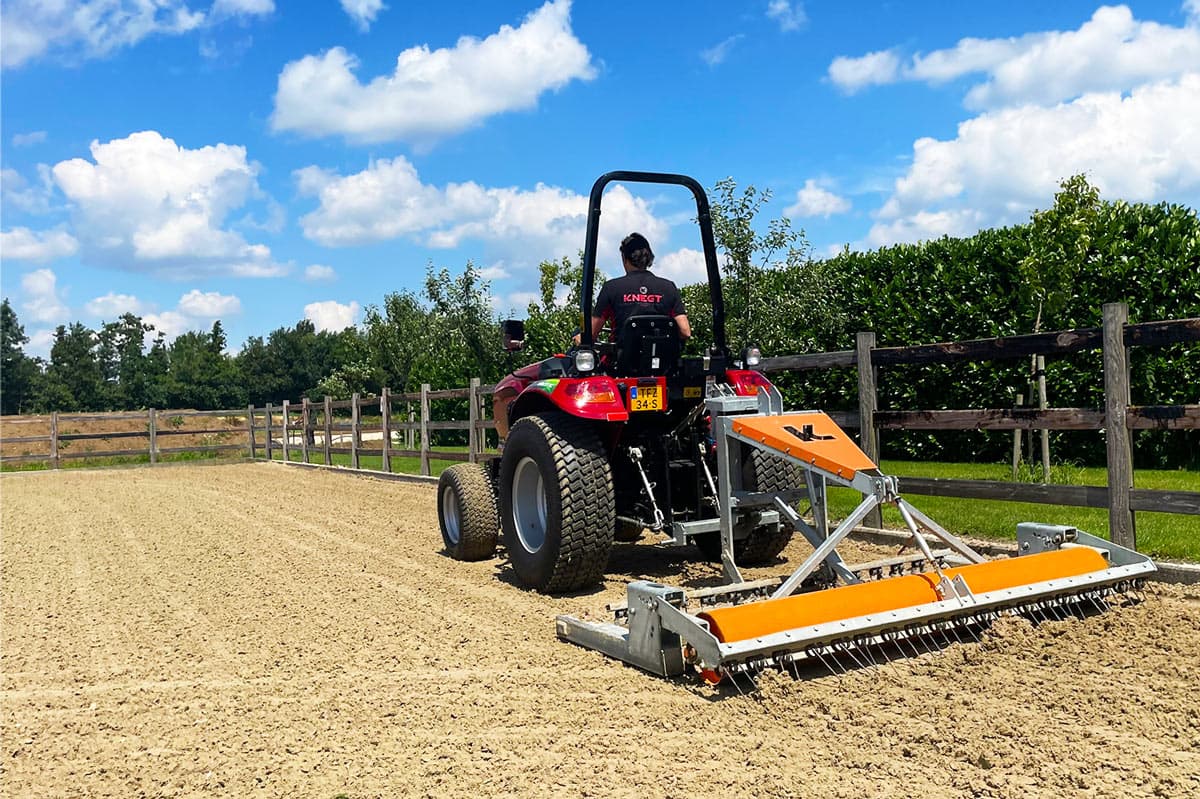
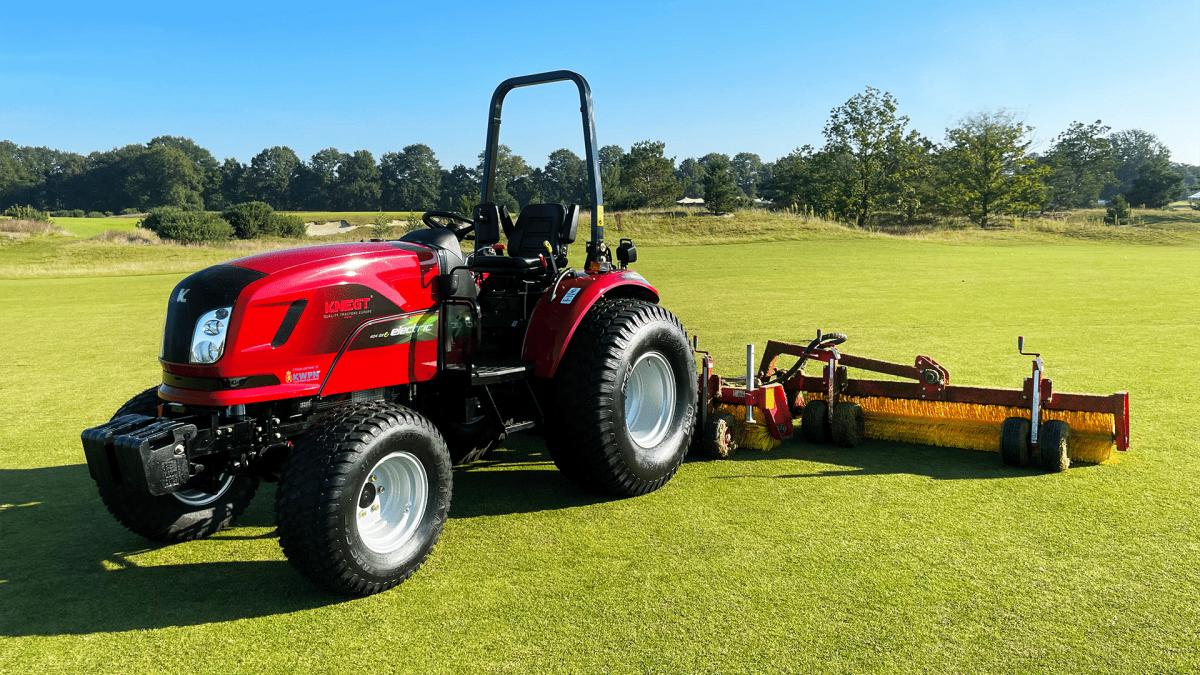
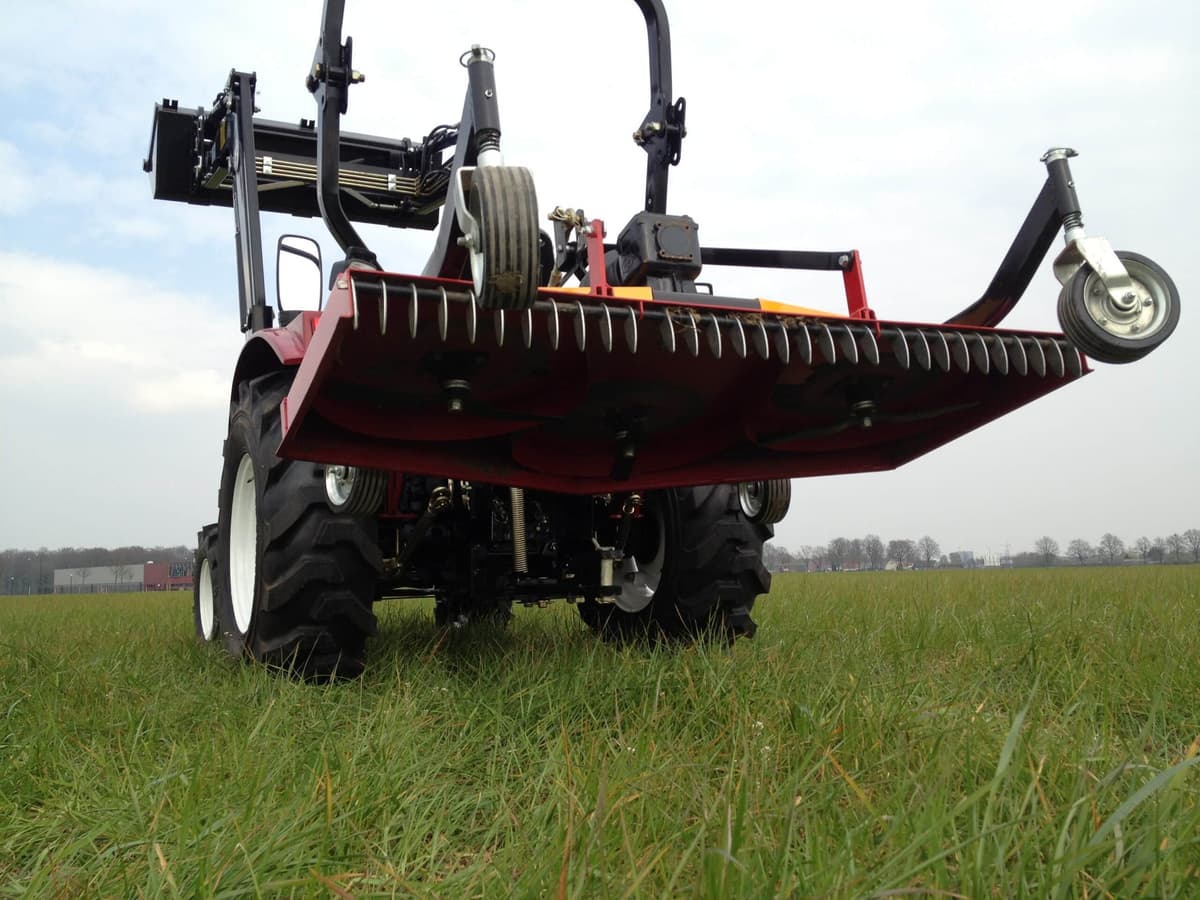
- Rear implements: a tractor has a three-point hitch. The 404G2E and 504G3E also have a PTO with 540 and 1,000 rpm, and a lift capacity of 665 kg and 1,100 kg at 61 cm behind the ball. That lets you run a flail mower, topper, arena leveller, rotary harrow or wood chipper, among others.
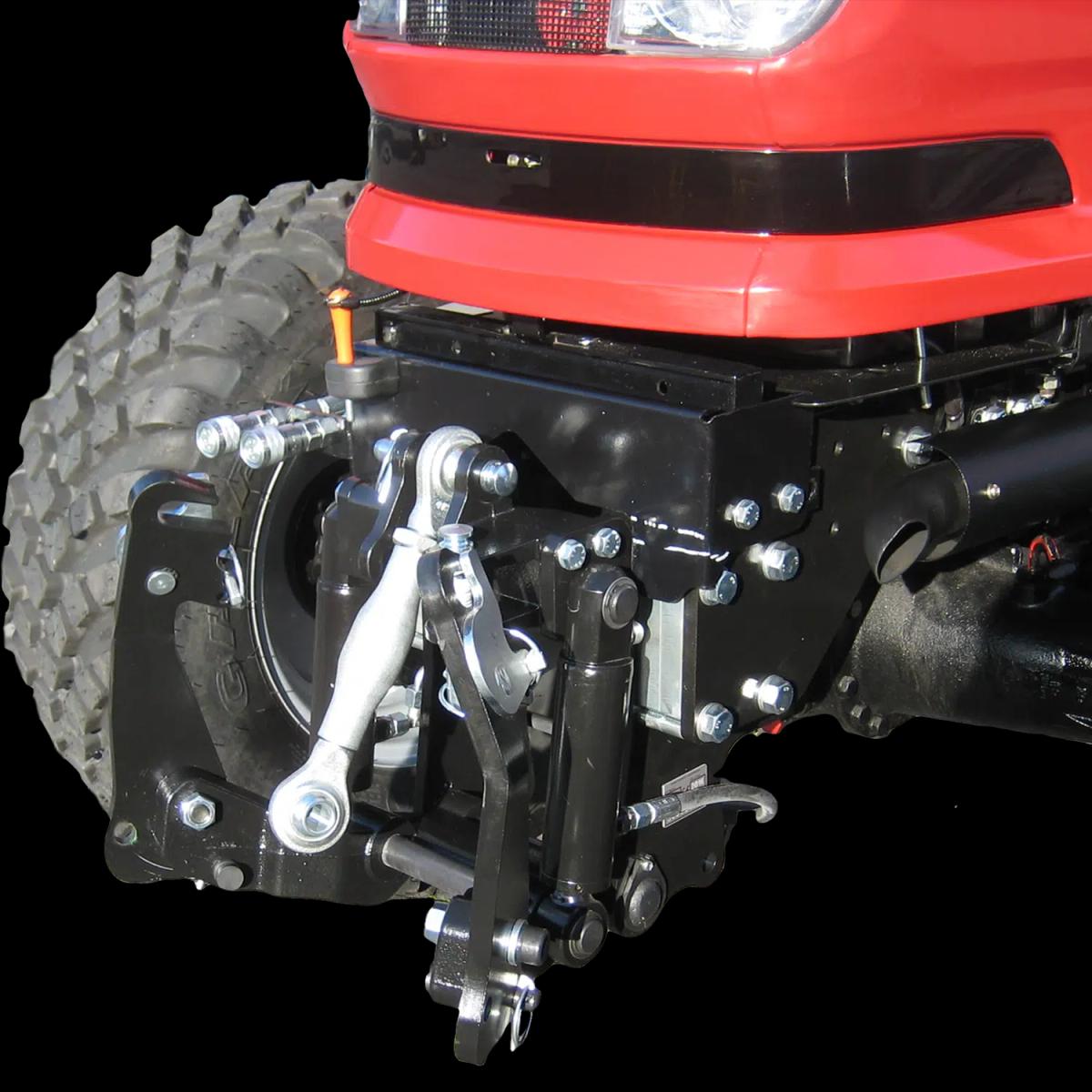
- Front implements: besides the front loader, a tractor can be fitted with a front linkage for implements at the front.
- Manoeuvrability: an articulated yard loader turns tightly. The Knegt tractors are compact, 161 to 167 cm wide with a turning circle from 230 cm on the 304G2E, and have four-wheel drive and power steering.
- Public roads: the electric Knegt tractors are CE approved and road legal in Europe, up to 25 km/h (the 504G3E up to 27.5 km/h).
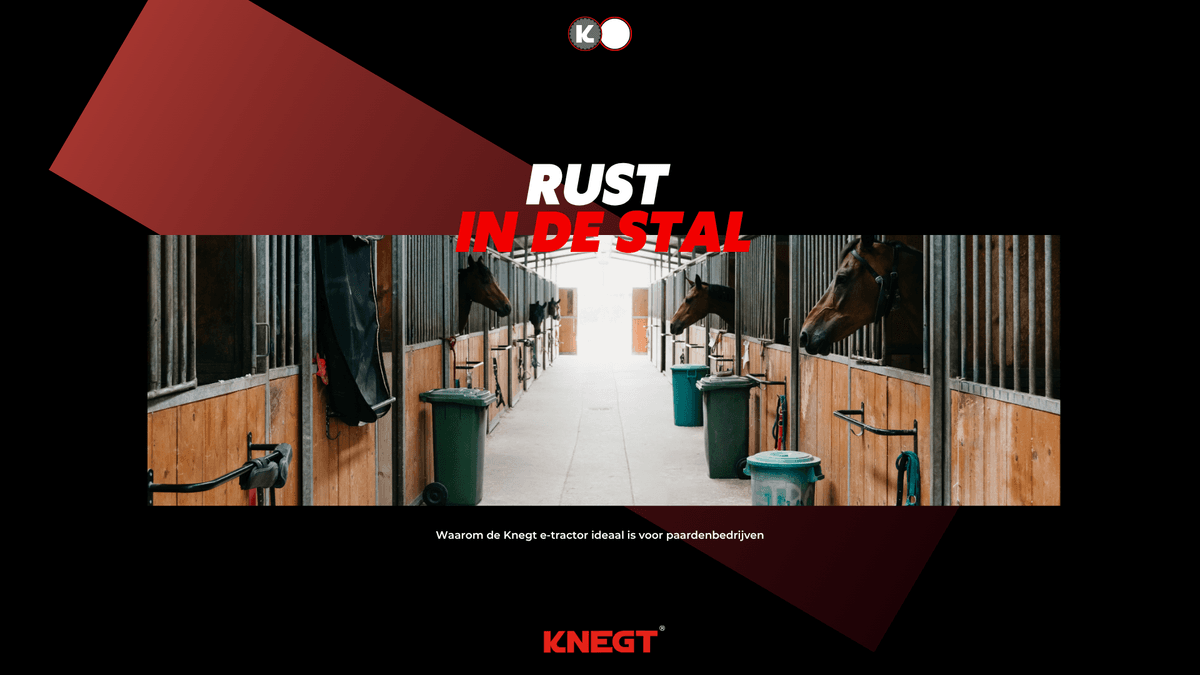
- Working indoors: an electric tractor produces no exhaust fumes and is quiet, so you can also use it in stables, barns, greenhouses and halls.
Which machine fits when?
A yard loader makes sense if:
- you almost only load, scoop and move material, such as feed, manure or bedding;
- you make short loading movements in one place all day;
- you do not need implements behind the machine.
An electric tractor with a front loader fits better if:
- besides loading you also mow, drag, scrape or till, for example on pasture, paddocks, arenas or grounds;
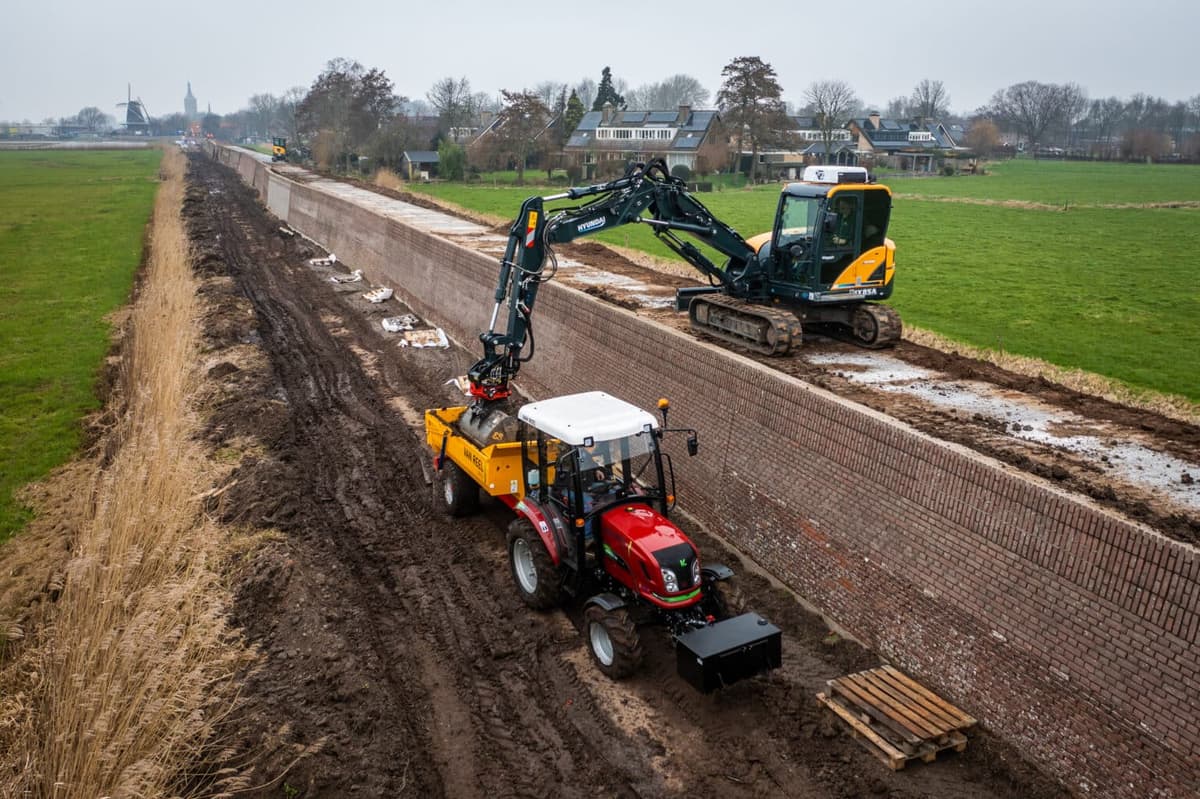
- you pull trailers or a transport box, including on public roads;
- you work indoors near animals, plants or people and want no exhaust fumes;
- you would rather maintain one machine than two.
Many yards sit in between: lots of loading, but regular mowing or dragging too. In that case a tractor that does both often saves you a second machine.
How to choose in 5 steps
- List your tasks: how much of the time is loading and unloading, and how much is mowing, dragging, scraping or transport?
- Determine your heaviest load and loading height: what weight do you lift and how high do you need to load, for example over the side of a trailer? Ask for the lift capacity of the front loader for your combination.
- Measure your yard and buildings: how wide are passages and stable doors, and how much room do you have to turn? Compare that with the width and turning circle of the model.
- Choose the power: the 304G2E has 45 hp (30 hp drive motor and 15 hp hydraulics), the 404G2E 55 hp (40 and 15) and the 504G3E 65 hp (50 and 15). More drive power helps with pushing, slopes and heavy trailers.
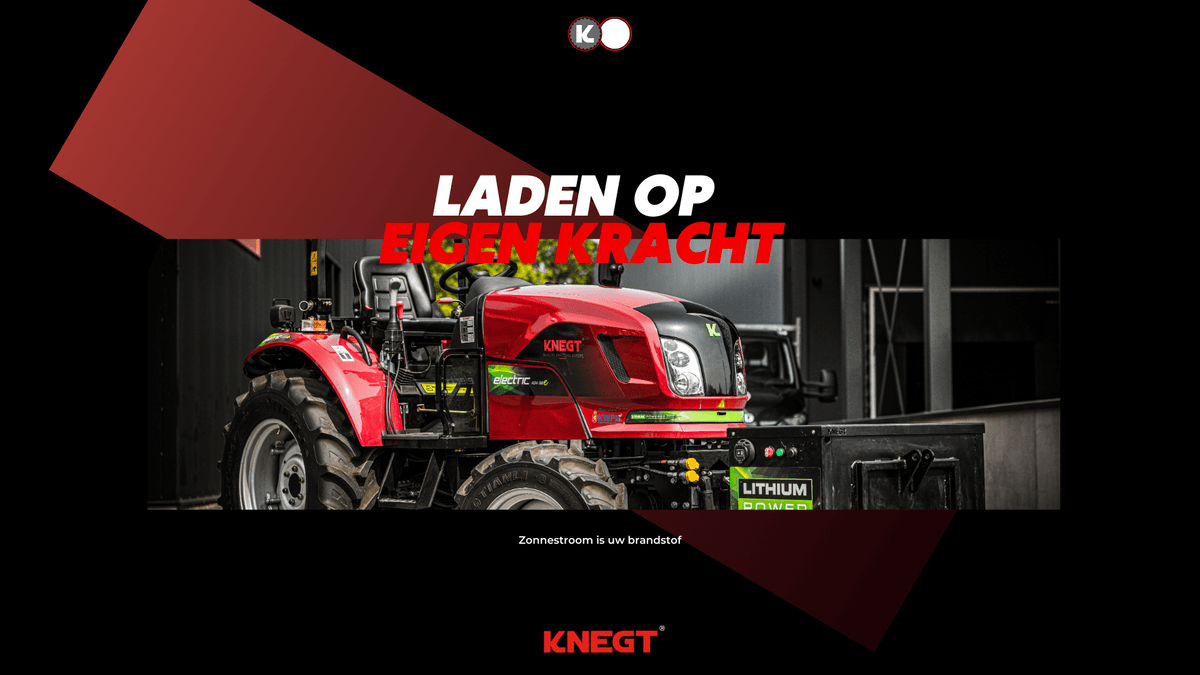
- Plan your working day and charging: run time depends on workload and battery choice. You charge via 230V or with a fast charger, which takes the battery from 30 to 80 percent in about 2.5 hours, and you can top up in between. An extra battery pack is optional.
In the configurator you choose between basic, with front loader, with cab or cab plus front loader. Prices vary by model, version and accessories, so request a quote for your combination.
Frequently asked questions
Can an electric tractor with a front loader replace a yard loader?
For many yards, yes. With a STOLL front loader and accessories such as a pelican bucket, bale spear, manure grab or pallet fork it handles most loading work, and it also runs implements. For almost exclusively intensive loading in one place, a yard loader is more specialised.
Can I load inside a stable with an electric tractor?
Yes. An electric Knegt produces no exhaust fumes and is quiet, so you can also work in stables, barns and halls.
Which Knegt model suits yard work?
The 304G2E is the most compact and agile. The 404G2E and 504G3E have more drive power and a PTO with 540 and 1,000 rpm for heavier implements.
How often does an electric tractor need servicing?
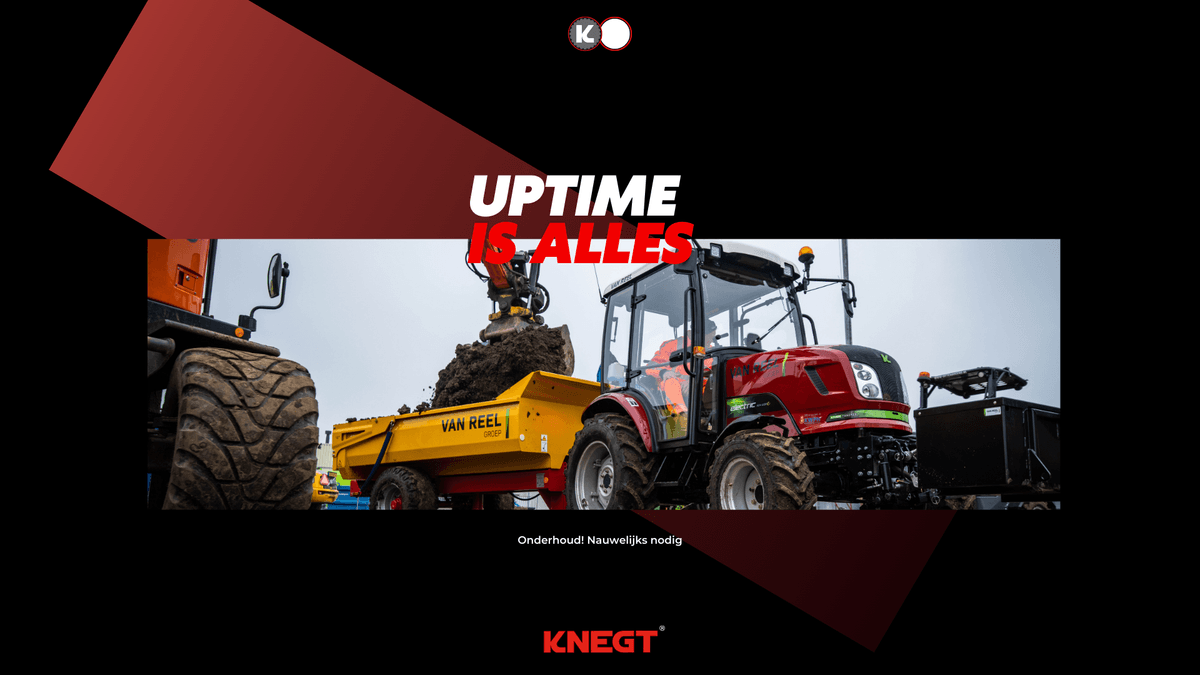
Every 350 hours or once a year. There is no engine oil, fuel filter or injectors to replace.
Try it on your own yard
Whether a tractor with a front loader can handle your yard work is best seen on your own site, with your own loads and passages. Request a free demo, book an advice session or find a Knegt dealer near you. Together we will look at which model, accessories and implements suit your yard.